






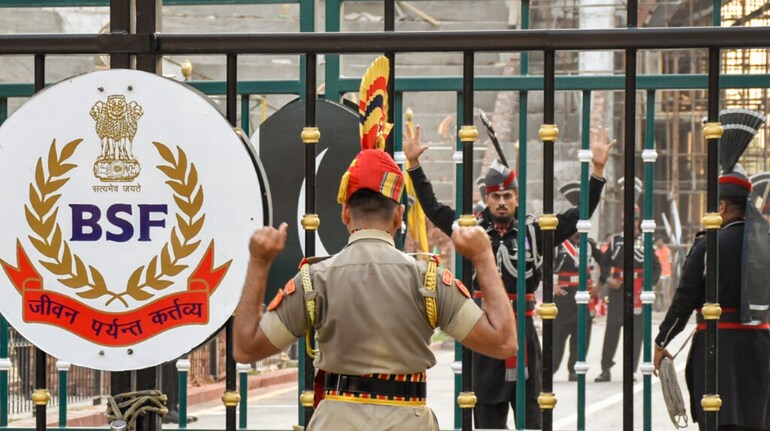

If there was any lingering illusion that India and Pakistan could stabilise their fragile relationship through routine diplomacy, 2025 buried it decisively. The year marked the sharpest deterioration in ties between the two nuclear-armed neighbours in decades, driven by Pakistan’s continued sponsorship of terrorism, military adventurism and institutional denial.
What began with a brutal terror attack on civilians in Jammu and Kashmir escalated into a rare four-day military confrontation, precision strikes deep inside Pakistan, and a strategic shift by India that fundamentally altered the rules of engagement. New Delhi not only retaliated militarily but also unleashed diplomatic and economic measures that struck at Pakistan’s long-standing pressure points, including the suspension of the Indus Waters Treaty.
For Pakistan, 2025 was a year of contradiction. Despite suffering clear military losses and growing international scrutiny, its army tightened its grip on power. General Asim Munir, instead of being held accountable, was elevated to Field Marshal and appointed Chief of Defence Staff. The message was unmistakable. Failure against India is rewarded, not punished, in Pakistan’s power structure.
By the end of the year, India–Pakistan ties were not merely strained. They were fundamentally reset, with New Delhi signalling that restraint would no longer be automatic and Islamabad exposing once again that it remains incapable of abandoning terrorism as state policy.
Pahalgam attack reignited India–Pakistan fault lines
The rupture began in early 2025 with the terror attack in Pahalgam, where Pakistan-sponsored terrorists killed 26 innocent civilians in a calculated strike to provoke fear and chaos. Indian intelligence agencies traced the attackers to Pakistan-based terror outfits operating under new names, a tactic increasingly used to evade international scrutiny.
Groups linked to Lashkar-e-Taiba, Jaish-e-Mohammed and newer fronts such as The Resistance Front were once again found to be active across the Line of Control. The attack reinforced a pattern India has repeatedly flagged. Pakistan’s internal political and economic crises are routinely exported through terrorism.
New Delhi responded with diplomatic fury. Pakistan’s High Commission officials were summoned. Intelligence sharing with global partners intensified. The message was blunt. This was not an isolated act of violence but part of a sustained campaign enabled by Pakistan’s military establishment.
Four days that changed the equation
The Pahalgam attack triggered a swift and forceful Indian response. What followed was a four-day military confrontation that shattered long-standing assumptions about escalation control between the two countries.
India launched Operation Sindoor, targeting terror infrastructure across Pakistan and Pakistan-Occupied Kashmir. Unlike previous episodes, the operation was not symbolic. It was precise, expansive and unapologetic.
Indian forces used a mix of air power, drones and stand-off weapons to strike multiple high-value targets. Pakistan responded with missile launches and drone attacks, but the asymmetry quickly became evident. Indian air defence systems intercepted most incoming threats, while Indian strikes penetrated deep into Pakistani territory.
Several Pakistani air bases suffered heavy damage. Among them was Nur Khan Airbase, a critical installation near Rawalpindi. Satellite imagery and intelligence assessments indicated significant infrastructure damage, grounding aircraft and disrupting operations.
Within days, Indian strikes demonstrated reach across Pakistan, exposing vulnerabilities in Islamabad’s air defences and command infrastructure.
Pakistan claims victory, reality says otherwise
Islamabad attempted to control the narrative, claiming it had achieved “fateh” and downed multiple Indian aircraft. These assertions were widely dismissed. Independent assessments and India’s subsequent operational dominance told a different story.
The conflict ended after Pakistan’s Director General of Military Operations contacted his Indian counterpart, seeking de-escalation. India made it clear that the cessation of hostilities was bilateral, not the result of foreign mediation, despite Pakistan’s claims of US and Saudi involvement.
The outcome was unmistakable. India demonstrated escalation dominance and precision capability. Pakistan exposed once again that its military brinkmanship rests on bluff rather than strength.
India suspends Indus Waters Treaty, changes the playbook
In a move that rattled Islamabad far more than air strikes, India suspended the Indus Waters Treaty following the Pahalgam terror attack. The decision marked a strategic shift in how New Delhi views long-term pressure on Pakistan.
The treaty, signed in 1960, had survived wars and crises. India’s decision to hold it in abeyance signalled that terrorism would now carry structural consequences. Pakistan’s agriculture and water security depend heavily on Indus flows, and even limited disruptions triggered alarm.
Pakistan protested loudly but found little sympathy internationally. India made it clear that treaty obligations cannot coexist with state-sponsored terrorism.
Alongside this, New Delhi announced further diplomatic and economic measures. Trade remained suspended. Visas were curtailed. Cultural and sporting engagements were frozen. Pakistan responded with predictable tit-for-tat measures that carried little real impact, given the asymmetry in economic leverage.
Drones and precision warfare redefine conflict
One of the defining features of the 2025 confrontation was India’s extensive use of unmanned aerial vehicles. Drones emerged as the real game-changers, enabling surveillance, precision strikes and air defence saturation.
Indian UAVs penetrated deep into Pakistani airspace, targeting radar sites, logistics hubs and terror infrastructure. Pakistan’s attempts to replicate this capability fell short, exposing technological gaps.
The conflict underscored that future India–Pakistan engagements will be short, sharp and heavily asymmetric, with Pakistan bearing disproportionate costs.
Defeat rewarded, Asim Munir elevated
Despite Pakistan’s poor military showing, the year ended with a move that summed up its dysfunction. General Asim Munir was elevated to Field Marshal and appointed Chief of Defence Staff.
The decision stunned even seasoned observers. Instead of accountability, Pakistan’s military rewarded failure. The elevation cemented Munir’s dominance over civilian institutions and confirmed that Pakistan’s power structure remains immune to reality.
For India, the message was clear. Pakistan’s army has no incentive to course-correct. It thrives on confrontation, not peace.
Diplomatic farce and the Mohsin Naqvi episode
The year’s absurdity was capped by the incident involving Mohsin Naqvi, who was accused of hijacking the Asia Cup final trophy presentation in a move widely seen as petty and anti-India.
The episode, trivial in isolation, symbolised Pakistan’s broader mindset. Even sporting platforms were politicised to project grievance and hostility toward India.
A broken relationship with no quick repair
By the end of 2025, India–Pakistan ties were worse than at any point since the Balakot crisis. The difference was that India no longer appeared interested in managing Pakistan’s sensitivities.
New Delhi demonstrated that terrorism will invite military retaliation, economic pressure and strategic consequences. Pakistan, meanwhile, doubled down on denial, propaganda and military domination of civilian life.
The year closed with no dialogue, no confidence-building measures and no illusion of normalcy. If 2025 proved anything, it is that India has moved on from managing Pakistan to deterring it. Pakistan, trapped in its own delusions, appears incapable of understanding the shift.
Discover the latest Business News, Sensex, and Nifty updates. Obtain Personal Finance insights, tax queries, and expert opinions on Moneycontrol or download the Moneycontrol App to stay updated!
Find the best of Al News in one place, specially curated for you every weekend.
Stay on top of the latest tech trends and biggest startup news.





