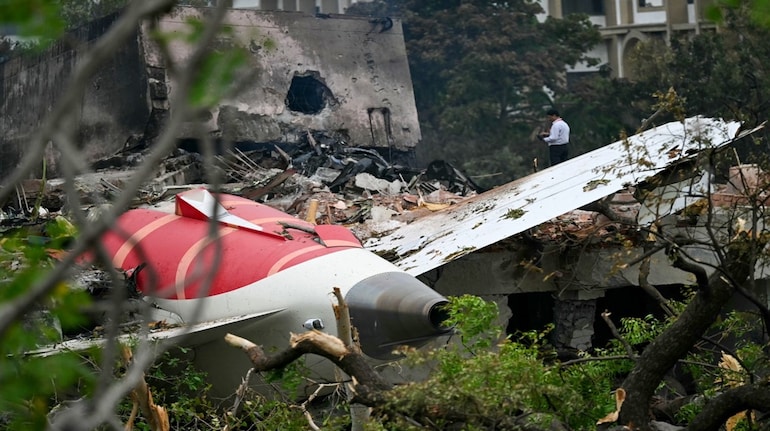

A US aviation safety group has claimed that the Boeing 787 Dreamliner that crashed in India last year had suffered a series of technical failures before the accident, including an in-flight fire, according to a report by the BBC.
The aircraft, operated by Air India, crashed shortly after taking off from Ahmedabad on June 12 while en route to London, killing 260 people. The official investigation into the accident is still underway.
Claims submitted to US Senate
The Foundation for Aviation Safety (FAS) said it has sent a presentation to the US Senate Permanent Subcommittee on Investigations, outlining findings it says are based on internal documents that have come into its possession.
According to the BBC report, the Foundation alleges that the aircraft experienced system failures from its very first day in service with Air India, citing what it described as engineering, manufacturing, quality and maintenance problems.
Alleged technical issues
The group claims the aircraft suffered repeated electronics and software faults, circuit breakers tripping, wiring damage, short circuits, loss of electrical current and overheating of power system components.
It also alleges that in January 2022, the aircraft experienced a fire in a P100 power distribution panel during a descent into Frankfurt Airport. The damage was discovered after landing and was severe enough that the entire panel had to be replaced, the Foundation said.
The P100 panel is one of five units that distribute high-voltage power generated by the engines across the aircraft.
Design focus on electrical systems
The 787 relies more heavily on electrical systems than earlier passenger aircraft after designers replaced many mechanical and pneumatic components with lighter electrical systems. The aircraft faced early safety issues, including a battery fire on a Japan Airlines plane in 2013 that led to a temporary global grounding.
The P100 power panel itself was redesigned in 2010 after a fire on a test aircraft, the BBC report noted.
Pilot focus sparks backlash
India’s Aircraft Accident Investigation Bureau (AAIB) is leading the investigation into the Ahmedabad crash, with participation from US officials as the aircraft and engines were designed and built in the United States.
A preliminary AAIB report published a month after the crash said the aircraft’s fuel control switches were moved from “run” to “cut-off” shortly after take-off, depriving the engines of fuel. The report cited a cockpit voice recording in which one pilot asked the other why the switches were cut off, with the response that he had not done so.
That passage triggered speculation that pilot action caused the crash. Lawyers for victims, safety campaigners, pilots’ groups and some technical experts have since pushed back, arguing that the focus on pilot error may be premature and could divert attention from potential technical causes.
Broader concerns flagged
The Foundation, led by former Boeing manager Ed Pierson, has described the preliminary report as “woefully inadequate,” according to the BBC. It says its concerns extend beyond the Air India aircraft and include a review of about 2,000 failure reports involving other 787s in the US, Canada and Australia.
Some of those reports involve water leaks into wiring bays, an issue previously flagged by the Federal Aviation Administration.
Boeing has consistently maintained that the 787 is a safe aircraft with a strong operating record. Before the Ahmedabad crash, the Dreamliner fleet had flown for nearly 15 years without a fatal accident.
Discover the latest Business News, Sensex, and Nifty updates. Obtain Personal Finance insights, tax queries, and expert opinions on Moneycontrol or download the Moneycontrol App to stay updated!
Find the best of Al News in one place, specially curated for you every weekend.
Stay on top of the latest tech trends and biggest startup news.