






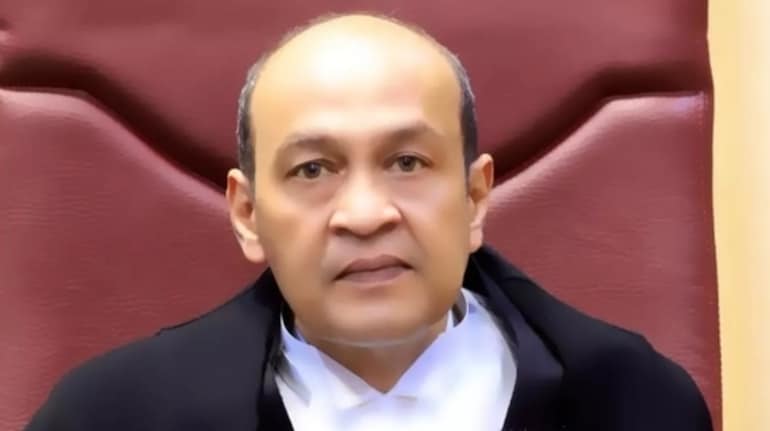

Senior Advocate and former Attorney General for India Mukul Rohatgi has warned that sustained media scrutiny can permanently scar a judge’s public standing, even if the legal process ultimately ends in acquittal.
Addressing a panel discussion in New Delhi, Rohatgi said relentless television coverage and repetitive allegations often operate like a parallel justice system, shaping public opinion long before courts assess evidence, according to a report by Bar and Bench.
Speaking about the controversy involving Justice Yashwant Varma, Rohatgi said, “There is the case of that judge in whose house they say the money was found. The whole media has painted him black...If he’s ultimately acquitted, nobody’s going to believe that he was an honest judge…His career is over, whatever may happen to the case.”
Although the judge was not named during the discussion, Rohatgi had represented Justice Varma before the Supreme Court in a challenge to the initiation of impeachment-related proceedings.
Rohatgi described media trials as “one of the very major issues drowning us today,” arguing that mainstream television causes deeper and more lasting damage than social media because of its perceived authority.
“You show the same person’s face five million times on television and say this man is a gangster. That destroys far more than social media,” he said, underscoring how repetition and visuals can convert allegations into assumed facts.
While acknowledging the constitutional guarantee of free speech under Article 19(1)(a), Rohatgi said sections of the media had crossed constitutional limits by eroding privacy, dignity and the right to a fair trial. He rejected the proposal of specialised media tribunals, calling tribunalisation in India a failed experiment.
According to him, such bodies lack both constitutional protection and institutional independence, making them vulnerable to executive influence, unlike High Courts.
These remarks were made during the launch of Beyond Headlines: Volume I — The Medium and Its Mutations by Aamir Khan Wali. The discussion was moderated by journalist and educator Avantika Gautam and organised in memory of constitutional lawyer Nani Palkhivala. Senior Advocate Percival Billimoria participated as a co-panelist.
On Friday, the Supreme Court dismissed a plea filed by Justice Yashwant Varma challenging the Lok Sabha Speaker’s decision to constitute a three-member Inquiry Committee under the Judges (Inquiry) Act.
Rohatgi had appeared for Justice Varma in this matter. Justice Varma argued that since removal motions were moved in both Houses of Parliament on the same day, a Joint Committee was mandatory.
A bench of Justices Dipankar Datta and A.G. Masih rejected this contention, holding that the Act permits either House to proceed independently.
The Court ruled that rejection of a motion in one House does not invalidate proceedings in the other and upheld the Deputy Chairman of the Rajya Sabha’s authority to act in the Chairman’s absence.
With this ruling, Justice Varma’s challenge failed, allowing the inquiry process constituted by the Lok Sabha Speaker to continue.
(With inputs from agencies)
Discover the latest Business News, Sensex, and Nifty updates. Obtain Personal Finance insights, tax queries, and expert opinions on Moneycontrol or download the Moneycontrol App to stay updated!
Find the best of Al News in one place, specially curated for you every weekend.
Stay on top of the latest tech trends and biggest startup news.





