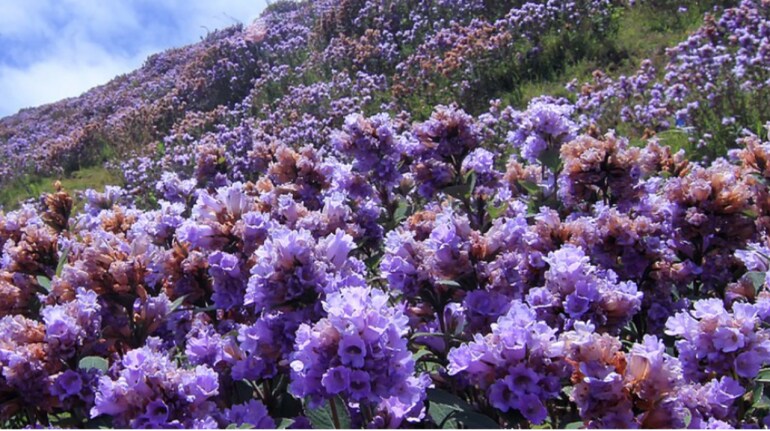
Mass flowering is an enchanting phenomenon that occurs across the world. In India, the neelakurinji (Strobilanthes kunthiana) bloom, where swathes of the landscape become carpeted in flowers, is a well-known example of mass flowering – or synchronous flowering.
It is also a demonstration of a type of community bonding in the plant world, which has developed its unique relationship with pollinators.
Why do some plants flower en-masse?Mass flowering is an example of semelparity, a phenomenon where an organism – plant or animal – reproduces only once before dying. In the plant world, this phenomenon is also called monocarpy, a unique flowering behaviour where a plant species flowers and produces seeds only once in its lifetime, and then die afterward. Such plants are commonly known as annual, or periodical, plants.
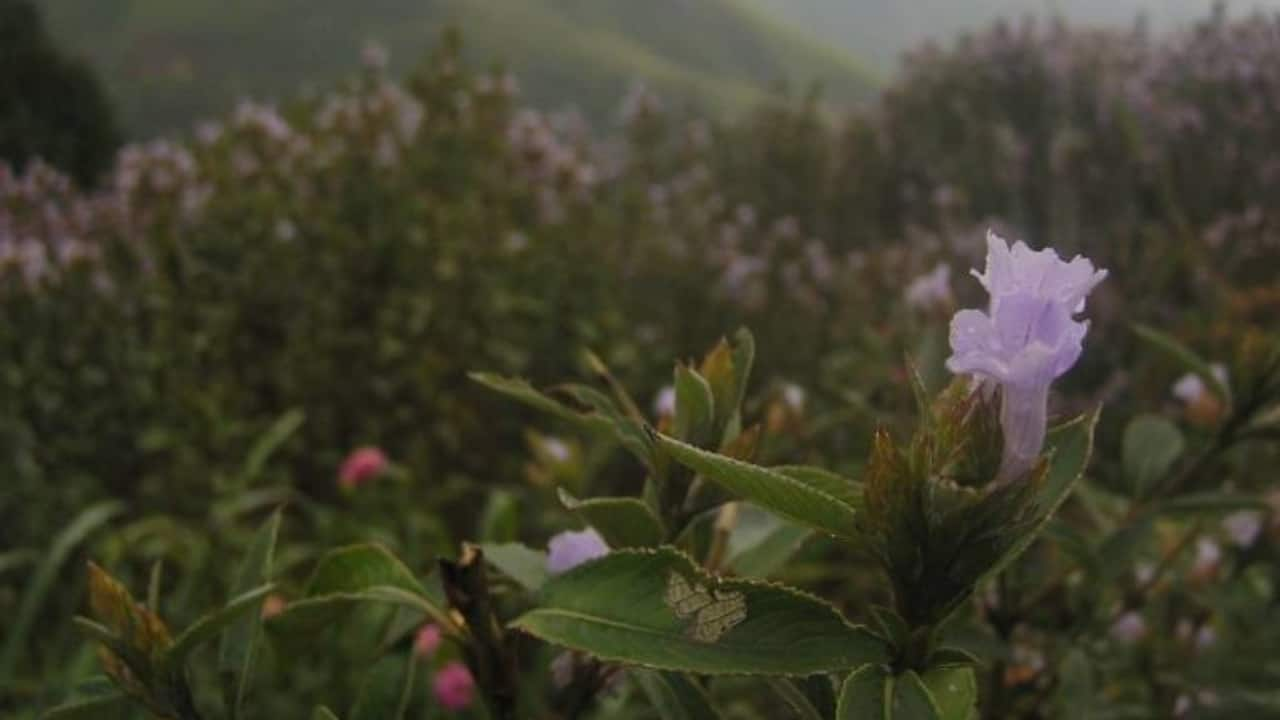 Mass flowering is not only seen in the genus Strobilanthes, but also in plants across nearly 20 families. Photo by Simynazareth /Wikimedia Commons.
The genus Strobilanthes has 145 species in India – of which 72 species are endemic – distributed in the Eastern Himalayas and the Western Ghats. All species of Strobilanthes flower at long intervals, but the famous Strobilanthes kunthiana, the neelakurinji bloom, has been documented rigorously, and its flowering interval is well known and touted for tourism purposes in certain parts of the Western Ghats.
Plants like this one that bloom at long intervals are known as plietesials. The neelakurinji flowers in late August, reaching its peak in mid-September and subsiding by October. This is a small flowering window, but highly effective from an evolutionary standpoint.
To prepare for a mass seeding event, a long vegetative phase helps the plants in accumulating sufficient resources to produce large quantities of attractive seeds. After flowering, the parent plants die, opening the forest floor and improving soil nutrient levels for their offspring to have enhanced survival. During its flowering season, the neelakurinji is pollinated by droves of bees. The honey produced by these bees – Kurinjithen – is rare and is considered a delicacy and is prized for its medicinal properties. The Paliyan tribe collects this honey and has termed it ‘liquid gold’ for its high market value.
Strobilanthes has also developed unique plant-pollinator interactions to suit its unique flowering pattern. Early scientists noticed that the same small animals and birds that fed on the seeds of the neelakurinji, also fed on the seeds of the mass-flowering bamboo in the Western Ghats. They also noted that droves of honeybees (Apis sp.) would pollinate the neelakurinji while it was in bloom.
In 2019, studies showed tiny spiders living inside the tubular corolla of the neelakurinji. The spiders wait inside the flowers, hunting the pollinators entering the nectar tube, and their movement allows pollen to stick to their bodies. This facilitates pollen transfer from flower to flower as the spiders shift their hunting spots, and also ensures the flower’s self-pollination. Pseudopollinators like these spiders had not previously been documented in research, and more studies on how they contribute to the reproduction of Strobilanthes are necessary to better appreciate the complex evolutionary relationships between these plants and the species around them.
But why does it make ecological sense for certain plants to subscribe to such a dramatic seeding pattern? Mass flowering and a similar process called masting (seen mostly in trees that shed acorns or nuts) are thought to have developed as an evolutionary defence against seed predation, with a large quantity of seeds satiating predators and allowing many seeds to germinate into the next generation. Another hypothesis states that cross-pollination is increased by mass flowering, which makes the species more attractive and noticeable to pollinators. The third hypothesis is that mass flowering helps certain species outcompete other plants in the region, allowing for mass seedling establishment and thus asserting dominance in the landscape.
After mass flowering, all individuals in the parental generation of plants die, leaving a veritable graveyard in their wake. There are two probable explanations for this: first, seed production requires enormous energy inputs that stress the plant to the point where its lifespan is drastically reduced; and second, the mother plant, by dying and leaving behind a gap for sunlight, water, and nutrients, is creating optimal conditions for its seedlings to survive.
Mass flowering is not only seen in Strobilanthes but also in plants across nearly 20 families. However, most of these species are non-periodical plants, which means that the length of time between two mass flowering events is not regular. Two other genera of mass flowering plants include Cerberiopsis (family Apocynaceae) and Tachigali (family Fabaceae); the latter is referred to as the ‘suicide tree.’
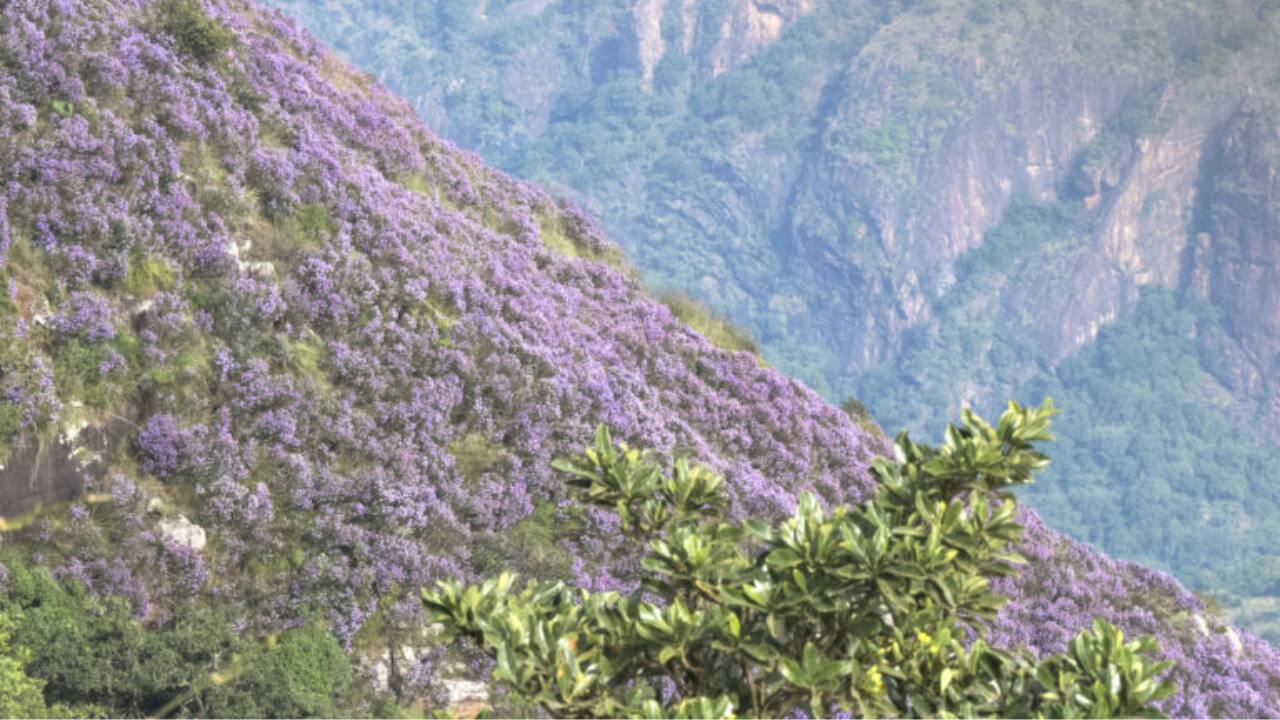 The neelakurinji bloom happens every 12 years. After mass flowering, all individuals in the parental generation, die. Photo by Palmathi Vinoth.
While periodic flowering may seem similar to the flowering patterns seen in annual flowers, a 2018 study discusses the subtle differences between these two phenomena. Annual species bloom synchronously in the same season each year, and flowering may vary based on seasonal changes or individual size. However, periodical plants have fixed flowering periods from the time of germination. Seasonal changes and individual size do not impact the flowering cycle in these species, nor do transplantation or cutting of individual plants. Periodicity of more than two years is a key trait of periodical plants and is thought to be a key event in the evolutionary history of such species. Other defining traits of periodical plants are more than two years of fixed intervals between flowering events (periodicity), all individuals within a given population flower together (mass flowering), and one flowering event per lifetime (monocarpy).
The case of bambooMass flowering is also seen in species of bamboo in Northeast India and South India. Most bamboo plants flower only once in their life cycle. The flowering period for different species of bamboo varies; for some, it is as often as every three years, while in other species, the interval is 150 years. But there is something strange about this – all members of a species, regardless of geographical location, will flower simultaneously. This means that bamboo forests hundreds of kilometers apart suddenly burst into flower simultaneously, something scientists are still trying to understand. A 2002 research study proposed that cyclical temperature fluctuations, likely governed by climate cycles such as El Nino, coordinate masting events across populations. However, other researchers believe that this mass flowering is genetic, like a ticking time bomb, where a silent countdown seems to trigger this mass flowering phenomenon that culminates in the bamboo stands dying all at once, following the principle of monocarpy.
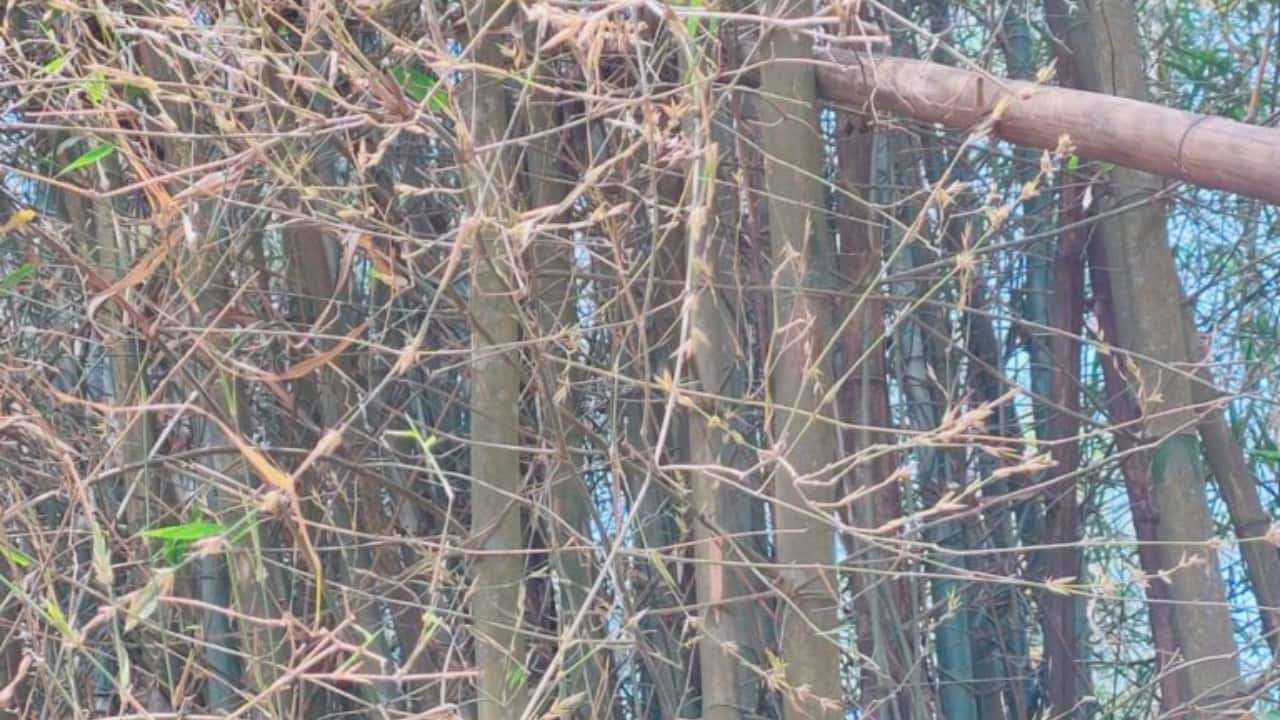 Most bamboo plants flower only once in their life cycle. The flowering period for different species of bamboo varies; for some, it is as often as every three years, while in other species, the interval is 150 years. Photo by Shagufta Ahmed.Culture and tourism interlinked with mass flowering
Bamboo flowering is seen as a bad omen in different parts of Northeast India. It is believed to lead to famines and poverty, perhaps because certain years of bamboo flowering correlated with a spike in the rodent population that devastated crops. However, bamboo plays a major role in the culture of many Northeast states, like the bamboo dance of Mizoram. In Kerala, where Ochlandra bamboo species are found, bamboo culms (stems) are used in cottage industries for making reed mats, baskets, flutes, pens, fish traps, and even arrows. It is an important part of the paper and pulp industry as well.
Similarly, the neelakurinji is shrouded in lore and steeped in the culture of its landscape. In Palani, a town in Dindigul, Tamil Nadu local communities celebrate the Kurinji Festival at Murugan Ghat. Indigenous tribes use the flowering of the neelakurinji as a calendar, recalling birthdays, marriages, and other important events by the time since the last mass flowering event. The mass flowering of the neelakurinji is also a huge draw for Kerala tourism, with thousands of tourists flocking to Eravikulam National Park to witness the blue flowers carpeting the hills. According to the Kerala Forest Department, nearly eight lakh tourists visited Eravikulam in 2018, leading to stringent measures to protect the delicate ecosystem from degradation.
The Kurinjimala Sanctuary was declared in 2006 as a means to protect the most vital habitat of the neelakurinji. However, with the rise of tourism and agricultural activity on the outskirts of the sanctuary, it faces pressure from small farms, plantations, resorts, and hotels. Currently, 32 hectares are ordained as part of the sanctuary, which is also home to rare wildlife such as the Nilgiri tahr, Asian elephant, gaur and spotted deer. In the rush to protect a rare flower and its unique flowering pattern, the government’s plans are also helping protect the delicate biodiversity of the Western Ghats.
Discover the latest Business News, Sensex, and Nifty updates. Obtain Personal Finance insights, tax queries, and expert opinions on Moneycontrol or download the Moneycontrol App to stay updated!
Find the best of Al News in one place, specially curated for you every weekend.
Stay on top of the latest tech trends and biggest startup news.