Moneycontrol PRO
HomeNewsIndiaCoronavirus lockdown: How Maharashtra's Wardha has managed to remain in green zone, despite being surrounded by affected districts

Coronavirus lockdown: How Maharashtra's Wardha has managed to remain in green zone, despite being surrounded by affected districts

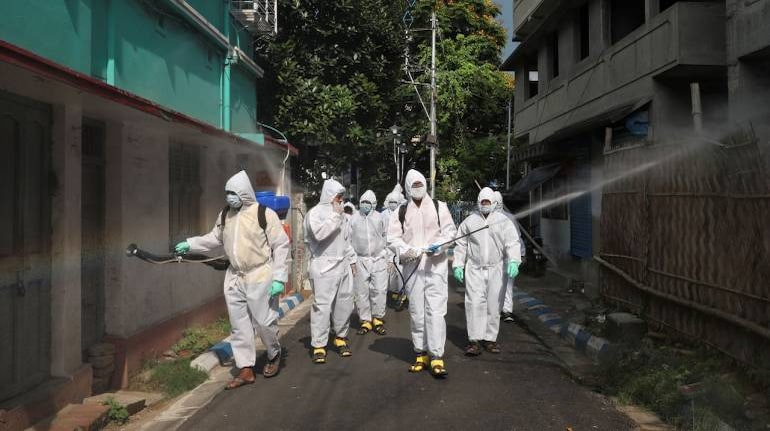
In mid-March, the administration shifted 54 major crowding vegetable markets to large open places in order to prevent crowding

May 04, 2020 / 18:25 IST

Even as Maharashtra has reported the most number of coronavirus cases in the country, one of its districts, Wardha, has managed to remain free from the virus despite being surrounded by districts with high number of COVID-19 cases.

According to the district's collector Vivek Bhimanwar, who spoke to The Indian Express, this was because of the initiatives taken by the administration, including strict vigil at four goods unloading points in the region and deployment of youth squads in over 65 villages.

"We are surrounded by three highlyaffected districts — Nagpur, Yavatmal and Amravati. So, we needed to be extra cautious," Bhimanwar said.

Follow our LIVE Updates here.

"We started off our campaign as early as February when we quarantined 13 girls from Beijing, who had joined the Mahatma Gandhi Antarrashtriya Hindi Vishwavidyalaya. At that time, there was no talk of lockdown in the country," the official said.

COVID-19 Vaccine

Frequently Asked Questions

View more
How does a vaccine work?

A vaccine works by mimicking a natural infection. A vaccine not only induces immune response to protect people from any future COVID-19 infection, but also helps quickly build herd immunity to put an end to the pandemic. Herd immunity occurs when a sufficient percentage of a population becomes immune to a disease, making the spread of disease from person to person unlikely. The good news is that SARS-CoV-2 virus has been fairly stable, which increases the viability of a vaccine.

How many types of vaccines are there?

There are broadly four types of vaccine — one, a vaccine based on the whole virus (this could be either inactivated, or an attenuated [weakened] virus vaccine); two, a non-replicating viral vector vaccine that uses a benign virus as vector that carries the antigen of SARS-CoV; three, nucleic-acid vaccines that have genetic material like DNA and RNA of antigens like spike protein given to a person, helping human cells decode genetic material and produce the vaccine; and four, protein subunit vaccine wherein the recombinant proteins of SARS-COV-2 along with an adjuvant (booster) is given as a vaccine.

What does it take to develop a vaccine of this kind?

Vaccine development is a long, complex process. Unlike drugs that are given to people with a diseased, vaccines are given to healthy people and also vulnerable sections such as children, pregnant women and the elderly. So rigorous tests are compulsory. History says that the fastest time it took to develop a vaccine is five years, but it usually takes double or sometimes triple that time.

View more
Show

Bhimanwar added that in mid-March, the administration shifted 54 major crowding vegetable markets to large open places in order to prevent crowding. They also stopped the entry of vegetables from outside the district.

A major challenge was to ensure that entry into the district was sealed.

"We knew it would be impossible to deploy police at all the points. So, we roped in staff from other departments to form vigilance squads along with 65 squads of local youths led by sarpanchs of villages near the entry points of the district," Bhimanwar said, adding, however, that the most effective method was to establish four good unloading points at district borders.

"We allowed transport vehicles carrying essential goods only by four routes and created unloading points at the entry points of district," the collector said, adding that drivers and cleaners of such vehicles were shifted to a separate facility and were not allowed to enter the cities.

Also Read | India's response well-organised, but will have to prepare for surge after lockdown: WHO official

"The vehicles are also disinfected and goods are unloaded by local labourers and carried to markets in separate vehicles," Bhimanwar said.

"We have put 114 foreign travellers and 19,600 outside travelers under home quarantine. A total of 300 samples were sent for testing, of which, 291 have reported negative and nine reports are awaited," the official added.

Click here to get all the news on the coronavirus pandemic

Moneycontrol News
first published: May 4, 2020 06:25 pm

Discover the latest Business News, Sensex, and Nifty updates. Obtain Personal Finance insights, tax queries, and expert opinions on Moneycontrol or download the Moneycontrol App to stay updated!

Subscribe to Tech Newsletters

  • On Saturdays

    Find the best of Al News in one place, specially curated for you every weekend.

  • Daily-Weekdays

    Stay on top of the latest tech trends and biggest startup news.

Advisory Alert: It has come to our attention that certain individuals are representing themselves as affiliates of Moneycontrol and soliciting funds on the false promise of assured returns on their investments. We wish to reiterate that Moneycontrol does not solicit funds from investors and neither does it promise any assured returns. In case you are approached by anyone making such claims, please write to us at grievanceofficer@nw18.com or call on 02268882347