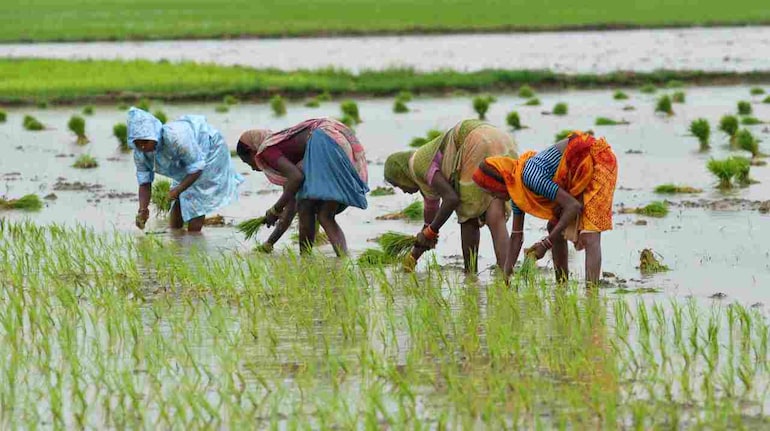

India’s hardened position in the face of US tariff threats has once again put agriculture at the heart of national policy. It was over farming that Prime Minister Narendra Modi chose to strike a defiant note last year. “India will never compromise on the well-being of its farmers, dairy and fishermen,” he said in Delhi on August 7, a day after Washington announced higher tariffs.
Now, as Nirmala Sitharaman prepares to present Union Budget 2026-27, farmers and agri-industry watchers are scanning for signs of whether the government will merely tweak existing schemes or attempt a deeper reset of farm policy.
Why this budget matters more than usual
India’s population is projected to touch 1.6 billion by 2050, raising the stakes for food and nutrition security. At the same time, agriculture’s growth engine has slowed. The sector’s share in GDP is about 17%, but the First Advance Estimates of the Central Statistics Office show agricultural and allied activities growing only 3.1% in real terms this year, down from 4.6% in 2024–25.
At current prices, the picture is starker: agricultural GVA growth is projected at just 0.8%, compared with 10.4% last year. For a sector that supports nearly half the workforce, this divergence is a warning sign.
Bigger outlay, but also better targeting
In the last budget, allocation for agriculture and allied sectors stood at Rs 1.52 lakh crore in FY25 and Rs 1.37 lakh crore in FY26, while effective spending, including MSP and input subsidies, crossed Rs 3.91 lakh crore.
Reported in The Economic Times, PwC India expects a 'northward movement' in outlay in Budget 2026, with higher allocations potentially providing a catalytic push to exports, research and development, self-sufficiency, and technology-led farming.
Shashi Kant Singh of PwC has been quoted to argue that meeting future needs requires a 4P approach: Produce more per unit area through R&D, process more per unit of output via value addition and infrastructure, price optimally using efficient supply chains, and protect resources through resilient, sustainable actions.
Plugging losses after harvest
Despite strong grain production, India still loses 15-20% of fruits and vegetables because of inadequate storage and logistics, according to EY. “The PDS continues to grapple with leakages, infrastructure gaps, and wastage, which are major challenges to farm productivity,” said Amit Bajaj, Partner, Agriculture Sector, EY India.
He said Budget 2026 should speed up investment in cold chains, modern warehouses, processing units, and digital supply-chain systems, while also expanding the Price Stabilization Fund and strengthening affordable staples such as dal, atta, and rice.
Self-reliance in oils and pulses
Food security initiatives already underway include the National Mission on Edible Oils–Oilseeds, with an outlay of Rs 10,103 crore till 2030-31, targeting an increase in oilseed output from 39 million tonnes to nearly 70 million tonnes and bringing 40 lakh hectares of rice-fallow land under oilseeds.
A six-year pulses mission, backed by Rs 1,000 crore, aims self-sufficiency in select pulses by 2027 through distribution of 126 lakh quintals of certified seeds and 88 lakh free seed kits.
India still imports around 60% of its edible oil requirement, making domestic capacity building “essential to enable long-term food security,” Bajaj said.
What farmers expect on the ground
Direct income support under PM-Kisan could see higher allocation and smoother payments. With weather shocks increasing, farmers also want faster claim settlement and wider coverage under Pradhan Mantri Fasal Bima Yojana.
More funds for Pradhan Mantri Krishi Sinchai Yojana are expected to expand drip and sprinkler irrigation, improve canals, and build water storage. Agriculture credit is another focus area after the Rs 32.50 lakh crore credit target in 2025–26.
Crackdown on fake inputs
Union Agriculture Minister Shivraj Singh Chouhan has signalled tough action. “Fake fertilisers and fake seeds are a major problem for farmers. We are trying to bring the Seed Act in Parliament during the current session. Those supplying substandard seeds to farmers will not be spared. Heavy fines will be imposed and, if done deliberately, there will also be provisions for punishment,” he said in Raipur, a day ahead of the Union budget.
He added, “Many times farmers invest their money in poor-quality pesticides that fail to work. Such practices will not be allowed under any circumstances.”
Climate-resilient farming on the agenda
Experts warn that without climate-smart agriculture, average production losses of 15–20% could occur across crops over the next 15 years. Expectations from Budget 2026 include scaling up the National Innovations on Climate Resilient Agriculture scheme nationwide, promoting agroforestry and organic farming, equipping Krishi Vigyan Kendras to handle climate challenges, and increasing Kisan Credit Card limits.
The bigger picture
India’s agriculture and food exports already total USD 50-55 billion annually. With better infrastructure, predictable trade policy, and stronger value addition, that figure could rise substantially.
Budget 2026 will show whether the government continues to plough familiar furrows or charts a new course -- one that protects farmers at home while positioning Indian agriculture as a reliable supplier to the world.
Budget 2020 live updates: Nirmala Sitharaman makes history, set to present ninth straight Budget today - All eyes on Part B mystery

Discover the latest Business News, Sensex, and Nifty updates. Obtain Personal Finance insights, tax queries, and expert opinions on Moneycontrol or download the Moneycontrol App to stay updated!
Find the best of Al News in one place, specially curated for you every weekend.
Stay on top of the latest tech trends and biggest startup news.