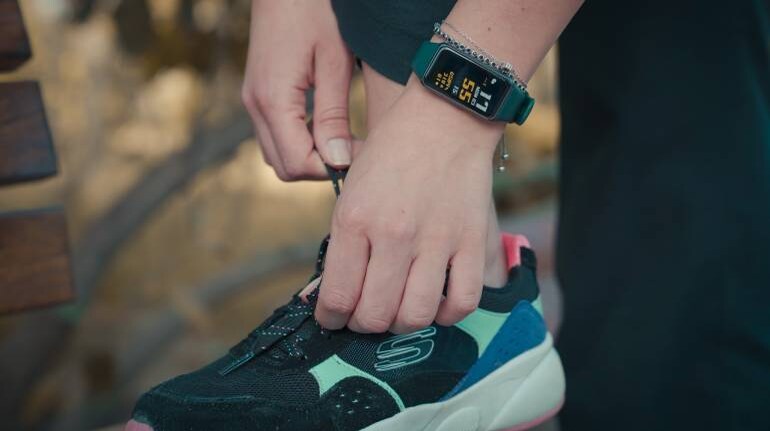
As any early-stage entrepreneur should be, Curefoods founder Ankit Nagori, 36, is busy. Despite that he makes sure he racks up something in the region of 15,000 steps per day. That he doesn’t like sitting still in one place helps. Even when attending Zoom meetings or interviews from home or office, he is constantly moving, walking from one room to another.
You get the idea, it’s all walk and talk for Nagori, who also loves playing badminton and hits the gym apart from meeting his step count goals almost every single day. While Nagori averages a much higher step count than most people who religiously count their steps, the globally popular, and accepted, goal is 10,000 steps per day. The world largely believes 10,000 steps a day keeps the doctor away and is the magic number for a fit and healthy life. But is it really?
“These days we love numbers and our smartphones and smartwatches all track or generate such numbers for us readily and easily,” says Gagan Arora, Delhi-based celebrity coach and founder of Kosmic Fitness. “Everyone believes moving around to meet the goal of 10,000 steps a day is good for their health. Whether this is true or not, this step count thing has got people talking a lot more about health and fitness and that in itself is a good thing.”
Well, there is no medical basis for suggesting 10,000 steps works miracles for your health or fitness. As with most modern myths, the source of this number is in marketing and not in medical or health studies or journals as it ought to be. A team of Harvard Medical School researchers who tried to investigate the truth and origins of the 10,000 steps goal found that the number was invented in Japan in 1965 as a marketing gimmick to sell pedometers. The Yamasa Clock and Instrument Company launched in 1965 a pedometer called Manpo-kei, which translates to “10 000 steps meter” in Japanese and that’s probably where today’s magic number comes from, the researchers wrote in the 2019 study published in the Journal of American Medical Association. They also studied smartphone data recorded by an accelerometer, which measures the number of steps taken, and found that the worldwide average number of steps accrued daily is approximately 5,000.
What science saysSo, is 10,000 steps a day the key to a better life?
The simple answer is no. The Harvard Medical School team found that women who averaged approximately 4,400 steps a day had significantly lower mortality rates compared with the least active women who took approximately 2,700 steps per day. Mortality rates progressively decreased before levelling at approximately 7,500 steps a day.
A broader meta analysis conducted earlier this year and published in the Lancet journal this March found that “although 10,000 steps per day is widely promoted to have health benefits, there is little evidence to support this recommendation.” The authors of the study specifically set out to determine the association between number of steps per day and stepping rate with all-cause mortality. They analyzed data of more than 47,000 adults who were followed over the course of seven years, and concluded that there is no one universal number of steps for all mankind to gain health benefits. “The optimal number of steps needed to reduce the risk of mortality might be affected by characteristics such as age or sex. Walking volume and pace decrease with age and might differ by sex; hence, the distribution of steps differs in younger and older adults and by sex,” they wrote. The conclusion of this broad spectrum exhaustive study was that “mortality benefits, particularly for older adults, can occur at levels less than the popular reference value of 10,000 steps per day.”
Stepping into fitnessApart from the myth of the number of steps, the other misplaced belief is that just meeting your daily step goal would make you fit. Nothing could be farther from the truth. “It (step goal) has nothing to do with fitness and everything to do with selling a product,” says Kaustav Baruah, a Bengaluru-based CrossFit coach.
While as pointed out in the Lancet article, the number of daily steps is a simple and feasible measure for monitoring and promoting physical activity globally as fitness trackers and mobile devices increase in popularity, fitness experts and coaches say the step count is just a stepping stone to adopting a more active lifestyle that includes regular exercise and fitness routine.
A high daily step count is just the baseline for daily health, explains Arora. “This has to be complemented with a workout of 30-60 minutes at least thrice a week,” says Arora, adding, “our jobs tend to throw us into a sedentary pattern of sitting in one place for long hours. You should not do that, and that’s where the move alerts on your smartwatch and phone help. You need to have some movement almost every waking hour. The daily step goal gives people something to get out of their chair for and start thinking about fitness and a better lifestyle.”
Baruah adds that how you rack up your daily steps, their quality and intensity also matter. “When you run a quick-paced 5km or play a game of basketball or football for 30 minutes, that effort is a lot more beneficial for your fitness compared to someone who goes on a leisurely 30-minute stroll, which is better than someone who gets a bulk of their steps by tapping their feet while working on their desks. Yes, people do that to get their daily step goals,” says Baruah.
However, if you are one of those who exercises, plays a sport or does intense workouts like bootcamps and CrossFit, you don’t really need to keep track of your step count. Your body and mood will let you know that you are doing well.
Discover the latest Business News, Sensex, and Nifty updates. Obtain Personal Finance insights, tax queries, and expert opinions on Moneycontrol or download the Moneycontrol App to stay updated!
Find the best of Al News in one place, specially curated for you every weekend.
Stay on top of the latest tech trends and biggest startup news.