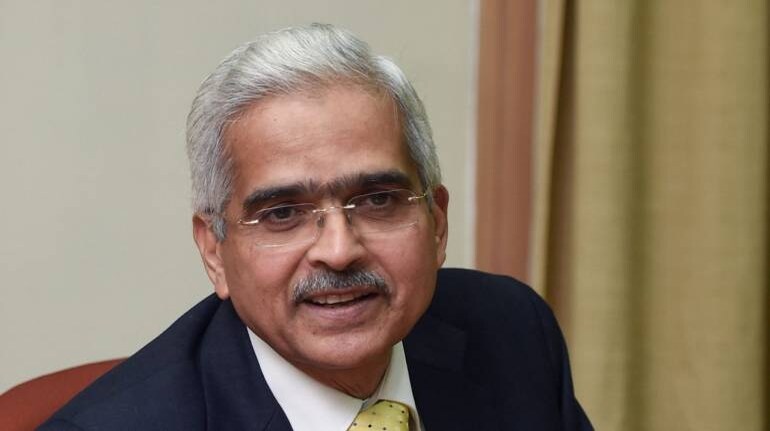
RBI Governor Shaktikanta Das said that the central bank would undertake orderly unwinding of counter cyclical regulatory measures after COVID-19 is contained.
Speaking at the 7th SBI Banking & Economics Conclave Governor Das also assured that there are several signs of the economy looking up.
“The RBI strives to maintain financial stability. Monetary, fiscal, regulatory response are enablers to growth. We are still uncertain when supply chain will be restored fully. But, the Indian economy has started showing signs of getting back to normalcy,” he said.
There is a great opportunity for Indian companies to become part of the global value chain, Reserve Bank of India (RBI) Governor Shaktikanta Das said on July 11.
“There are emerging opportunities world over and Indian industries respond better during crisis. Emphasis should be in correcting and undertaking land, labour, ease of biz and other reforms,” the Governor said.
Speaking to State Bank of India (SBI) Chairman Rajnish Kumar, Das further said that quality issue is one area of focus “if we want to be part of the global value chain.”
“Emphasis will have to be on product quality, there is potential. Financial markets must not treat unconventional measures as new normal. Banks must not be overly dependent on relief measures from RBI for their recovery,” he added.
On the issues faced by non-banking finance companies (NBFCs), the Governor said that the RBI is taking “more actions” against NBFCs. “This is very important. Going forward, RBI proposes to extend good governance measures to large sized NBFCs as well,” he stated.
Das was also confident that confident financial stability will be maintained, adding: “Our risk compliance and governance culture must be strengthened. The RBI has released a paper on the same. Assessment of biz model, assurance and governance functions are going to be the focus areas going forward. The higher emphasis is now on identifying vulnerabilities. Based on our close interaction with financial system, we are confident financial stability will be maintained.”
Stating that the global financial crisis and the COVID-19 pandemic have dispelled the notion that tail risks to financial system will arise only once in a while, Das said that only meeting minimum capital requirement while necessary, is not a sufficient step.
“Banks have to improve governance, sharpen risk management and raise capital on an anticipatory basis. Key takeaway is how banks and financial institutions (FIs) respond to this challenge,” he noted.
“The rising stress is obvious and possibilities of increasing vulnerability and rising non-performing assets (NPAs) is a given naturally. Thus, recapitalisation of public sector banks (PSBs) has become absolutely necessary,” he said.
Adding: “It is important that banks and FIs are even more watchful of emerging vulnerabilities. Each bank is expected to undertake a COVID-19 stress test for FY21 and FY22, identify vulnerabilities and raise capital in time. Building capital buffers is very important at this time.”
While the Governor noted that the medium-term outlook is uncertain, he added that off-site assessment is forward looking and aimed at identifying vulnerable sectors and entities.
“We wrote to all banks, FIs are to prepare business continuity plans as early as March 16 for COVID-19. All entities were advised to assess impact of the virus on their balance sheet, asset quality and capital position,” he said.
RBI has also tweaked its priority lending norms for urban cooperative banks (UCBs) to ensure they lend more to sectors for which they were intended to lend to, Das said, adding that “special efforts” are being made towards identifying early risks for UCBs.
“RBI has taken a number of measures to strengthen co-operative banking system. Yes Bank is one such example where RBI proactively acted. The reconstruction scheme was implemented quickly to safeguard depositors Interest and financial stability. Specialised handling of weak institutions helps us determine risks in a timely manner,” he added.
“A calibrated approach has been designed by the RBI to ensure better focus on risky institutions and practices,” Das said, adding that the central bank has reorganised its supervisory functions to effectively addressing potential systemic risks and mitigate vulnerability of FIs.
“Equal priority has to be given to financial stability by RBI and growth is one of the topmost priority. We have been constantly monitoring Top 50 NBFCs very closely and constantly engaged with NBFCs which saw marginal deterioration in asset quality and capital position in FY20; which has helped the sector,” he added.
He pointed that the government has infused Rs 3.08 lakh crore of capital into public sector banks and that overall stressed assets have declined and capital position of banks has improved over last few years.
Das also outlined the liquidity measures announced by RBI since February which amount to Rs 9.57 lakh crore or 4.7 percent of FY20 nominal GDP; use of conventional and unconventional methods to restore market confidence and unfreeze credit markets; and the RBI’s monetary policy committee (MPC) rate cut of 115 bps since the COVID-19 outbreak.
“Given uncertainty regarding evolution of COVID-19 curve, it was important to take certain monetary steps. We have kept liquidity in ample surplus. RBI had cut repo rates by 135 bps till onset of COVID-19 and was already in accommodative stance,” he said.
The Governor acknowledged that while looking after growth, financial stability of the country is ultimately the RBI’s responsibility.
“While the eventual outcome of our efforts will be known only after sometime, they appear to have worked so far. RBI has taken a number of important historic measures to support the economy. The pandemic represents the biggest test of the resilience of our financial system and has dented the existing world order. However, banks and other financial entities are today at the forefront,” he ended.
Discover the latest Business News, Sensex, and Nifty updates. Obtain Personal Finance insights, tax queries, and expert opinions on Moneycontrol or download the Moneycontrol App to stay updated!
Find the best of Al News in one place, specially curated for you every weekend.
Stay on top of the latest tech trends and biggest startup news.