
A recent study by the Securities and Exchange Board of India (SEBI) revealed that the share of young traders (under the age of 30 years) in the F&O or futures and options segment rose from 31 percent in FY23 to 43 percent in FY24. A similar rise is seen in the share of B30 (Beyond Top 30) cities in the F&O segment, where the share has increased from 62 percent to 72 percent. There is a very high probability of a similar trend in direct stock investing and mutual funds as well.
Most of these new and first-time investors could be overly influenced by the upward sloping price charts with above-average returns in recent years. While the long-term patterns could recur, it is worthwhile to keep a tab on the downside risk management for durable long-term returns.
The following chart shows the drawdown of the NSE Nifty 50 TRI (Total Return Index). Drawdown indicates the quantum of an index's fall from its previous peak. For instance, If the Nifty falls from a high of 100 to 75, the drawdown is -25 percent [(75 - 100)/100].
Also see: When should you sell your mutual funds?
While it is good to focus on the long term, investors need to follow processes to minimise the impact of potential drawdowns.
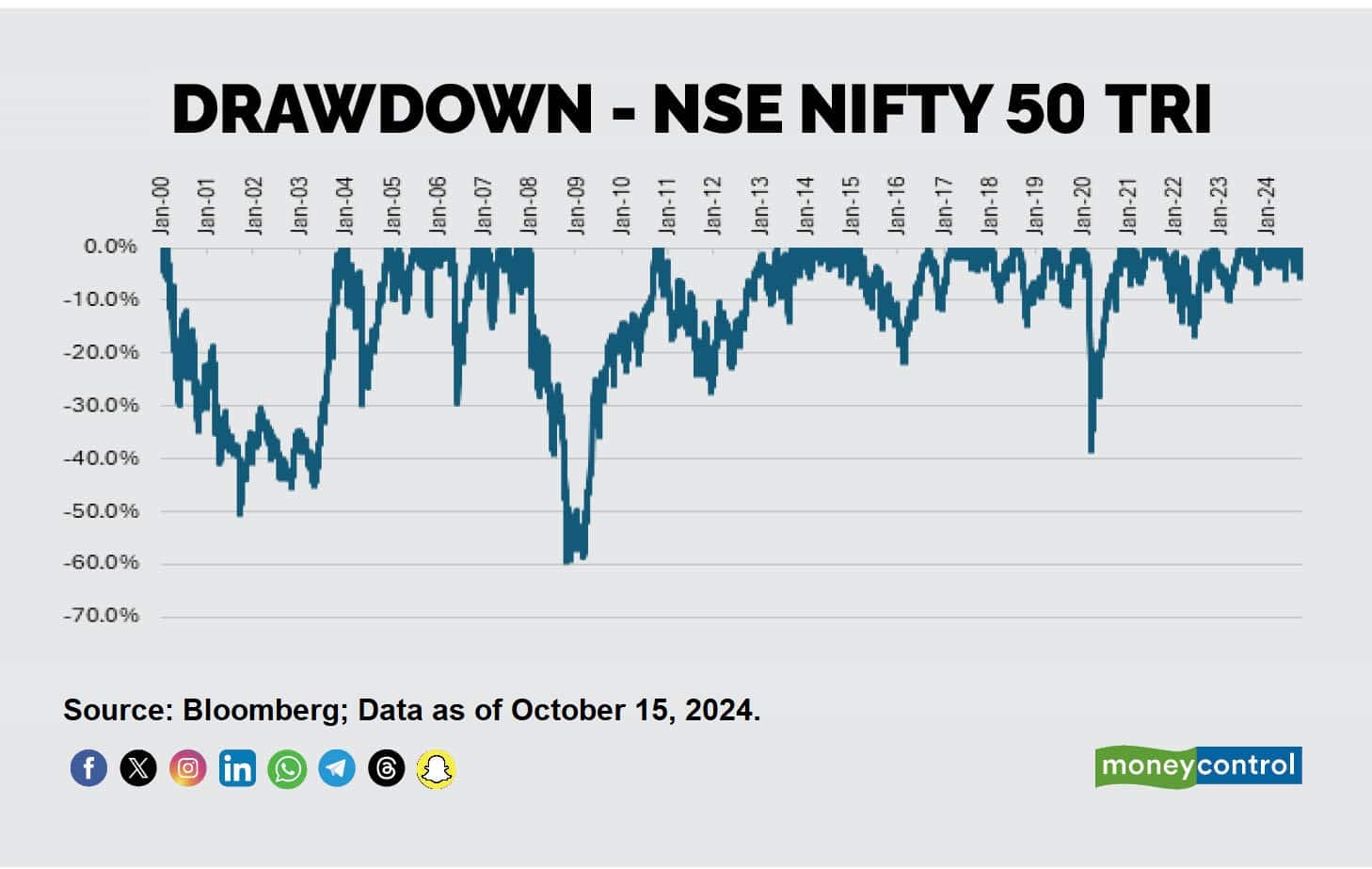
As is evident from the graph, in the 2020s, barring the short span of correction around the covid years, we haven’t seen a material drawdown for many years. The absence of a negative return period during a new investor’s investment career could make one believe a material correction is a low-probability event. While it is difficult to predict the market's trajectory, one needs to be mindful of warning signs to protect your holdings from a sharp correction. There are two prominent warning signs that could help investors gauge the drawdown risk.
Too good to be true storiesThe 2007 annual report of a prominent infrastructure company has the following excerpt: “Sustaining economical growth, reforming the agricultural sector, improving education and healthcare, opening the economy to the benefits of globalisation and emerging as a true world power are but utopian dreams in the absence of adequate infrastructure development. Fortunately India has, since recent years, aptly recognized the importance of the same. Something that has resulted in a remarkable growth story… Another noteworthy development in the recent years has been the expansion of the role of the private sector to achieve infrastructure development in both rural and urban areas.”
See here: Stockology: No need to rush in or panic exit markets
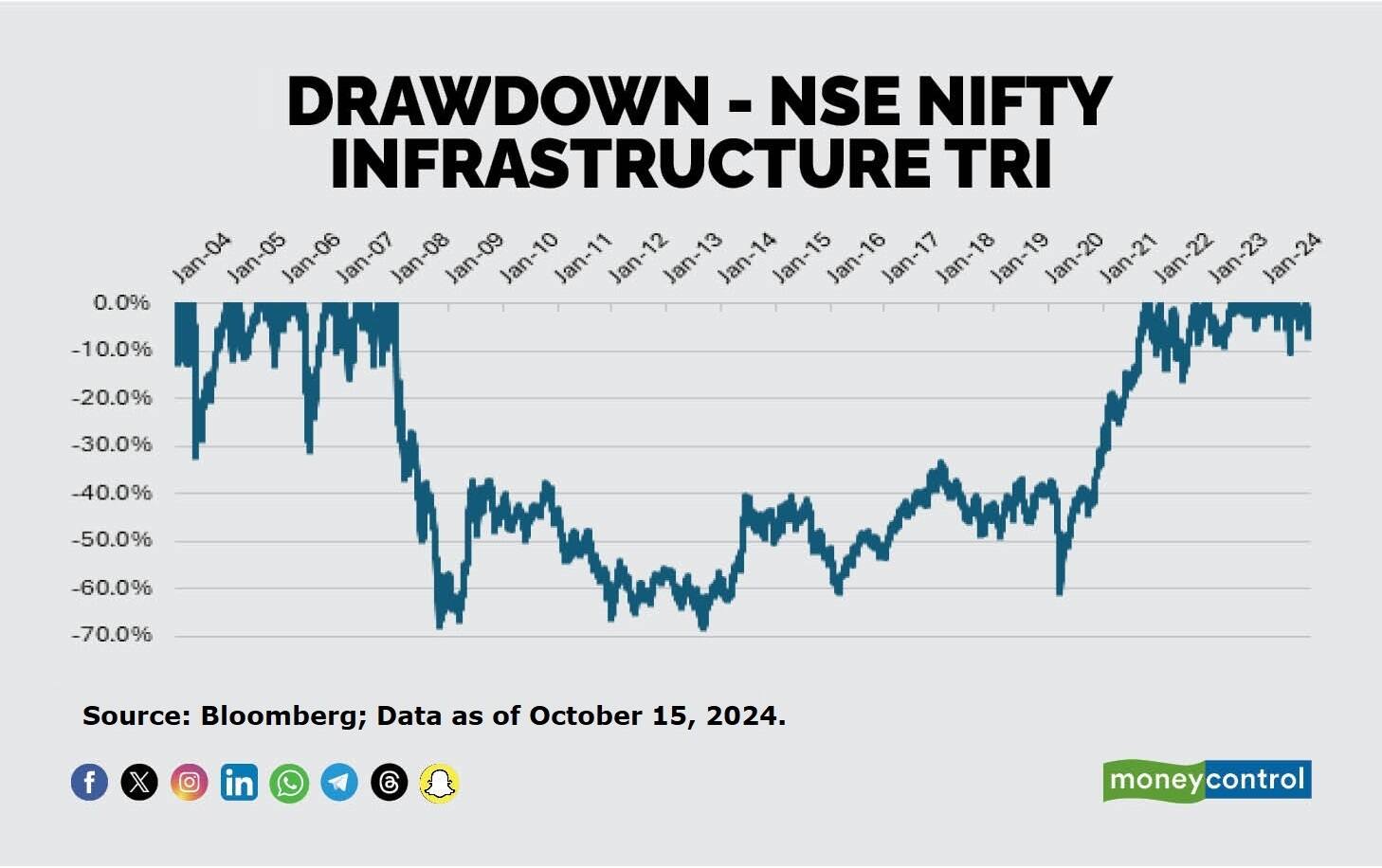
The stock was a multi-bagger when this was put out, but just a year later, it was a different story altogether, showing that for this company, its plight was no different from the sectoral performance. As shown in the graph below, drawdowns witnessed by the sector took more than a decade to nullify. The story jibes with many others in recent times. Certain names are trading at triple-digit PE or price to earnings multiples, building in a lot of optimism. It is always advisable to see if the story has credence.
In the example above, high hopes built on the sector's growth was eventually proven wrong, leading to negative returns for a prolonged period.
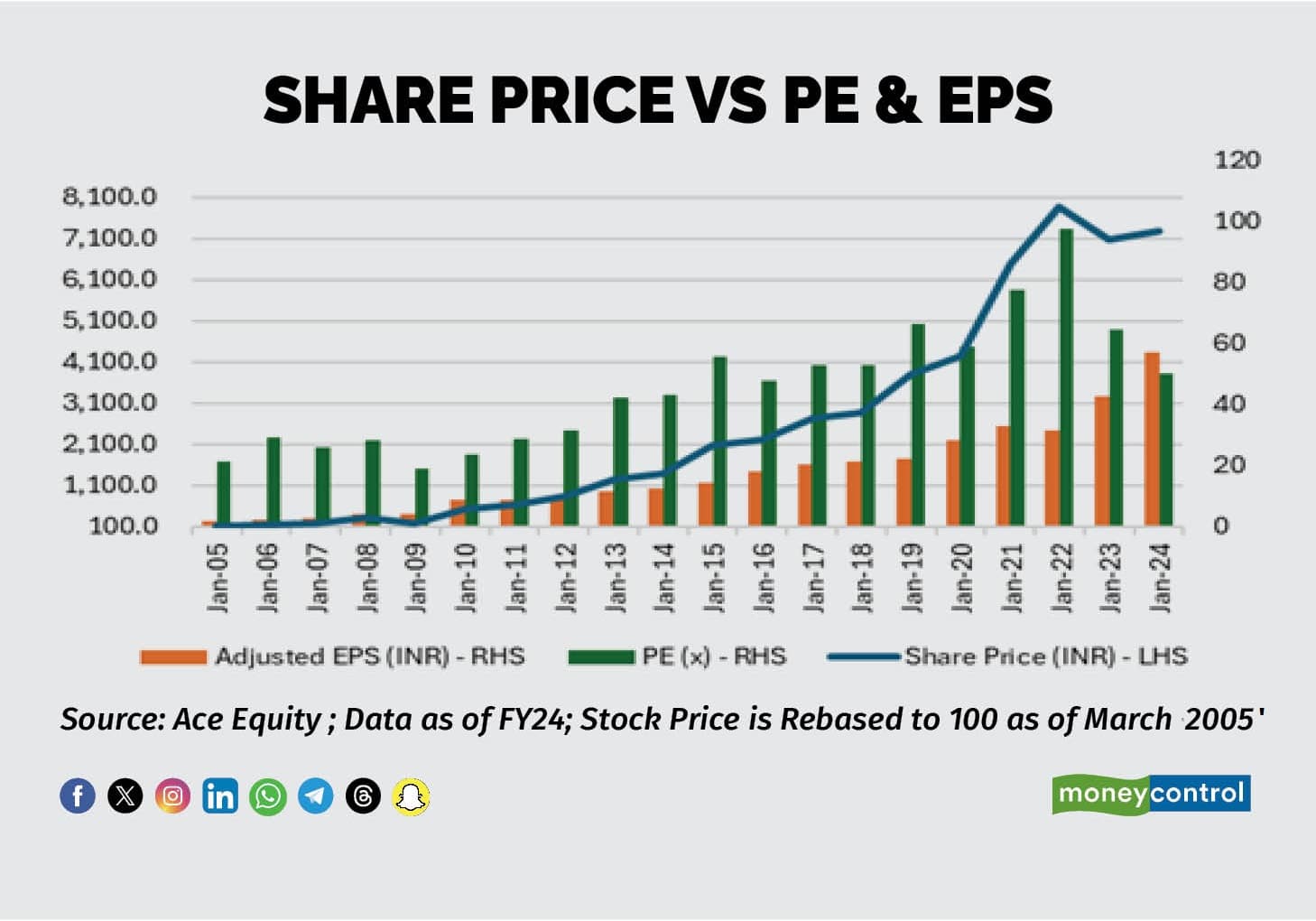
When the price of a company's share appreciates far ahead of what its earnings warrant, it would lead to an expansion in valuation metrics like the PE multiple. Once this happens, a material price correction is inevitable. While it may not always be always feasible to pinpoint the reason for a correction in valuation multiples, every enterprise would face enough challenges in its life cycle, leading to a reality check. The following graph shows the stock price performance of a leading paint company that was believed to have unrivalled moats. However, despite what was believed to be a ring-fenced market share, the entry of a new rival with deep pockets led to muted stock price performance despite reasonable earnings growth. In today’s market, there are many names trading near peak valuations built on the hopes of a flawless future.
Clearly, unreasonable valuation multiples could make the stock vulnerable to even a slight disappointment in earnings or news flow.
Identifying exit points are as critical as finding new ideas. Every investor should have a robust process to trigger the exit from an investment. This could be based on valuations or simple heuristics to identify the market expectations from the stock. At Quantum, we follow strict Sell limits based on our fair value estimate of the stock. As the stock crosses Sell limits, we start trimming our position. A disciplined process would go a long way in managing downside risk, especially in volatile markets. While it is important to remain invested for the long run, it is equally important to see if you are invested in the right companies that have room for long-term stock price appreciation.
See here: Top mid-cap stocks that fund houses sold ahead of volatility

Discover the latest Business News, Sensex, and Nifty updates. Obtain Personal Finance insights, tax queries, and expert opinions on Moneycontrol or download the Moneycontrol App to stay updated!
Find the best of Al News in one place, specially curated for you every weekend.
Stay on top of the latest tech trends and biggest startup news.