






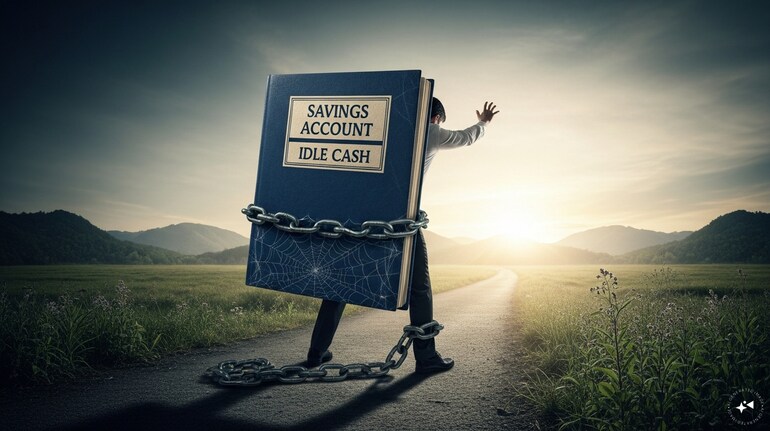

Most of us treat a savings account like a default parking spot. Salary comes in, money piles up, and it just stays there. It feels sensible. Safe. Responsible.
But over time, that habit can quietly work against you.
The problem isn’t that savings accounts are bad. The problem is that we use them for everything, even when they’re not meant for that.
The illusion of safety
A savings account gives certainty. You can see the money. You can pull it out anytime. Nothing moves up or down.
But while the balance looks steady, the value isn’t. Prices keep rising. Groceries, school fees, insurance, rent. After tax, most savings accounts barely keep up, if at all. So money that sits there for years slowly buys less, even though the number hasn’t changed.
It doesn’t feel like a loss, which is why it’s easy to ignore. But it is one.
How much cash actually needs to sit there
You do need some money sitting safely and accessibly. No debate there.
For most people, that’s about three to six months of essential expenses. Rent or EMI, groceries, utilities, school fees. This is your cushion for things going wrong. Job gaps. Medical surprises. Sudden repairs.
Beyond that, a lot of what sits in savings accounts isn’t emergency money. It’s money without a plan.
If you might need it soon
For money you could need in the next few weeks or months, you still don’t need to accept near-zero returns.
Liquid funds and money market funds exist for exactly this space. They’re not exciting. They don’t promise miracles. But they usually do better than savings accounts and still let you access your money quickly.
They suit people who want their cash close, but not completely idle.
Money meant for near-term plans
If you’re saving for something specific in the next year or two, a holiday, a car down payment, a planned expense, leaving that money untouched in a savings account often isn’t ideal.
Short-term debt options or even staggered fixed deposits tend to work better. The goal here isn’t to grow fast. It’s to not lose quietly.
Matching money to timelines matters more than chasing returns.
When “temporary” becomes permanent
This is where most damage happens. Money meant to be temporary just… stays. Years pass. Inflation does its work.
If money has no clear use in the next few years, keeping it all in a savings account is usually a sign of avoidance, not prudence. It often means no decision was made.
That’s when gradual movement helps. You don’t have to shift everything at once. You don’t have to take big risks. Even slow, systematic transfers into better-aligned options make a difference over time.
The bigger risk we rarely talk about
People worry a lot about markets going down. They worry much less about money standing still.
But over long periods, doing nothing often costs more than making cautious, imperfect decisions. Inflation doesn’t announce itself. It just keeps nibbling away.
A savings account is useful. It just has a limited role. Once that role is filled, leaving the rest of your money there is less about safety and more about habit.
And habits, especially expensive ones, deserve to be questioned.
Discover the latest Business News, Sensex, and Nifty updates. Obtain Personal Finance insights, tax queries, and expert opinions on Moneycontrol or download the Moneycontrol App to stay updated!
Find the best of Al News in one place, specially curated for you every weekend.
Stay on top of the latest tech trends and biggest startup news.





