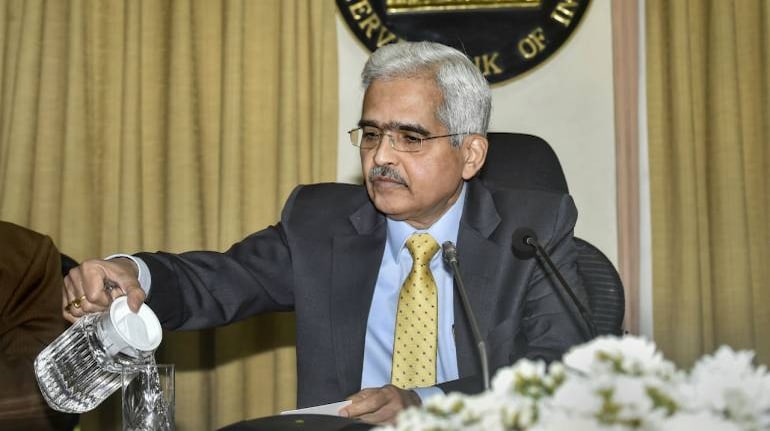
The minutes of Reserve Bank of India's (RBI) Monetary Policy Committee (MPC) meeting of October 7-9 shows the rate setting panel is more worried about the nosediving economic growth, rather than high inflation, and will look for room for rate cuts if inflation eases to support growth.
“I recognise that there exists space for future rate cuts if the inflation evolves in line with our expectations. This space needs to be used judiciously to support recovery in growth,” said RBI Governor Shaktikanta Das in the policy minutes.
The MPC kept the repo rate, the key lending rate unchanged, at 4 per cent in the last policy review and continued is “accommodative” monetary policy stance as long as necessary.
India’s economic growth is likely to contract by 9.5 per cent in the current fiscal, the RBI has projected. The International Monetary Fund has projected a deeper contraction at 10.3 per cent in 2020.
There are downside uncertainties that could put sand in the wheels of this nascent recovery, Das said, adding primary among them is the risk of a second wave of COVID-19. Private investment activity is likely to be subdued, even as domestic financial conditions have eased significantly. Also, the external demand is expected to remain anaemic with sharp contraction in global economic activity and trade, the governor said.
According to deputy governor, Micheal Patra, it may take years for the economy to regain the lost output.
“The projections of real GDP growth for 2020-21 that are set out for the first time in the MPC’s resolution provide a sense of the wounds on the soul of the economy inflicted by COVID19. If the NSO’s provisional estimates for Q2 that are expected at the end of November corroborate at least the direction of these forecasts, India has entered a technical recession in the first half of the year for the first time in its history,” Patra said.
GDP is an aggregative indicator of economic activity and hides the extent of human misery and the loss of social and human capital caused by the health crisis, Patra said.
“Nonetheless, if the projections hold, the level of GDP would have fallen approximately 6 per cent below its pre-COVID level by the end of 2020-21 and it may take years to regain this lost output,” Patra said.
Further, there is also an anecdotal sense that the economy’s potential output has fallen, and the post-COVID growth trajectory will look very different from what has been recorded so far. Changes in social behaviour and norms of commercial and workplace engagements may accentuate this structural change, Patra added.
Patra further added that it is critical for monetary policy remain accommodative and “opportunistically exploit” room for rate cuts in the falling growth conditions.
“Under these conditions, it is essential for monetary policy to remain accommodative and opportunistically exploit the headroom that opens up when inflation recedes, as it is projected in the second half of 2020-21,” Patra said.
The MPC has cut repo rate by a cumulative 250 basis points (bps) since February, 2019. One bps is one hundredth of a percentage point.
One of the MPC members, Mridul K. Saggar has highlighted the problem of continuing real interest rates in the economy. “If current real negative interest rates fall further, it may generate significant distortions that could adversely affect aggregate savings, current account and medium-term growth in the economy,” Saggar said.
“With retail fixed deposit rates currently ranging between 4.90-5.50 per cent for tenors of 1-year or more and the headline inflation prevailing above that for some months now, there has been a negative carry for savers,” saggar said.
A note of dissent
Another MPC member Jayant R Varma, has a note of dissent on technical grounds with respect to the choice of words used by the MPC on the forward guidance.
Varma’s dissent pertains to the part of forward guidance which says: “MPC also decided to continue with the accommodative stance as long as necessary – at least during the current financial year and into the next financial year – to revive growth on a durable basis and mitigate the impact of COVID-19 on the economy, while ensuring that inflation remains within the target going forward”.
According to Varma, the date based forward guidance is not a decision but an expectation. In a world that is full of unpleasant surprises, the MPC must of necessity be data driven. “I am firmly of the view that the MPC risks a damage to its credibility when it uses words that do not accurately reflect what it means. I therefore disagree with the choice of the word “decided” when it comes to the date based forward guidance in the MPC resolution,” Varma said.
Secondly, Varma has argued that to have the desired impact, it is desirable that the forward guidance extend beyond the one year horizon at which the steepness of the yield curve sets in. “Forward guidance of six months in the MPC resolution is in my view suboptimal. I would also point out that the weakness of investments in the Indian economy predates the Covid-19 pandemic, and this merits a longer term response that goes beyond six months,” Varma said.
Varma bats for a “sharp” reduction in long-term rates. “I believe that excessively high long term rates are inflicting damage to the economy in two ways,” Varma said. A significant part of the easing of policy rates is not being transmitted to longer term rates that form the benchmark for corporate borrowing and investment decisions, Varma said.
According to Ashima Goyal, another MPC member, the accommodative stance and the benign financial conditions will support growth. The repo rate pause together with inflation guidance given will contribute to anchoring inflation expectations, she said.
The comments from MPC members suggest that MPC will be more lenient towards a growth supportive monetary policy going forward. A rate cut could be a possibility if the inflation eases and growth concerns persist.

Discover the latest Business News, Sensex, and Nifty updates. Obtain Personal Finance insights, tax queries, and expert opinions on Moneycontrol or download the Moneycontrol App to stay updated!
Find the best of Al News in one place, specially curated for you every weekend.
Stay on top of the latest tech trends and biggest startup news.