Dear Reader,
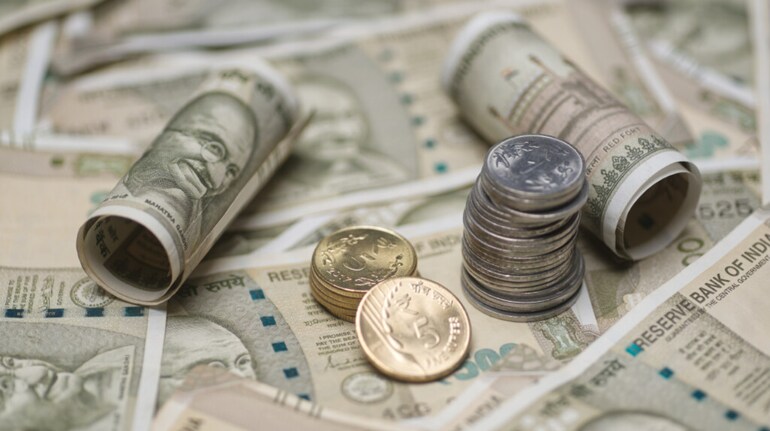
The Indian rupee touching a fresh all-time low of 91.08 against the US dollar marks more than just another uncomfortable milestone on the currency charts. It is a moment that forces a harder look at how India is positioned in a world where money is restless, capital is impatient and the dollar refuses to loosen its grip.
For a while, the slide felt orderly, even predictable. The rupee had been weakening in steps, cushioned by central bank intervention and helped by the comforting belief that India’s macro fundamentals were still solid. Crossing 90 to the dollar shook that confidence slightly. Breaching 91 makes it harder to pretend that this is business as usual.
What is driving the weakness is not a single dramatic trigger, but a slow accumulation of pressure points. Foreign portfolio investors have been pulling money out steadily, responding to tighter global financial conditions and more attractive yields elsewhere. Every outflow creates incremental dollar demand, and over time, that demand overwhelms sporadic inflows. Add to this the uncertainty around India’s trade engagement with the US, and the rupee finds itself short of natural support.
So what changes on the ground?
What makes this phase interesting is the contrast between currency weakness and the broader economic picture. Growth remains comparatively strong. Inflation, while not trivial, is under control. The banking system is far healthier than it was a decade ago. This disconnect suggests that the rupee’s slide is being shaped more by global capital dynamics than by domestic economic stress.
That distinction matters. A currency crisis born out of internal imbalances requires aggressive correction. A currency adjustment driven by global forces requires patience and calibration. The Reserve Bank of India seems to recognise this difference. Rather than defending a specific level, it appears focused on smoothing volatility and preventing disorderly moves. That approach accepts depreciation as a price of stability, not a failure of policy.
Still, a weaker rupee is not without consequences. Imports become more expensive, and for an economy dependent on energy imports, that risk cannot be ignored. Over time, costlier crude can seep into transport, manufacturing and food prices, complicating the inflation outlook. Corporates with unhedged foreign currency borrowings will feel the pressure, even as exporters enjoy a temporary boost in competitiveness.
There is also a psychological element at play. The exchange rate often becomes a shorthand for economic strength in public discourse. A falling rupee, even if driven by external factors, can dent sentiment and invite questions about policy credibility. Governments dislike this problem of optics, but markets rarely care about optics alone. They respond to flows, expectations and relative returns.
Some will argue that a softer rupee could actually help India rebalance its growth model by supporting exports. There is truth in that, but only up to a point. Export competitiveness gained through currency depreciation is fragile and easily reversed if global demand weakens. Structural competitiveness -- through productivity, logistics and market access --matters far more than a cheaper exchange rate.
The bigger takeaway from the rupee’s slide past 91 is India is no longer insulated from global financial moods, if it ever truly was. Capital moves faster, reacts sharper and shows less loyalty. In such a world, exchange rate comfort zones can disappear quickly.
This does not mean alarm bells should ring. India’s foreign exchange reserves remain adequate, and there is no sign of panic in money markets. But it does mean policymakers and businesses alike must adjust to a new normal where currency volatility is part of the operating environment and not an exception.
Investing insights from our research team
Muthoot Finance – Is it time to pocket the gains?
Himadri Speciality: H2 to see a pick-up in volume growth
What else are we reading?
Chart of the Day | India’s credit comeback story, with a caveat
A case for restoring derivatives trading in Indian agricultural commodities
India trade trend — Will the high tide continue?
Insurance FDI hike to 100% is not a panacea for the industry
Renewable energy can play crucial role, but generation capacity is only the first step
The worried investor’s guide to 2026 (republished from the FT)
How Budget 2026-27 can trigger broad-based private investment revival
Sydney terror strike is India’s wake-up call; beware the lone wolf
Harnessing AI to unlock small business growth in India
Purulia: A tapestry of ancient temples, lost dynasties, and secrets
Markets
Technical Picks: WIPRO, HEROMOTOCO, BSOFT, ASIANPAINT
Dinesh Unnikrishnan Moneycontrol Pro

Discover the latest Business News, Sensex, and Nifty updates. Obtain Personal Finance insights, tax queries, and expert opinions on Moneycontrol or download the Moneycontrol App to stay updated!
Find the best of Al News in one place, specially curated for you every weekend.
Stay on top of the latest tech trends and biggest startup news.