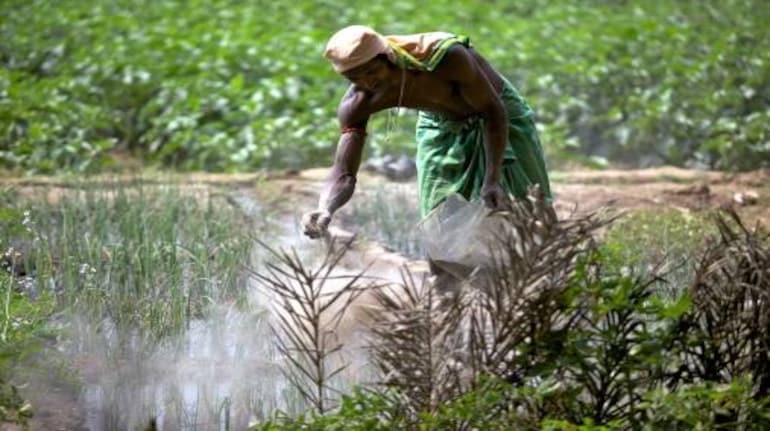
The government is moving on a mega plan for fertiliser subsidy reduction by launching premium fertiliser products like nano DAP (di-ammonium phosphate), gold urea (which has added humic acid to enhance longevity of the fertiliser) and triple super phosphate (used mainly for leguminous crops) variants
On these products, there will be either no subsidy or less subsidy, an official said. Apart from saving on subsidies, these products will also preserve soil fertility, meaning it will be environment-friendly, too. The best part of these plans is that there will be no adverse impact on farmers’ pockets, the source added.
The ministry of chemicals and fertilisers source said, “With the launch of these products, we want to offer more options to farmers and reduce dependency on a single product. This will also reduce import dependency.”
The government is planning to start sales of nano DAP from the upcoming sowing season. There won’t be any subsidy on this fertiliser, even though farmers will get it at prices more than 50 percent lower compared to conventional DAP. For example, a 50 kg bag of DAP now costs around Rs 3,850.
The government provides Rs 2,500 by way of subsidy per bag, meaning farmers get the 50 kg bag at Rs 1,350. On the other hand, one 500cc bottle of nano DAP produced by the Indian Farmers Fertiliser Cooperative or IFFCO is equivalent to 50 kg of DAP, which can be had for around Rs 600. This translates to a saving of Rs 750 for farmers and Rs 2,500 for the government by way of subsidy.
US Awasthi, MD, IFFCO, said “By adopting nano DAP, there will be huge saving of forex, as about 95 percent of raw materials is imported. And it will save the environment also, because it will save fertility of soil. It will be cost-effective for farmers too. So this is a win-win situation for all.”
As per a rough calculation, 1 crore bottles of nano DAP will save Rs 200 crore. As of now, the fertiliser ministry has given permission to two companies, IFFCO and Coromandel International, to manufacture the fertiliser. IFFCO alone is planning to produce 6 crore bottles in the next financial year, and 17 crore bottles by 2025-26.
Gold urea, for its part, will have a special coating and extra nutrients, and here too, the plans to slash the subsidy component. As of now, farmers get 45 kg urea bag at Rs 242 against the cost of production of around Rs 2,650 per bag.
According to people aware of the matter, the new variant may be in smaller packages, of 40 kg, but though prices could be higher, the quantity of fertiliser required will be less. Its trail is in the final stage and the government may approve its sale any time now.
The third product, triple super phosphate will be a mixture of single super phosphate and urea, promises to be more effective and also protect the soil fertility. Field trials of the fertiliser are ongoing.
The government is also promoting production of nano urea. According to the fertiliser ministry, the aim is to produce 44 crore bottles a year of the fertiliser by 2025 from eight plants, which will be equivalent to 200 LMT (lakh metric tonnes) of conventional urea.

Discover the latest Business News, Sensex, and Nifty updates. Obtain Personal Finance insights, tax queries, and expert opinions on Moneycontrol or download the Moneycontrol App to stay updated!

Find the best of Al News in one place, specially curated for you every weekend.
Stay on top of the latest tech trends and biggest startup news.