






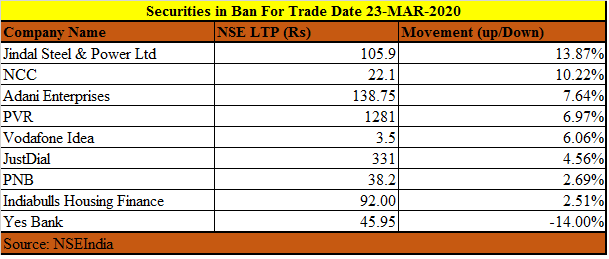
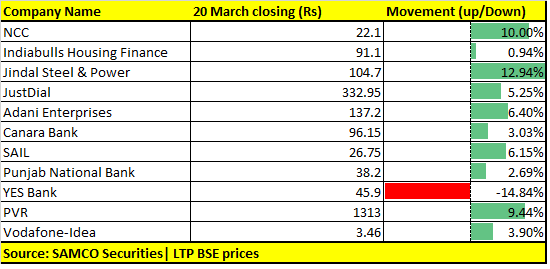
 In the recent past, global markets have also taken similar measures to curb short selling, while some of them have closed the exchanges (Philippines stock exchange). Markets across the world have been under pressure as infected cases of Coronavirus exceeded 300,000 globally. In India, many parts of the country are facing a lockdown, a situation which is similar to other nations such as USA, Iran, and Italy. A lockdown threatens the economic activity of a country; hence, fears of a possible recession has gripped markets. Hence, panic selling is seen in equity markets across the globe. FIIs have pulled out more than Rs 50,000 cr so far from the cash segment of Indian equity markets. In order to curb the extreme volatility witnessed in the stock market, SEBI has introduced measures such as revising the market-wide position limit to 50 percent which will reduce fresh short positions in individual stocks. In simple words, no fresh positions will be allowed in the underlying security, once the 50 percent criterion is met. An increase in margin for the cash segment to 40 percent will lead to a higher margin requirement for intraday positions. Restricting fresh short positions against the underlying security will curb fresh naked short positions in the market. And, restricting long positions only to the tune of available cash and equivalents will reduce the overall speculation in the equity market, suggest experts. “When other economies are resorting to banning short selling on account of increased volatility, such a move by SEBI should provide some relief on the overall volatility witnessed in the markets and should calm in the markets in the short term,” Vijay Kuppa, Co-Founder, Orowealth said. Jimeet Modi, Founder & CEO, Samco Securities is of the view that these are good steps to reduce excessive volatility. The market-wise limits have been reduced which means more stocks likely to go into F&O trading ban period. “Also there is a practical short-selling cap at 500 crores that’s been levied. If someone wants to speculate beyond prescribed limits of 500 crores, they will need to put up twice the margin which will be blocked for 3 months,” he said. Modi further added that the impact of this circular would be highest on stocks with the very high volatility that include names like NCC, Jindal Steel & Power, Indiabulls Housing, Canara Bank, Adani Enterprises, Canara Bank, PNB, SAIL, PVR, Vodafone Idea, Just Dial and YES Bank. Effectively about 10-12% of the F&O stocks would see an impact. For most other stocks, even if MWPL is restricted, open interest is far lower to have any meaningful impact.
  Disclaimer: The views and investment tips expressed by investment experts on Moneycontrol.com are their own and not that of the website or its management. Moneycontrol.com advises users to check with certified experts before taking any investment decisions.
Discover the latest Business News, Sensex, and Nifty updates. Obtain Personal Finance insights, tax queries, and expert opinions on Moneycontrol or download the Moneycontrol App to stay updated!

Find the best of Al News in one place, specially curated for you every weekend.
Stay on top of the latest tech trends and biggest startup news.




