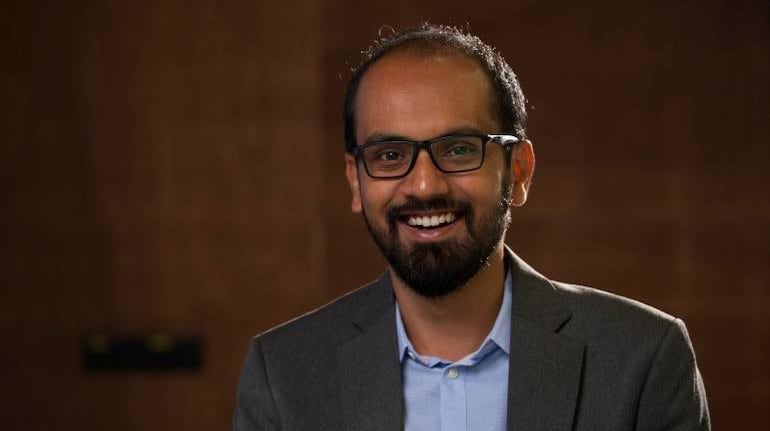
Delhivery, an e-commerce logistics and supply chain startup, floated its maiden public issue on May 11. It will be the first new-age technology company to get listed in 2022. The IPO marks a lucrative exit for many of its investors, makes some employees rich and serves as a barometer to measure India's startup and tech sector's success.
The company’s initial public offering (IPO) is significant as it comes at a time when global financial markets have turned volatile due to high inflation, rising interest rates, and geo-political tensions. It also comes on the back of the hammering that new-age technology companies have received after getting listed last year.
Delhivery’s IPO response could potentially determine the outcome for startups such as Oyo, Snapdeal and Pharmeasy, who have filed draft papers with Sebi but have delayed their listing plans due to uncertainty in the market. Delhivery, too, had delayed its listing plans after it received Sebi’s nod in January.
But Sahil Barua, Co-founder and Chief Executive Officer of Delhivery, said that good companies will continue finding ways to go public, irrespective of market conditions.
Barua and Delhivery’s Managing Director and Chief Business Officer Sandeep Barasia spoke to Moneycontrol. Barua also said that Delhivery always wanted to go public in 10 years since its inception in 2011. Excerpts from the interaction:
What’s going through your mind as Delhivery becomes the first new-age tech IPO of the year?Barua: It's been 11 years since Suraj, Mohit, Bhavesh, Kapil and I started out in 2011. So, it's quite a long way and it's hard to remember what those days were like. I can tell you one thing though, that when we started in 2011, we sat down and we thought about taking the company public in the future and our target was 10 years. So, we are actually one year late rather than sort of being on time as it was our goal to go public in 2021.
It is a huge milestone for the company and I think, it's one thing to run a large private startup and it's an entirely different thing to then be a publicly traded stock where a much broader set of people can actually see how you're doing and ask questions to the company and potentially invest.
Does the overall market sentiment worry you and in the hindsight, do you think it would have been better if Delhivery would have gotten listed in 2021?Barua: I think one piece of advice we've gotten from our board and it is the one thing that we’ve consistently heard is that good companies find a way to go public at any time, irrespective of market conditions. Obviously, we have to be cognizant of the fact that there's nervousness in the market and there are certain expectations that investors have. But otherwise we're pretty confident and we've reached a size where our business model is stable, we've reached a size where strategically we are more stable and well understood as a company.
I think we're happy to sort of educate the markets more and provide more information about our business. So is it the best possible time? In hindsight, 2021 might seem better. But there's also a downside. Imagine if you got listed in 2021, at this point in time as a public company, you would have been answering questions about the economy rather than about the company. So, I don't know if there's ever an ideal time.
Some internet companies have faced criticism that they did not leave enough on the table for the investors as most of the value was juiced out ahead of the IPO. You have cut your IPO size, but do you think you have left enough on the table for shareholders?Barua: The reduced size has not got anything to do with leaving money on the table for investors. Last year’s market was entirely different and they (companies that went public) had their own philosophy. From our standpoint, the important thing is that our approach has been to do a primary IPO. So whether we dilute x percent or 1 percent more than x, it relatively makes no difference to the company in the longer term. Ten years from now, I don’t think we are going to remember whether or not we optimized the price by some 5 percent
In our minds, Delhivery is a compounding story. As an example, you know, the two members of the senior management team are not selling anything. For us, the logic is the stock compounds over a period of time and if it compounds to where we expect it to, whether we priced at x or 5% over x is going to make no difference for either of us on the management team. Right now, the ambition is to make sure that investors make money.
Despite being household names, a lot of internet companies that got listed last year were not able to lure retail investors in a big way. How do you think will retail investors buy Delhivery’s story?Barua: Unfortunately for data privacy reasons, I won’t ever be able to pull out this, but I'm pretty confident that we've delivered to you. We've delivered to everybody in this country. So while we may not be a consumer internet business, I think the retail investor does understand who we are and what we do. I think with the DRHP (draft red herring prospectus) and as we start providing more information to the markets, they'll also get a better sense of us not just as a service provider but as a business and they will be able to evaluate us on the sort of merit that we should be evaluated on.
We're not a B2C (business-to-consumer) company and so you don't really see us out there as much but I think consumers do have an innate understanding of the business. So I don't think we'd have as much of a problem with retail investors. I think they do understand the business.
Can you take us through the path to profitability that you have in mind as you may have to keep investing to fuel growth?Barasia: For a company like us, growth and profitability should not be conflicting objectives. I think they both have to be achieved in parallel and that's what we want to do and that's what our shareholders should expect from us as well.
Now, if you look at what's happened to us from FY19 to now, in FY19, we were Rs 1,600 crores. Nine months alone of FY22, we did over Rs 5,000 crores in revenue tracking to do a billion dollars as Sahil had outlined. Through this entire period, we've also massively improved unit economics. Now again, if you go back to FY19 out adjusted EBITDA was minus 11.39 percent. Now if you fast forward to this year, just in nine months alone, the adjusted EBITDA has improved to less than minus 1 percent, actually, to be specific, it is minus 0.7 percent. Now,
that is practically breakeven and you have to factor in that there was Covid in the first quarter of this year. In fact, if you go and look at the DRHP, you'll notice that the first quarter or FY22, we had declared minus 3.7 as adjusted EBITDA, and for nine months, it's almost breakeven, which means the second and third quarters combined would have actually been profitable. So there is no question of how to profitable we are there. I can't make a forward looking statement, but we are there.
How do you see the global supply chain bottlenecks affecting Delhivery’s business, given that Delhivery has global ambitions too?Barua: The global supply chain challenge is obviously very real. There are two parts to it. One is the uncertainty around input costs, and specifically for logistics that comes from fuel. Fortunately, given our engineering capabilities, we are less affected by this than most traditional players.
Logistics is not a discretionary expenditure. If you manufacture anything, you have to move it. If you trade something, you have to move it.
So irrespective of the supply chain challenges, the demand for logistics persists and if you look at the list of companies, for example, you'll see that while the markets have been volatile, logistics stocks have remained fairly consistent over the last several months. And I think it's a reflection or realization that logistics is ultimately is the core.
Do you think rising input costs will tame demand for logistics as a sector and thus for Delhivery?Barua: If we were, let's say, a Fedex sized business in India, you know, a $40-50 billion business in a $200 billion market, then I would say that these uncertainties would have had a real impact on our business. But the reality is, in a way, it's a good thing, even as it sounds crazy to say that we are just half percent in the market today. So we are really small. So at this point, even if the market goes up or down, the fact remains that there still will be so much demand. Let’s say even if the market drops by 10%, it’s still a $180 billion market out of which Delhivery would be $1 billion. So in some senses, our business development doesn't get affected by sort of narrow or near-term constraints.
Barasia: I think we also have to think about it practically. When we talk about India slowing down or demand going off, I think the latest projection still shows India's GDP growth at 7 percent. And so unless the GDP is going to shrink, the logistics industry is not going to shrink. It might grow slower but it will not shrink.
How do you look at competition in the logistics sector in India?Barua: I think operational capabilities speak for themselves. We are also a large company as they are and we all inhabit the same space. Fortunately, all of us have the benefit of inhabiting a very large space. Where we're not out to get each other as we have enough space for each of us to build on unique capabilities.
So, I think competitive intensity in logistics exists, but it is not detrimental to any of the players in the market. Delhivery’s existence doesn't matter to anybody else, nobody else's existence matters to Delhivery. That means that we all exist in this billion dollar market.
We are relentlessly focused on precisely doing things really well. We want to be the lowest cost player in every space that we are in and we want to be the most reliable player in every space.
We're a business that fulfills your logistics requirements or supply chain requirements. So our differentiator is just that. If you look at our strategy, the aim for delivery is ultimately very clear, we want to be the largest, and the most efficient. And if we can do that, we will get our share of the market. In fact, we will get more than our fair share of the market.
Will Delhivery expand to an asset-heavy model going forward?Barua: Never say never is probably the safe answer, but I'll tell you the truth. I don't see any reason for us to not remain asset-light. It is core to Delhivery’s philosophy. We're not an asset owner.
There are people who want to run fleets, there are people who want to build warehouses. Delhivery will orchestrate those warehouses and that’s a great skill. A great skill is not in constructing warehouses, and we are not good at it. We don't know how to build warehouses and so for us to go and try to build warehouses suddenly, will not be the best use of either our time or capabilities or our investors’.
I think there's always been this strange thing that people have said about India, which is that India is an undersupplied market. In logistics, I don’t think that’s true. India is not an undersupplied market, in fact it needs more demand.
There are four and a half million trucks which are running up and down the Indian highways. Delhivery buying 4,000 more trucks is not going to change the market that has 4.5 million trucks. The problem is not that Delhivery doesn't have 4,000 trucks, the problem is these 4.5 million trucks don't have enough demand. They're not driving enough. An average Indian truck will drive 7,000 kilometers a month or eight kilometers a month whereas global competitors will do 15,000 kilometers. And so I think until such time as we get to a point where capacity is saturated and is not being created in this market, there's no reason for Delhivery to go out and become an asset heavy business.



Discover the latest Business News, Sensex, and Nifty updates. Obtain Personal Finance insights, tax queries, and expert opinions on Moneycontrol or download the Moneycontrol App to stay updated!
Find the best of Al News in one place, specially curated for you every weekend.
Stay on top of the latest tech trends and biggest startup news.