






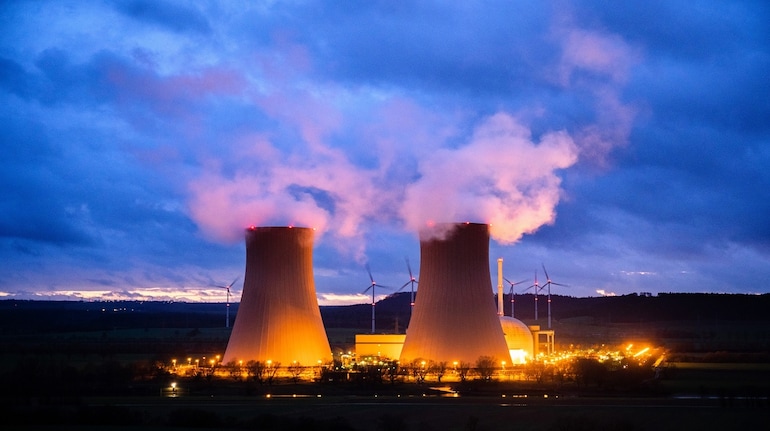

After clearing the SHANTI (Atomic Energy) Bill, the Union government has begun a separate policy exercise to formally integrate nuclear power into India’s clean-energy framework, officials familiar with the matter told Moneycontrol.
While nuclear power is recognised by the government as a non-fossil, low-carbon source of electricity, it is not treated on par with renewable energy in India’s power-sector regulations. As a result, nuclear power does not currently benefit from renewable-energy-specific market mechanisms such as Renewable Purchase Obligations (RPOs), which apply to sources like solar and wind.
“The ongoing exercise aims to close this gap by aligning nuclear power more closely with other clean electricity sources in regulatory and market frameworks, rather than announcing stand-alone fiscal incentives at the moment,” said an official from the Ministry of Power.
The policy move follows the Parliament’s clearance of the SHANTI Bill, which lays the legislative groundwork for expanding nuclear power capacity by allowing greater private-sector participation in the construction and operation of nuclear power plants under a licensing framework, while keeping control over nuclear fuel, safety regulation and strategic assets with the central government. The legislation also seeks to address structural issues that have slowed nuclear capacity addition in the past, as India works towards a long-term goal of 100 GW of nuclear power capacity by 2047.
Renewable power buying rules under review
One of the key proposals under consideration is whether nuclear power can be made eligible under Renewable Purchase Obligations (RPOs). RPOs require power distribution companies and large electricity consumers like the commercial and industrial sector to procure a fixed share of their power from renewable sources.
At present, nuclear power—despite being low-carbon—does not qualify under RPOs. Officials said nuclear power is likely to be included under RPOs as the move could improve long-term demand visibility for nuclear projects, which have high upfront costs and long construction timelines.
CPCB classification being re-examined
The government is also reviewing how nuclear power plants are classified under environmental norms of the Central Pollution Control Board (CPCB), including their placement in the “Red” category, officials said.
Under CPCB’s classification system, the “Red” category is meant for highly polluting activities subject to the strictest environmental scrutiny, mainly due to air and water emissions. Nuclear plants have traditionally been placed in this category because of the radioactive materials they handle, even though they do not emit carbon dioxide or conventional air pollutants during power generation.
Officials said the government is examining whether this classification reflects nuclear power’s actual pollution profile, particularly the absence of air emissions, while keeping radiation safety, waste management and operational oversight under existing nuclear regulators unchanged.
“The idea is to make the regulatory framework more enabling and reduce avoidable delays by aligning environmental classification with the actual pollution profile of nuclear plants,” an official said.
Any change, they added, would be limited to environmental categorisation and would not dilute safety standards.
Why nuclear matters for net zero
India has committed to achieving net-zero carbon emissions by 2070, a target that requires a sharp expansion of clean electricity while meeting growing demand from industry, cities and electrification.
While renewable energy such as solar and wind is expected to form the bulk of new capacity, their intermittent nature limits their ability to provide round-the-clock power. Nuclear energy provides continuous electricity without direct carbon emissions and is expected to play a role in maintaining grid stability as India reduces its reliance on fossil fuels, particularly as power demand rises alongside the expansion of variable renewable energy such as solar and wind.
Officials, however, said the policy exercise is still at an early stage, with consultations underway across ministries and regulators. “No timeline has been set yet for decisions on RPO eligibility or CPCB classification,” an official from the Department of Atomic Energy said.
Discover the latest Business News, Sensex, and Nifty updates. Obtain Personal Finance insights, tax queries, and expert opinions on Moneycontrol or download the Moneycontrol App to stay updated!
Find the best of Al News in one place, specially curated for you every weekend.
Stay on top of the latest tech trends and biggest startup news.





