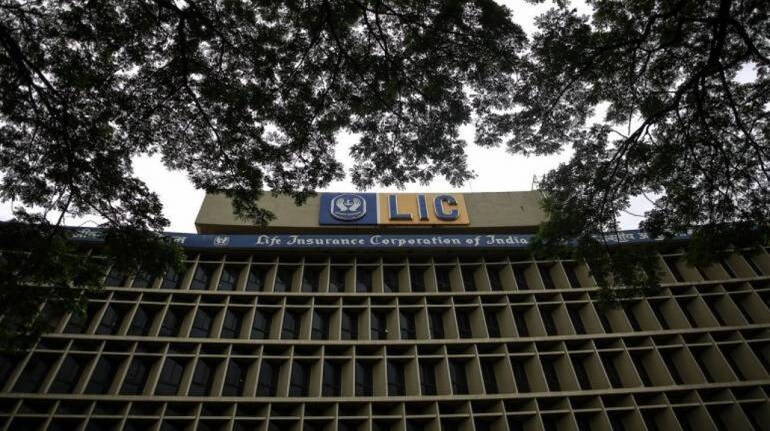
Government-owned Life Insurance Corporation of India (LIC) is preparing itself for an initial public offering (IPO) that is likely to be completed by Q1FY22.
With a likely valuation of Rs 10 lakh crore, LIC’s IPO is expected to be the biggest listing in the country so far.
Story continues below Advertisement
The government’s plan is to divest up to 25 percent stake in the country’s largest insurer. This process will be completed in tranches, with the initial disinvestment likely to be 10 percent.
However, before LIC gets listed on the exchanges, a slew of changes have to be made in the governing structure and books of the insurer. Moneycontrol gives you a lowdown on the changes anticipated. Changes in the LIC Act
Once the government receives the Cabinet approval for disinvestment, the amendment Bill of LIC Act, 1956, will be tabled in Parliament. Since Since the monsoon session was cut down, this Bill will be tabled in the winter session.
The LIC Act will have to be amended to increase the capital base, ahead of the disinvestment and the listing. The paid-up capital of LIC, which now stands at Rs 100 crore, will have to be increased to offer more shares to the public at the time of listing.
Initially, it was expected that LIC will be renamed ‘Company’ from ‘Corporation’. However, sources told Moneycontrol that that if the sovereign guarantee provision has to be retained, ‘Corporation’ will have to stay.
Story continues below Advertisement
LIC is the only insurer in the country whose policyholders enjoy a sovereign guarantee. This means that there is a government guarantee for every policy sold by LIC.
The Companies Act, 2013, does not allow for sovereign guarantee if LIC is renamed ‘Company’. Hence, ‘Corporation’ will be retained.
Investment book rejig
With SBI Capital and Deloitte being appointed to run the IPO, the initial step would be to look deeper into the investment books. LIC has a balance sheet of Rs 32.8 lakh crore.
Unlike traditional companies, insurers have the policyholder investment book and shareholder investment book. Under the policyholder investment book, the premiums collected are invested in the stock market or debt market, depending on the type of products.
The shareholder investment size is Rs 685 crore, while the policyholder investment, as of Q1FY21, is Rs 30.1 lakh crore.
Similarly, within the investment book, there is a linked fund, life fund and pension fund. Premiums collected in products like traditional plans, unit-linked plans (Ulips) and pension plans flow into these funds for investment purposes.
Once the insurer is closer to the IPO, the investment book will be rejigged to clearly demarcate the debt and equity investments in the book, especially in the Ulip portfolio, where investment in both equity and debt are made.
LIC and the consultants will work towards the simplification of the book, so that is easier for public investors to understand.
Considering the multiple funds and bifurcations, Foreign Institutional
Investors (FIIs) and non-insurance domestic entities will find it tough to understand how LIC invests. Hence, the idea is to show one single data set of how much LIC has invested in debt and equity.
Public disclosures
Unlike other unlisted companies, insurers already have a high degree of disclosures when it comes to the financial and investment book. However, considering the size of LIC’s balance sheet, clarity will be needed on the exact nature of investments in listed companies as also in corporate debt, and downgraded investments.
These investment details are usually available on the LIC website after every quarter. Considering that the insurer is close to the IPO, LIC will have to display the details of the downgraded investments prominently, and also the action taken against downgrades.
An additional requirement would be to state LIC’s equity stake in all listed companies. IRDAI has now also mandated insurers to state their role in giving approval to board matters in these listed companies and the rationale behind the insurer’s decision.
Given that LIC is the largest institutional investor, the insurer will also be required to prepare this information on a quarterly basis and display it on its website.
For instance, in Q1FY21, in LIC's Life Fund, investments worth a total of Rs 1,223.21 crore were downgraded. The downgraded investments included debt instruments of Yes Bank, ECL Finance and GMR Pochanpalli Expressway.
Insurance is a long-term instrument and defaults in any instrument can affect returns paid to policyholders. Unlike other sectors, exposure to default instruments cannot be written off. An insurer is required to set aside adequate funds for such future defaults.
Way forward
Considering the balance sheet and legal changes required before LIC is listed on the exchanges, the original plan of listing in H2FY21 looks unlikely.
A combination of Indian and international listing is expected to be the model to ensure that the government’s disinvestment target is met.