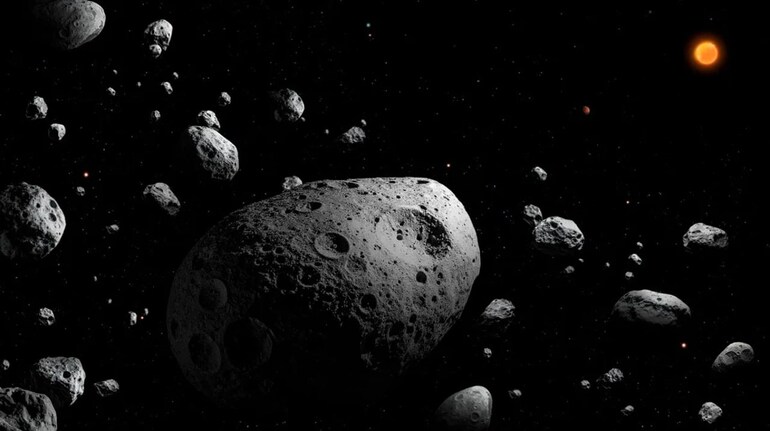

A new telescope has revealed an unusually fast spinning asteroid. The discovery offers fresh clues about asteroid strength and origins. Scientists say the finding highlights new possibilities for solar system studies.
Rubin Observatory and asteroid discoveries
The images came from a powerful new Chilean observatory. Its digital camera is the largest ever built. First images were released during a June 2025 event. Scientists quickly identified thousands of asteroids across the Solar System. Nearly 2,000 of these objects were previously unknown. Among them were several asteroids spinning at extreme speeds. Nineteen were found rotating far faster than expected. All were large enough to challenge existing asteroid theories. One object stood out because of its unusual size. It measured more than half a kilometre across. Despite this, it rotated faster than any comparable asteroid.
The observatory uses the Legacy Survey of Space and Time. This programme will scan southern skies for 10 years. It creates a detailed time lapse record of space. Early results already suggest a new era beginning. Scientists say distant asteroids are now easier to study.
What fast spinning asteroids reveal
Asteroids are remnants from the Solar System’s formation. They preserve information about early planetary conditions. Their rotation speeds offer clues about their internal makeup. Faster spins suggest stronger internal structures. Slower spins often indicate loosely bound rubble piles. Scientists estimate a critical spin limit for asteroids. Objects spinning faster than 2.2 hours risk breaking apart. Only strong material can withstand such forces. This makes unusually fast asteroids especially valuable to researchers.
The newly identified object spins once every 1.88 minutes. It is named 2025 MN45 by astronomers. Its diameter measures about 710 metres across. That makes its speed particularly surprising to scientists. Researchers believe it must be made of solid rock. Such strength contradicts common assumptions about asteroid composition. Most are thought to be loose collections of debris.
Why this discovery matters next
The study was led by astronomer Sarah Greenstreet. She heads a working group studying near Earth objects. The research used observations gathered across seven nights. Data were collected during April and May 2025. Seventy six asteroids had their rotation measured. Sixteen spun within minutes rather than hours. Three completed full rotations in under five minutes. Most of these objects orbit within the main asteroid belt.
Previously, fast rotators were mainly near Earth objects. Main belt asteroids were harder to observe in detail. This discovery changes that limitation significantly. Scientists now expect more surprising asteroids soon. Rubin Observatory may reveal unknown asteroid populations. Researchers believe this will reshape asteroid science. The findings point towards deeper understanding of Solar System history.
Discover the latest Business News, Sensex, and Nifty updates. Obtain Personal Finance insights, tax queries, and expert opinions on Moneycontrol or download the Moneycontrol App to stay updated!
Find the best of Al News in one place, specially curated for you every weekend.
Stay on top of the latest tech trends and biggest startup news.