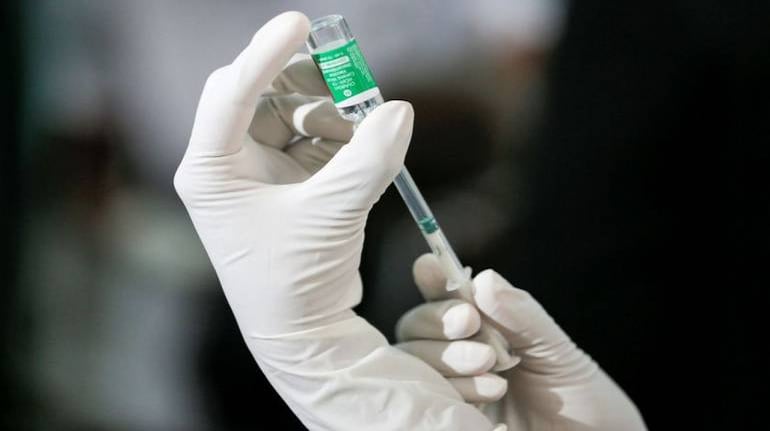
India's COVID vaccination drive is slowly gathering pace, but is not without its shortcomings. One of these is wastage, due to a lack of planning and fewer people turning up for the jab.
Tripura, the north-eastern state with the second-highest COVID-19 vaccine coverage ratio of 78.6 in the country, is also seeing the lowest vaccine wastage.
Dr. Kallol Roy, State Nodal Officer, told Moneycontrol that this was possible as the state administration has planned better and mobilised Asha workers for outreach, using both print, electronic and social media to nudge healthcare and frontline workers to attend vaccine sessions and get jabs.
"More people turning up at vaccine sessions also means there is less wastage of doses," Roy said.
Tripura which had seen vaccine wastage of about 10 percent during the first few weeks of vaccination, has brought the wastage down to almost "zero" says Roy.
Tripura has deployed Serum Institute of India's (SII) Covishield vaccine to inoculate its healthcare and frontline workers.
High wastage inflates demand for vaccines and raises procurement and supply-chain costs. For instance, India is procuring Covishield vaccine at Rs 210 per dose and Bharat Biotech's Covaxin at Rs 295 dose per vial. This is excluding costs of logistics, supply chain and administering charges. Every wasted dose is a drain on the exchequer.
Low turnout means more wastageKumar, a vaccinator identified with a single name, who is
in-charge at a session centre at a rural public health centre (PHC) in Srikakulam district of Andhra Pradesh that's also administering Covishield, attributes wastage of doses to a lack of recipients.
"Each Covishield vial contains 10 doses, which is enough to inoculate 10 people. Once the vial is opened, the doses need to be fully used within four hours, else the remaining doses go waste," Kumar told Moneycontrol.
"There were days initially when half of the registered beneficiaries who were supposed to turn up to get vaccinated as per our list never came," Kumar added.
Typically, in a session that begins at 9 am and ends at 5 pm, about 100 people are vaccinated. People will be called at particular timings to avoid crowding.
Kumar said that there is a "clear instruction from the government, that if there are less than 5 people, we should not open the vial, and if we have shortage of beneficiaries, we can call other registered beneficiaries to get vaccinated."
Health officials told Moneycontrol that Bharat Biotech's Covaxin was more prone to wastage than SII's Covishield, as the former is available in 20 doses per vial, which requires 20 people to open a vial. Bharat Biotech said it will make 10 doses per vial available soon.
Vaccines wastage also occurs due to administrators not being able to draw the number of doses in a vial, or logistics issues like vaccines exposed to heat or vaccines being frozen.
Wastage under controlThe Ministry of Health and Family Welfare while rolling out the COVID-19 vaccine had factored in 10 percent wastage across the country. While there is no official figure on the overall vaccine wastage rate, individual states are reporting rates below 10 percent, and with the COVID-19 vaccination drive now extended to frontline workers and administration of the second dose having begun, the wastage is expected to be much lower in coming days.
Experts say that the COVID-19 vaccine wastage is much lower compared to the rollout of Rotavirus vaccine in India for routine immunisation of infants and children, where the wastage was as high as 70 percent during the initial weeks of the rollout.
"It's not unusual that when a new vaccine is added to the national immunisation campaign, in the beginning the wastage would be high. It is also true that no matter how much you take precautions, there will be some wastage. That is why 10 percent is a good number," said Davinder Gill, former CEO of Hilleman Laboratories. Gill was previously global head of Biotherapeutics at Pfizer.
"The wastage tapers off with time, but it also boils down to planning in a campaign setting," Gill said.
Experts say a single-dose vial vaccine will have less wastage than multi-dose vials, but the cost of the vaccine will also go up, and may not be feasible for governments.

Discover the latest Business News, Sensex, and Nifty updates. Obtain Personal Finance insights, tax queries, and expert opinions on Moneycontrol or download the Moneycontrol App to stay updated!
Find the best of Al News in one place, specially curated for you every weekend.
Stay on top of the latest tech trends and biggest startup news.