






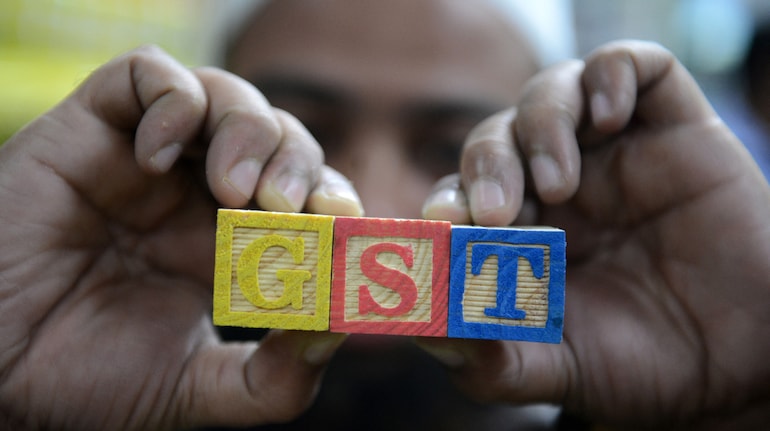
The Union government is evaluating steps to ease the goods and services tax compliance burden for small businesses in the upcoming Budget, amid concerns that higher US tariffs have hit micro and small enterprises harder, Mint reported, citing people familiar with the discussions.
One of the proposals under consideration is allowing micro enterprises to pay GST on a quarterly basis instead of making monthly payments, the sources told Mint. Micro enterprises are defined as businesses with annual turnover of up to Rs 10 crore under the revised MSME norms.
The Centre is also examining a more lenient approach to enforcement. In cases of genuine mistakes or delayed filings, MSMEs may initially receive a warning, with penalties waived for the first two instances, one of the people cited by Mint said.
At present, Section 47 of the Central GST Act imposes late fees for delays in filing returns such as GSTR-1, GSTR-3B and GSTR-9, with the penalty increasing on a daily basis until it reaches a prescribed cap. Delayed tax payments also attract interest at 18% per annum, Mint noted.
The proposals have been moved by the MSME ministry to the finance ministry following GST rate cuts announced in September. The timing is significant as US tariffs of up to 50% have added pressure on smaller exporters, Mint reported. India has about 73 million MSMEs, which contribute nearly 30% to GDP and account for around 45% of total exports.
Queries sent to the ministries of finance and MSME did not elicit a response till press time, Mint said.
Industry representatives have long argued that compliance costs weigh disproportionately on very small firms. "Tax filings and related compliances consume a lot of time and often require dedicated manpower," Vinod Kumar, president of India SME Forum, told Mint. For micro enterprises with limited resources, compliance expenses can account for 6-8% of turnover, he added.
While the GST framework offers a composition scheme aimed at simplifying compliance, uptake has been limited as businesses opting for it cannot claim input tax credit, experts told Mint.
Officials said the MSME, finance and corporate affairs ministries have been holding consultations on simplifying taxation and regulatory requirements. However, since recent GST rate rationalisation has already affected revenue buoyancy, any compliance relaxations will be evaluated through a cost-benefit lens to limit the impact on collections, the people cited by Mint said. Any GST-related changes will require approval from the GST Council before being included in the Finance Bill.
Tax expert Ved Jain, founder of Ved Jain & Associates, told Mint that quarterly payments or similar measures may not materially dent government revenues. Another official added that the GST rate reforms announced in September need to be complemented by steps that reduce the compliance load on smaller firms.
GST collections stood at Rs 1.7 trillion in November, only marginally higher than Rs 1.69 trillion collected in the same month last year, Mint reported. Gross GST revenue for the first eight months of FY26 (April-November 2025) grew about 9% year-on-year to Rs 14.75 trillion.
The Budget may also flag the creation of a single-window mobile application for MSMEs that integrates GST, income tax and UDYAM filings, one of the people cited by Mint said. UDYAM is the government portal for MSME registration.
In addition, the government is considering offering micro enterprises free embedded accounting software to ease bookkeeping and digital payments as part of the Digital India push, Mint reported.
Other proposals under discussion include shifting micro enterprises to a self-certification audit model and speeding up the GST registration process, with suspended registrations potentially being reactivated within 48 hours of compliance. Industry bodies have raised concerns over delays in restoring GST numbers for temporarily inactive taxpayers, Mint noted.
Experts say the recent revision in MSME definitions makes such measures necessary. The turnover threshold for classification as a micro enterprise has been raised from Rs 5 crore to Rs 10 crore. "With higher thresholds, corresponding relaxations are needed," Jain told Mint, adding that smaller enterprises require greater flexibility on the taxation front.
Discover the latest Business News, Sensex, and Nifty updates. Obtain Personal Finance insights, tax queries, and expert opinions on Moneycontrol or download the Moneycontrol App to stay updated!
Find the best of Al News in one place, specially curated for you every weekend.
Stay on top of the latest tech trends and biggest startup news.




