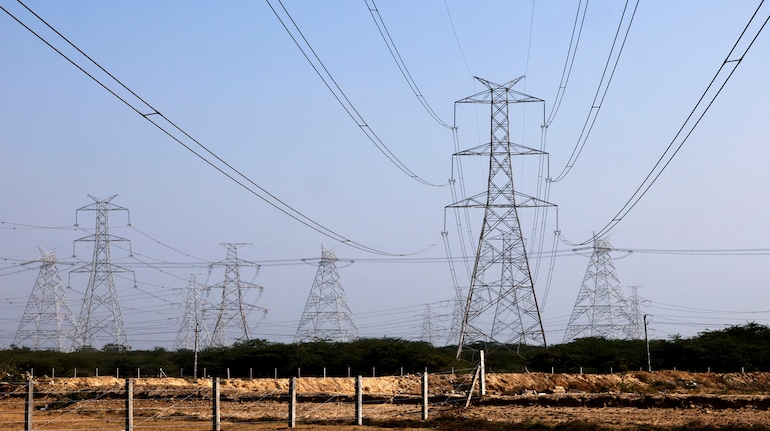
The Indian government is working on a restructuring plan for state-run power distribution companies (discoms) that are mired by mounting debt and poor performances. The plan, though not a first, has a new approach involving opening state-run power utilities to the private sector through Initial Public Offerings (IPOs) and partial stake sale, the Centre backing them through capital expenditure support, and state governments taking over the current unsustainable debt of their discoms.
Currently, only a few states and union territories including Delhi, Odisha, Gujarat and Maharashtra have private-sector participation in the electricity distribution business. The scheme, if implemented, could benefit Reliance Power, Tata Power, Adani Power, Torrent Power and Calcutta Electric Supply Corporation (CESC) Limited as they are likely to bid for stake sales as and when they happen.
The proposed discom restructuring plan has been prepared by a Group of Ministers (GoM) headed by Union minister for power Manohar Lal Khattar and is likely to be included in the Union Budget 2026 that will be tabled in the Parliament on February 1 next year.
The total accumulated losses of state-owned discoms stood at Rs 7.08 lakh crore and their outstanding debt was Rs 7.42 lakh crore as of FY24, according to the Ministry of Power.
Contours of the proposed scheme
The GoM has recommended that at least 20 percent of the state's total power consumption must be met by private companies and the states must assume part of the retailer's debt, according to documents prepared by the GoM seen by Moneycontrol.
One alternative offered to states is that they must list their power utilities on a recognised stock exchange within three years from the notification of the scheme and report a net profit for five years. Such states would then receive low-interest loans from the Central government for infrastructure management.
Another method is that states can choose to privatise their distribution operations for access to loans to pay off existing debt under two options. First, the states can create a new discome, divest 51 percent of the equity, which will enable them to access a 50-year interest-free loan for the privatised company's debt, along with access to low-interest (at 3.5 percent) federal loans for five years.
The second option would let states privatise up to 26 percent of the equity of an existing state-owned power distribution company in exchange for access to low-interest loans from the federal government for five years.
Overall, the GoM panel stated that the Central government will have to bear a cumulative outlay of Rs 78,119 crore in loans through a Special Assistance to States for Capital Investment (SASCI).
Laying the foundation for Electricity Amendment Bill, 2025
The proposed restructuring scheme for state-owned discoms can be seen as a preparatory platform for the Indian government’s larger goal to implement the draft Electricity Amendment Bill, 2025 which proposes to allow multiple discoms to operate in the same area using shared infrastructure, phase out cross-subsidies for industries and transport users within five years, and expand open access for large consumers.
It seeks to introduce competition in the power distribution sector by ending the monopoly of state-owned discoms. By encouraging private and PPP participation and linking network access charges to performance and efficiency, the draft aims to create a competitive retail electricity market where discoms must improve service quality, reliability, and pricing to retain customers.
Previous Reforms
To be sure, several reforms to better the financial health of India’s discoms, especially the state-owned ones, have been taken up in the past.
The Ujwal Discom Assurance Yojana (UDAY), introduced in 2015, aimed to turn around stressed discoms by transferring 75 percent of their debt to state governments and mandating efficiency improvements such as reducing AT&C losses and improving billing and collection.
In 2021, the government launched the Revamped Distribution Sector Scheme (RDSS) with an outlay of Rs 3.03 lakh crore to modernize distribution infrastructure through prepaid smart metering and system upgrades, and to reduce losses and bridge the cost-revenue gap by 2025.
Building on these, the Reforms-Linked Distribution Scheme, announced in the 2025-26 Union Budget, focuses on incentivizing states through results-based financial support and encouraging private and PPP participation in distribution.
Additionally, states implementing power sector reforms—such as timely tariff revisions, transparent subsidy payments, and audited accounts—are offered extra borrowing headroom.
Discover the latest Business News, Sensex, and Nifty updates. Obtain Personal Finance insights, tax queries, and expert opinions on Moneycontrol or download the Moneycontrol App to stay updated!
Find the best of Al News in one place, specially curated for you every weekend.
Stay on top of the latest tech trends and biggest startup news.