






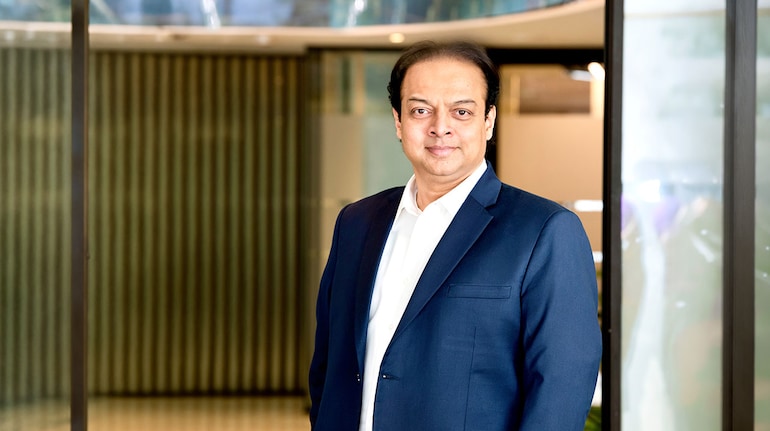

Biocon is sharpening its global ambitions by betting aggressively on market‑share expansion for its newly launched biosimilars while preparing for a multi‑country rollout of semaglutide, the fast‑growing GLP‑1 that has become one of the most sought‑after drug classes worldwide.
As Shreehas Tambe readies to take charge of the unified Biocon Group following the integration of Biocon Biologics, the company is entering what he calls a “capacity‑rich, demand‑heavy” phase—one where margins improve as capital and R&D intensity taper off.
Tambe said Biocon is seeing sustained momentum across its biosimilars portfolio, driven by surging demand and the ramp‑up of several recently approved products.
“Demand has been very strong… and it continues to be strong even now,” he said, noting that the company has launched aflibercept in Malaysia and Turkey and is scaling up assets including ustekinumab, aspart, bevacizumab and denosumab. Prioritizing shipments to higher‑margin geographies also boosted profitability.
“We decided we will prioritize towards high‑margin markets, which is why you are seeing the EBITDA contribution significantly higher this quarter,” Tambe said. Biosimilars EBITDA margins rose to 28%, compared with the 25–26% range seen earlier.
A key strategic thrust now is semaglutide, which is unlocking global opportunities as patents begin to expire across multiple markets in 2026. Biocon plans to commercialize semaglutide through its own sales force in the Brazil, Canada and the Middle East, while adopting a partnership model in India after monetizing its domestic brand portfolio earlier.
Tambe said the company’s existing GLP‑1 experience gives it an edge. “Our liraglutide launches in Europe have already laid the foundation.” Its deep fermentation capability—rare among peptide manufacturers—could further differentiate the company as global demand surges. “There will be a requirement for significantly higher volumes… and Biocon’s fermentation capability will give us a significant advantage,” he said.
With multiple approvals in hand and a new wave of biosimilars and GLP‑1 launches approaching, Biocon is entering a period where operating leverage strengthens margins. “There is no major capex now… the capacities we have invested in over the last three to four years will take care of the products we have developed,” Tambe said, signaling a shift to harvesting earlier investments rather than building new infrastructure. Lower clinical costs will also help. as regulator in the U.S., EU and Japan have removed phase‑3 trial requirements for biosimilars.
“Clinical development costs will halve, and time to market will also reduce by half,” Tambe said, describing this as a structural break that allows Biocon to advance more programs with the same R&D dollars. This momentum comes as Biocon completes a major corporate integration. The company issued Rs.4,150 crore through a QIP in January—part of nearly $1 billion raised in eight months—to buy out Viatris’ stake in Biocon Biologics, unifying the structure and simplifying governance.
Credit rating upgrades from S&P and Fitch followed, reflecting improvements in leverage after debt settlement. Tambe—currently CEO of Biocon Biologics—will take charge of the combined entity once integration concludes. With new biosimilars scaling, semaglutide poised for multi‑market entry, and a lighter capex and R&D burden, Biocon is positioning for what Tambe describes as a “multi‑year, margin‑accretive growth trajectory” anchored in global expansion and operating discipline.

Discover the latest Business News, Sensex, and Nifty updates. Obtain Personal Finance insights, tax queries, and expert opinions on Moneycontrol or download the Moneycontrol App to stay updated!
Find the best of Al News in one place, specially curated for you every weekend.
Stay on top of the latest tech trends and biggest startup news.





