







Every year on January 26, India celebrates Republic Day to mark a defining moment in its history — the day the Constitution came into force in 1950, transforming the country into a sovereign, democratic republic.
More than just a public holiday or a ceremonial parade, Republic Day represents the culmination of decades of struggle, debate, and vision that shaped modern India. On this day, the nation formally stepped away from its colonial past and embraced self-governance, guided by a Constitution that placed justice, liberty, equality, and fraternity at its core.
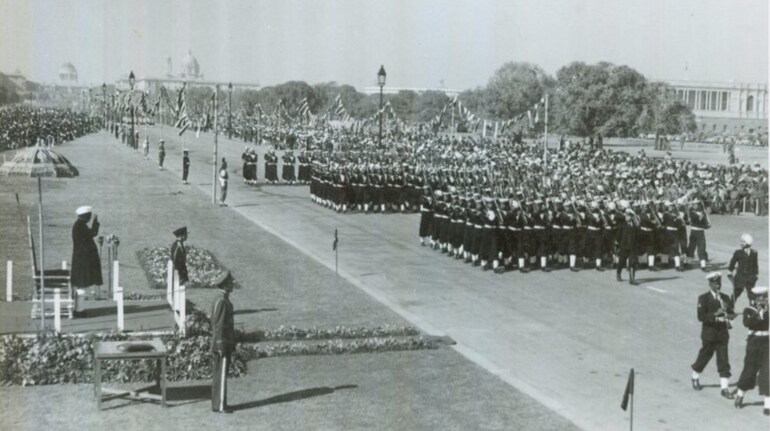
Today, Republic Day is marked by a grand parade at Kartavya Path in New Delhi, featuring synchronised military displays, vibrant tableaux from different states, flypasts by the Indian Air Force, and cultural performances that reflect the country’s diversity and technological progress. The event is broadcast nationwide, watched by millions, and has become a symbol of India’s confidence on the global stage. But it was not the same over the years. It evolved gradually, shaped by changing times and priorities. Here’s what the first Republic Day of India looked like.
January 26 was not selected at random. It was chosen to honour the Purna Swaraj Declaration of 1930, when the Indian National Congress had declared complete independence from British rule. By bringing the Constitution into effect on this date two decades later, India paid tribute to the original dream of freedom that had inspired generations of freedom fighters.
On January 26, 1950, the Constitution of India — drafted under the leadership of Dr B.R. Ambedkar — came into force. With this, India ceased to be a dominion under the British Crown and became a fully sovereign republic with its own elected head of state.
That historic morning began with the swearing-in of Dr Rajendra Prasad as India’s first President. He took oath as the constitutional head of the nation, replacing the Governor-General, C Rajagopalachari. It was a moment filled with emotion and symbolism — a visible sign that political power now rested firmly in the hands of the people.
For many who had lived through the freedom movement, the ceremony represented the realisation of a long-cherished dream. Independence in 1947 had brought freedom, but the Constitution gave structure, stability, and direction to that freedom.
The first Republic Day Parade was held at Irwin Stadium, now known as the National Stadium, in New Delhi. Compared to today’s grand displays at Kartavya Path, the 1950 parade was simple and understated. Yet, its significance was immense.
More than 3,000 personnel from the Indian Armed Forces marched before the President, showcasing discipline, unity, and the emerging strength of the nation. Military bands, cavalry units, and mechanised columns reflected India’s growing confidence and commitment to safeguarding its sovereignty.
With the rest of the world, foreign guests once again walked the streets and served the nationals.
Almost every Republic Day since 1950 has included the hosting of an international dignitary as the guest of honour. Indonesia’s head of state visiting India to celebrate its first Republic Day was an indication of India’s desire to build relationships with other recently liberated countries.
Nehru’s India wanted to be seen as an advocate for the newly independent countries of the world. India would be the forerunner of the post-colonial countries of the world, advocating for non-violence, collaboration, and regard for one another.
More than just parades and temples were opened for the first Republic Day. The masses were entertained with many performances, speeches, and military parades. The military presence was intended to convey the strength of the new Republic, but the celebration was to foster a sense of renewal
The Republic was a new beginning for India, and the Preamble of the Constitution was the guiding philosophy of the new beginning. The Republic and the new beginning came with the responsibility to practice the emerging democratic values of the new nation.
The Republic Day was the beginning of a series of observances to be taken on a nationwide basis. The observances are now positively extravagant. The displays of technology and honour are replaced by parades and state-ordered novelties.
However, the emotional profundity and historical significance of January 26, 1950, continue to be unparalleled. It was a day of quiet pride and shared hope rather than ostentation.
It was the time when India learned how to govern itself instead of just celebrating freedom.
Every Republic Day still evokes memories of that first morning in 1950, serving as a reminder to the populace that the nation's strength is found not only in its institutions but also in the principles that keep it united.

Discover the latest Business News, Sensex, and Nifty updates. Obtain Personal Finance insights, tax queries, and expert opinions on Moneycontrol or download the Moneycontrol App to stay updated!
Find the best of Al News in one place, specially curated for you every weekend.
Stay on top of the latest tech trends and biggest startup news.





