
Buying or gifting plants has become a ritual in these times. For many, especially those living in flats with limited sunlight, houseplants feel strangely fragile. But according to plant biology research, the problem is rarely the plant. It’s usually the way you’re caring for it.
Studies shows that overwatering is the number one cause of houseplant death. Roots need oxygen as much as they need water. When soil stays constantly wet, roots suffocate, rot sets in, and the plant slowly dies from below, even if the leaves look fine at first.
Another issue is light mismatch. Research explains that plants labelled “low light” still require indirect daylight. Artificial room lighting is rarely enough for photosynthesis. Many indoor plants slowly starve, not from lack of fertiliser, but from lack of usable light.
Temperature stress also plays a role. Sudden changes caused by air conditioners, heaters or kitchen heat disrupt plant metabolism. Plants evolved for stable outdoor conditions struggle with these indoor extremes.
Don’t water on schedule. Touch the soil. If the top inch is dry, then water. This traditional hand-check method aligns with root oxygen studies.
Place plants where they can “see” daylight, not just brightness. Near windows with filtered sunlight works best. Scientists confirm light quality matters more than room brightness.
Also read: 9 longest living indoor plants that require minimal maintenance
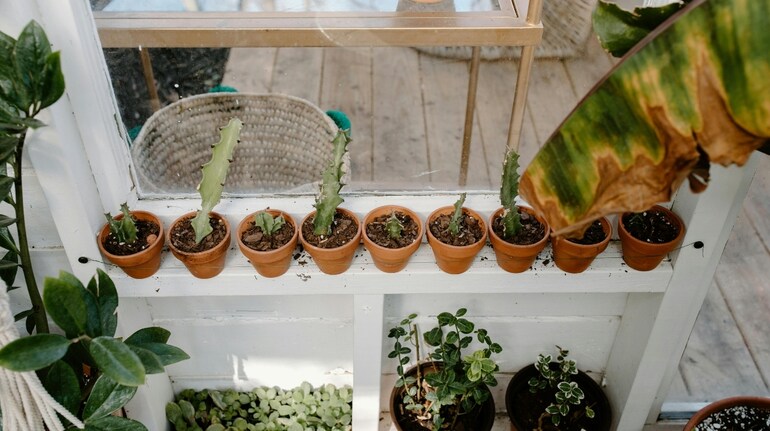
Clay pots allow excess moisture to evaporate, reducing root rot. Research in HortTechnology shows porous containers improve root health compared to plastic ones.
Too much fertiliser burns roots. Studies show mild, diluted feeding during growth seasons works better than frequent strong doses.
Compacted soil suffocates roots. Mix garden soil with sand, cocopeat or compost. This mirrors traditional desi soil mixes and improves drainage, as supported by agricultural soil research.
Plants need time to adapt. Frequent relocation stresses their internal rhythms, something plant stress physiology journals repeatedly highlight.
Also read: 8 indoor plants that purify air in your bedroom in the night
Experts suggest that plants operate on slower timelines than humans. Yellow leaves don’t always mean failure; they’re often communication. By slowing down, observing soil, light and airflow, and using simple, time-tested desi practices, most houseplants don’t just survive, they thrive.
1. How often should indoor plants be watered?
Water only when the topsoil feels dry, as overwatering can damage roots.
2. Do indoor plants need sunlight?
Yes, most indoor plants need bright, indirect sunlight to grow well.
3. How can I tell if I’m overwatering my plant?
Yellowing leaves, soggy soil, and root rot are common signs.
4. Should indoor plants be fertilised?
Yes, but lightly—use a balanced fertiliser during the growing season.
5. How do I keep indoor plants healthy?
Ensure proper drainage, clean the leaves regularly, and protect them from pests.
Discover the latest Business News, Sensex, and Nifty updates. Obtain Personal Finance insights, tax queries, and expert opinions on Moneycontrol or download the Moneycontrol App to stay updated!
Find the best of Al News in one place, specially curated for you every weekend.
Stay on top of the latest tech trends and biggest startup news.