






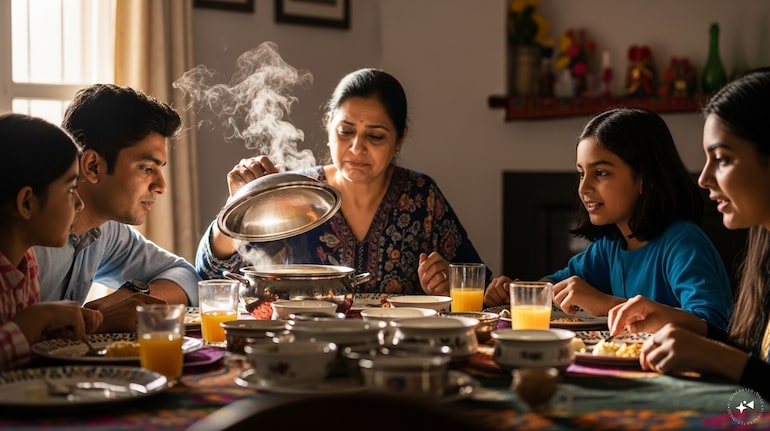
That four-letter word I dread. Not because it frightens me. Not because it traumatised me. But because it represents something far more unsettling: how boring life can quietly become, how routine turns dangerous when left unquestioned, and how uncreative, uncaring, and emotionally absent a household can get without anyone raising their voice. U.P.M.A.
Say it out loud and watch the room react. Someone sighs. Someone defends it too quickly. Someone says, “At least it’s healthy,” which is rarely said about food people actually enjoy. Very few smile.
Upma is a signal. A domestic mood ring. A cultural code we all learned before we had the language to explain it. It is nourishment without warmth and routine without joy.
Upma is perhaps the only dish in India that enjoys sovereign immunity from needing approval. It does not seek consent, does not invite opinion, and certainly does not arrive with joy. It is declared, like a policy decision taken late at night. You wake up to it and are expected to adjust.
No one ever wants upma. They merely accept it, which is how many important things in this country function. And when it appears, the household participates in a brief theatre of rationalisation, praising its “health benefits” in the same tone reserved for traffic diversions and power cuts, pretending this was a choice.
If you love upma, this is not about you. You are clearly emotionally evolved, nutritionally disciplined, and spiritually prepared for restraint. Please stay. We promise not to confiscate your mustard seeds.
In Indian homes, food is never just food. It is communication. It is affection. It is feedback. Extra ghee means forgiveness. Your favourite dish means reconciliation. An elaborate spread means celebration, guilt, or both. And upma? Upma means distance. Emotional budgeting. Presence without enthusiasm. Almost like that relative whom you tolerate but never miss. Upma has caused more domestic ceasefires than any peace process, mostly because everyone is too tired to argue after eating it.
If upma is made once in a while, fine. Life is busy. The cook was tired. Everyone understands. But if upma appears twice within a short span, you know something has gone wrong. Someone is upset. Someone feels unappreciated.
This is why reactions to upma are so visceral. Many of us grew up decoding feelings through meals. We learned early that food could speak when people wouldn’t. And upma spoke often.
Most people’s first memories of upma are not great. It arrives quietly, often lukewarm, sometimes clumpy, which is where lifelong trust issues begin. You ate it because you were told to. You finished it because wasting food was a moral failing. You did not complain because complaining was ungrateful.
Imagine a lazy Sunday morning, hopeful for something indulgent. The kitchen smells promising for exactly thirty seconds until the reveal. “Upma.” The disappointment is instant and deeply personal.
Upma is deployed. It is the food equivalent of “let’s just get this over with.”
If upma itself is the culinary equivalent of coasting, sajjige is what happens when even coasting feels like too much effort. Upma, at least, makes a token attempt at charm. It may fluff itself up, throw in a few vegetables, squeeze a lemon, and pretend it cares how you feel. Sajjige does none of this emotional labour. It is thicker, denser, and resolutely uninterested in creativity, as if someone looked at upma and said, “This is still trying too hard.” Where upma is passive-aggressive, sajjige is openly indifferent. Same ingredients, fewer ideas. If upma signals that imagination is on leave, sajjige announces that it has resigned.
And then there is semiya upma, which is what happens when upma becomes self-conscious. It is thinner, lighter, and faintly smug, as if austerity has mistaken itself for sophistication. Semiya upma achieves nothing that upma could not, except the impression that someone wanted to appear thoughtful without actually thinking. It neither comforts nor disciplines. It merely occupies space, like a managerial idea that survives several meetings without solving a single problem.
There is a peculiar kind of family tension that arrives without warning, raised voices, or slammed doors. It arrives in a steel bowl. The first spoonful confirms it. This is not celebratory upma. This is corrective upma. The kind that appears after someone forgot an anniversary, came home late without calling, or answered “anything is fine” one too many times. The upma explains everything. You eat it carefully, compliment it politely, and spend the rest of the day replaying conversations, trying to locate the emotional landmine you stepped on.
Then there is hostel upma, which deserves its own trauma helpline. It appears on Monday mornings when morale is already low. The cook ladles it out with mechanical indifference, like issuing punishment. Students gather, complain before tasting it, and ask the eternal questions. Why is it sweet? Why is it wet? Is this even cooked? And yet, twenty minutes later, every plate is empty. Hunger humbles ideology.
The irony, of course, is that upma, when made well, is genuinely good. Properly roasted rava. Mustard seeds that crackle with intention. Curry leaves that smell alive. Enough fat to carry flavour. A squeeze of lemon because someone was thinking of you.
Over the years, we have responded to our complicated feelings about upma not by reducing it, but by multiplying it. There is rava upma, sajjige, semiya upma, vegetable upma, tomato upma, kharabath, oats upma, ragi upma, dalia upma, aval upma, even leftover-rice upma - each variant arriving with the quiet promise that this one will finally make things better. And yet the sheer number of upma variants proves only one thing: we keep trying to fix upma instead of asking the simpler, more uncomfortable question — why are we making it so often in the first place?
And yet, most of us will still eat it. We will complain, but we will eat it. That is why no one complains this passionately about idli, dosa, paratha, or poha.
Because the real danger is not a boring breakfast.
It is a life where no one notices when boring becomes the default.
That is what scares me about upma.
Discover the latest Business News, Sensex, and Nifty updates. Obtain Personal Finance insights, tax queries, and expert opinions on Moneycontrol or download the Moneycontrol App to stay updated!
Find the best of Al News in one place, specially curated for you every weekend.
Stay on top of the latest tech trends and biggest startup news.




