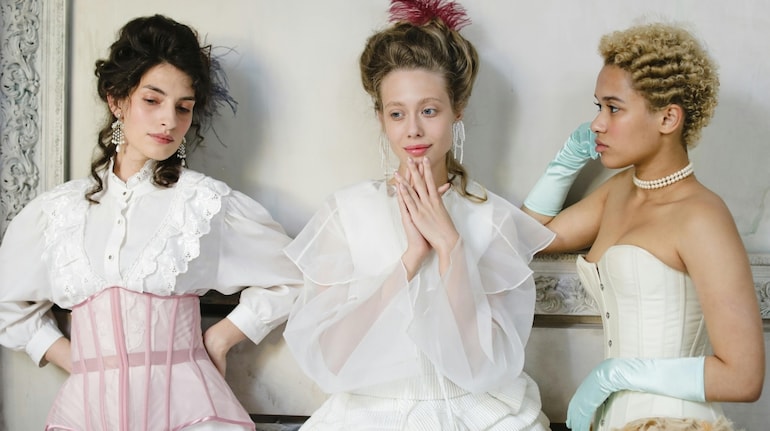

In an age where serums promise eternal youth and cosmetic science prioritises safety, it’s almost unthinkable that once upon a time, beauty literally meant risking your life. Beauty in the past was often nothing short of a chemical gamble, what dazzled in the mirror could ravage the body.
For centuries, people across the world swallowed poisons, bound and distorted their bodies, and smeared toxic compounds on their skin all to fit the ideals of attractiveness in their era. These practices, both bizarre and tragic, reveal how deeply culture and aesthetic values shape human behaviour, and how sadly fragile the body can be beneath the mask of beauty.
In Renaissance Europe, the quest for porcelain-white skin was not a metaphor but a matter of literally bleaching oneself to death. Women (and some men) eagerly applied white lead cosmetics, known as Venetian ceruse, to erase colour from their faces, signalling wealth and class. Pale skin conveyed status precisely because it meant you never toiled under the sun; sadly, the lead in these creams caused itching, hair loss, scarring and long-term poisoning. Some scholars even suggest that figures like Queen Elizabeth I’s famed white complexion came at a heavy personal cost, potentially contributing to health problems later in life.
Centuries later, the Victorian era brought its own suite of dangerous trends. Women obsessed over delicacy and frailty; pale skin, delicate features and a slim silhouette. To achieve such ideals they ingested arsenic wafers sold as beauty supplements, unaware that the same compound used in murder mysteries was creeping into their bloodstream. Others reached for belladonna, also called deadly nightshade, to dilate pupils and create a seductive gaze, though misuse could lead to blindness or worse. Such practices were advertised as harmless, revealing just how blurred the line between fad and fatal hazard could be.
In ancient Rome and Greece, flawless paleness was a status symbol. Lead-based powders were the go-to cosmetic to hide blemishes and signal nobility, but repeated use brought neurological damage and poisoning long before the dangers were understood.
By the 19th century, slenderness was fashion’s currency. Tight-laced corsets reshaped women’s bodies but also cut off breathing, displaced organs and sometimes caused broken ribs in pursuit of an “ideal” waist.
Sold widely in the Victorian and Edwardian periods, arsenic complexion wafers promised a translucent look liked by the elite. Instead many consumers suffered nervous system and kidney damage, and in some cases died.
Also Read: Republic Day 2026: From khadi to handloom, how PM Narendra Modi champions Indian craft
In the early 20th century, the discovery of radioactivity brought a bizarre beauty fad: face creams laced with uranium or radium. While they briefly promised glowing skin, later use revealed catastrophic long-term effects.
Across Renaissance Europe, women used extracts of nightshade, a deadly plant, as eyedrops to achieve alluring dilated pupils. But the fine line between an enchanting gaze and blindness was all too easy to cross.
Discover the latest Business News, Sensex, and Nifty updates. Obtain Personal Finance insights, tax queries, and expert opinions on Moneycontrol or download the Moneycontrol App to stay updated!
Find the best of Al News in one place, specially curated for you every weekend.
Stay on top of the latest tech trends and biggest startup news.