






For decades, the now‑famous 10,000 steps a day mantra has ruled fitness trackers, health articles, and daily‑walk challenges. It’s become almost a modern wellness ritual that says hit 10,000 steps and you’ve done your exercise for the day.
But a recent claim from fitness coach Zarina Manaenkova may force many to rethink that routine.
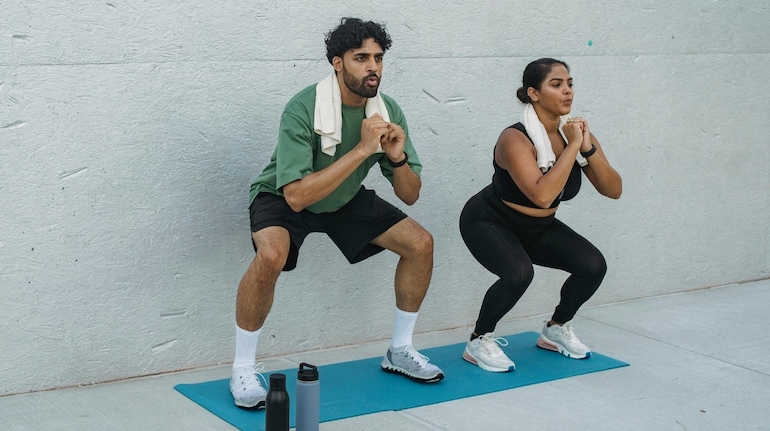
In a post that quickly went viral, Manaenkova suggested that people could achieve similar, or even superior, health benefits with periodic squats instead of those daily steps. Her prescription suggests performing ten squats every 45 minutes, rather than banking all your movement into a long walk or step count. According to her, active muscle contraction produces biochemical signals that support metabolism, brain function, and fat burning, effects that simple walking may not trigger as strongly.
Also read | Exercise tips: 6 home workouts to burn more calories than the gym
A post shared by Zarina Manaenkova | Woman.Body.Mindfulness.Success (@zarina_del_mar_world)View this post on Instagram
It might look like a bold claim, especially when you consider the popularity of step goals. Walking has been long praised for cardiovascular health, improved circulation, stress relief, and gentle calorie burn. Recent studies even suggest that far fewer than 10,000 steps may deliver meaningful health gains.
Just 4,000 steps a few times a week can help lower mortality and cardiovascular risk among older adults. However, walking alone might not deliver the full benefits that come from engaging large muscle groups.
What sets squats apart is their ability to turn passive movement into active load-bearing work. They engage major lower-body muscles, the glutes, quadriceps, hamstrings, and calves, as well as your core and stabilising muscles around hips and ankles. Considering the sources cited by Manaenkova, proper squats can strengthen these muscle groups, support joint and bone health by reinforcing ligaments and tendons, and even improve posture, balance and mobility.
Also read | Best exercise tips for beginners: Transform your fitness journey with these expert-approved workout hacks
According to the International Journal of Physical Education, Sports and Health (IJPEHS), squats can boost mobility, stability, and joint health. Performing a full squat requires the hip, knee, and ankle joints to move through their full range of motion, which stretches and strengthens key muscles such as the glutes, hip flexors, adductors, quadriceps, and hamstrings.
Ankle mobility is particularly important for maintaining balance and proper alignment, and regular squatting improves flexibility in the Achilles tendon, soleus, and gastrocnemius, reducing stiffness and injury risk.
Moreover, IJPEHS informs that squats also strengthen muscles, ligaments, and tendons, promoting joint stability and proprioception, which are crucial for prevention of acute and degenerative injuries. Along with joint health, full squats also improve functional fitness by mirroring daily activities like bending, lifting or sitting, improving strength, balance and coordination. Thus, squats contribute to better performance, injury prevention, and long-term good health.
Disclaimer: This article, including health and fitness advice, only provides generic information. Don’t treat it as a substitute for qualified medical opinion. Always consult a specialist for specific health diagnosis.
Discover the latest Business News, Sensex, and Nifty updates. Obtain Personal Finance insights, tax queries, and expert opinions on Moneycontrol or download the Moneycontrol App to stay updated!
Find the best of Al News in one place, specially curated for you every weekend.
Stay on top of the latest tech trends and biggest startup news.




