






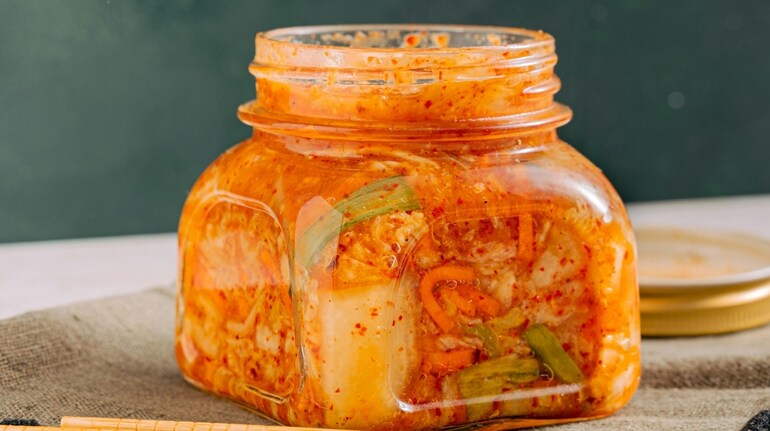
There’s a familiar anxiety that creeps in every winter: a sniffle here, a cough there, and the uneasy sense that something worse is lurking on the bus home. As colds and flu overlap, many reach for old comforts like scarves, soup, and perhaps something fermented. A recent study says that kimchi might be doing far more than warming the soul.
According to a new study by the National Research Council of Science & Technology, kimchi appears to help the immune system walk a careful line between attack and restraint. Rather than simply switching immune defences on full blast, the Korean staple seems to teach the body when to respond and when to stand down. For a food long praised in kitchens and folklore, it’s a rare moment of hard scientific vindication.
The research comes from a clinical trial led by the World Institute of Kimchi, using technology that would have sounded like science fiction back in the days of fax machines and floppy disks. Scientists looked at immune cells one by one, tracking how genes behaved after people ate kimchi regularly. What they found was not immune chaos, but order – and that, it seems, is the real secret.
Also read: Are the eggs you eat for breakfast safe? Doctor says beware of this one substance
This was no casual taste test. Over twelve weeks, volunteers were split into groups and given either a placebo or kimchi powder made in different ways. Blood samples were then put under the microscope using single-cell genetic sequencing, allowing researchers to see how each immune cells reacted. It’s the first time kimchi’s effects have been mapped at this microscopic level.
The standout result was balance. Immune sentinels known as antigen-presenting cells became sharper at spotting threats, while CD4+ T cells matured into both fighters and peacekeepers. In plain terms, kimchi helped the body defend itself without picking unnecessary fights, a quality increasingly prized in modern immunology.
Interestingly, not all kimchi behaved the same. Kimchi made with controlled starter cultures produced a calmer, more efficient immune response than naturally fermented versions. That opens the door to future food technologies designed not just for flavour, but for targeted health benefits.
Published in a leading international food science journal, the study adds weight to the idea of kimchi as a functional food – something that does a job beyond filling you up. The lead researcher Dr Woo Jae Lee says, kimchi can both “activate defence cells and suppress excessive response”.
Q. What is fermented kimchi?
Fermented kimchi is a traditional Korean dish made by fermenting vegetables like napa cabbage or radish with salt, spices and beneficial bacteria.
Q. How does fermentation change kimchi?
Fermentation allows good bacteria to grow, which enhances flavour, improves digestibility and increases its probiotic content.
Q. Is fermented kimchi good for gut health?
Yes, fermented kimchi contains live probiotics that support a healthy gut microbiome and better digestion.
Q. Does fermented kimchi help boost immunity?
A healthy gut plays a key role in immune function, and the probiotics in fermented kimchi may help strengthen the body’s immune response.
Q. How often can fermented kimchi be eaten?
It can be eaten regularly in moderate amounts as part of a balanced diet, depending on individual tolerance and salt sensitivity.
Disclaimer: This article, including health and fitness advice, only provides generic information. Don’t treat it as a substitute for qualified medical opinion. Always consult a specialist for specific health diagnosis.
Discover the latest Business News, Sensex, and Nifty updates. Obtain Personal Finance insights, tax queries, and expert opinions on Moneycontrol or download the Moneycontrol App to stay updated!
Find the best of Al News in one place, specially curated for you every weekend.
Stay on top of the latest tech trends and biggest startup news.




