






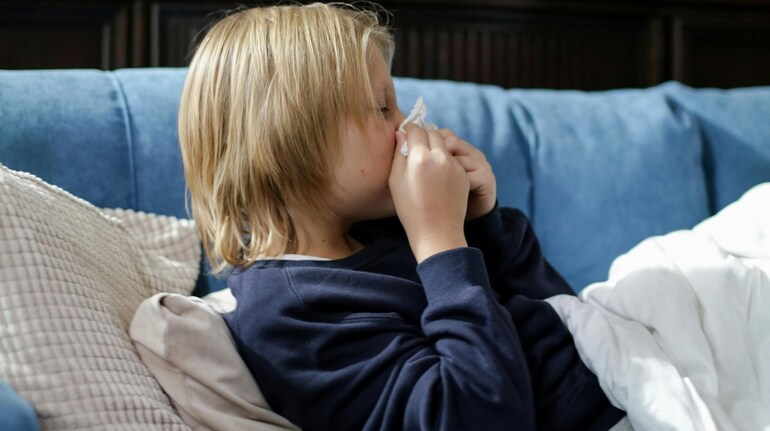

When coughing in children refuses to quit, most parents worry viruses, asthma or an allergic run-of-the-mill cold. However, for one little girl in Pune, a cough that stretched for eight agonising months revealed that the trigger isn’t always hidden deep inside the body, it’s floating in the air around us.
A six-year-old had been coughing so persistently that her family lost count of how many times they’d rushed to consult doctors, begged for answers, and watched medication fail to make a dent. X-rays appeared normal, chest examinations yielded no alarm, and standard treatments brought no solace. It wasn’t until a casual moment in a clinic waiting room that the mystery revealed itself. A nurse, overwhelmed by the mother’s strong perfume, started coughing herself. That was the clue clinicians had overlooked.
Within weeks, after the mother stopped wearing the perfume, the child’s cough, a symptom that had consumed nearly a third of a year, began to fade. This simple change suggests that a persistent cough in children, typically defined as lasting more than four to eight weeks, calls for a careful evaluation of not just infections or chronic illnesses, but also environmental irritants and exposures.
Chronic cough in children isn’t always about germs. Things like strong fragrances, aerosols, incense, smoke, and even scented detergents can irritate sensitive airways and sustain coughing. Sometimes, simply altering a child’s surroundings brings dramatic relief.
A cough lasting longer than 4–8 weeks is not “just a cold.” According to respiratory guidelines, persistent coughs warrant detailed history-taking and examination to rule out post-nasal drip, asthma, reflux, or less common causes like airway abnormalities.
What is ordinary for adults, such as a favourite perfume, can be a potent irritant for a child’s developing respiratory system. Kids’ airways are narrower and more reactive, making them disproportionately affected by environmental triggers.
Also Read: What causes your cough? Acute vs chronic cough symptoms and treatments explained
Sometimes a cough isn’t linked to infection or inflammation at all, it could be protective, habitual, or triggered by something entirely external. Physicians emphasize a broad diagnostic approach before defaulting to medication.
Persistent coughs can disrupt sleep, school and play, and should never be dismissed as “just a phase.” Early attention improves outcomes and prevents complications of overlooked conditions such as asthma or chronic bronchitis.
1. Can perfumes and fragrances cause a persistent cough in children?
Yes, strong fragrances can be potent irritants for a child’s respiratory system, leading to a persistent cough.
2. Are environmental factors significant in evaluating a child’s chronic cough?
Absolutely. Factors like aerosols, incense, smoke, and scented detergents should be considered as potential triggers.
3. How long should a persistent cough last before seeking further medical evaluation?
A cough lasting more than 4–8 weeks warrants a detailed medical evaluation to rule out various causes.
4. Why are children more affected by environmental triggers than adults?
Children’s airways are narrower and more reactive, making them more susceptible to environmental irritants.
5. Can a persistent cough be a sign of something other than an infection?
Yes, a persistent cough can be due to factors other than infection, such as environmental irritants or habitual behaviour.
Disclaimer: This article, including health and fitness advice, only provides generic information. Don’t treat it as a substitute for qualified medical opinion. Always consult a specialist for specific health diagnosis
Discover the latest Business News, Sensex, and Nifty updates. Obtain Personal Finance insights, tax queries, and expert opinions on Moneycontrol or download the Moneycontrol App to stay updated!
Find the best of Al News in one place, specially curated for you every weekend.
Stay on top of the latest tech trends and biggest startup news.





