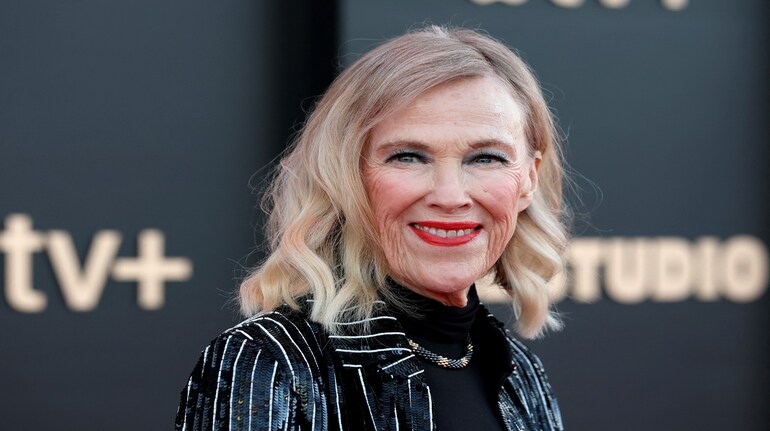

Catherine O’Hara, the acclaimed Canadian-American actor who brought to life iconic characters in Home Alone, Beetlejuice, and Schitt’s Creek, died on January 30, 2026, at 71.
Over the years, O’Hara earned several prestigious accolades, including two Primetime Emmy Awards, a Golden Globe Award, and two Screen Actors Guild Awards, cementing her place as one of the most versatile performers in Hollywood.
While she was a public figure, O’Hara remained largely private about her personal life. In 2020, however, she spoke candidly about living with a rare genetic condition during an appearance on winemaker Kathryn Hall’s Virtual Happy Hour.
During the interview, O’Hara revealed that she had been diagnosed with situs inversus, a condition in which the internal organs are positioned in reverse.
“I am a freak,” she joked at the time, adding, “I don’t even know the name because I don’t want to know the name.”
She discovered the condition nearly two decades earlier during a routine medical check-up with her husband, production designer Bo Welch. While undergoing an electrocardiogram (EKG), doctors noticed something unusual and had to repeat the test using another machine.
“I was like, ‘What is happening?’” she recalled. “He calls us into his office and says, ‘You’re the first one I’ve met!’”
O’Hara later shared that she had never been aware of the condition despite coming from a large family. “I’m one of seven kids, and I’d never heard anything about this,” she said.
When doctors confirmed that her heart and other organs were reversed, her husband responded humorously, saying, “No, her head’s on backwards.”
According to the Cleveland Clinic, situs inversus is a rare congenital condition in which the organs in the chest and abdomen develop in a mirror-image position compared to normal anatomy, known as situs solitus.
O’Hara reportedly had dextrocardia, a form of situs inversus in which the heart points toward the right side of the chest, along with reversed placement of other organs.
The condition affects approximately 1 in 10,000 people and is slightly more common among males. It is usually inherited when both parents carry the mutated gene. Researchers have linked more than 100 genetic mutations to the disorder.
In most cases, people with situs inversus do not experience noticeable symptoms. Despite the reversed organ placement, the organs function normally. Many individuals remain unaware of the condition unless it is detected during medical tests or surgery.
Catherine O’Hara was 71 when she was admitted to a hospital in serious condition, according to media reports. Her representatives at Creative Artists Agency confirmed that she passed away in Los Angeles following a brief illness.
Further details regarding the cause of her death have not been made public.
1. What is situs inversus?
Situs inversus is a rare congenital condition where the internal organs are positioned in a mirror-image arrangement compared to normal anatomy.
2. How common is situs inversus?
The condition affects approximately 1 in 10,000 people and is slightly more common among males.
3. What causes situs inversus?
Situs inversus is usually inherited when both parents carry the mutated gene. More than 100 genetic mutations have been linked to the disorder.
4. What are the symptoms of situs inversus?
Most people with situs inversus do not experience noticeable symptoms, and their organs typically function normally.
5. How is situs inversus diagnosed?
Situs inversus is often detected during medical tests or surgery, as many individuals remain unaware of the condition unless it is discovered incidentally.
Disclaimer: This article, including health and fitness advice, only provides generic information. Don’t treat it as a substitute for qualified medical opinion. Always consult a specialist for specific health diagnosis.

Discover the latest Business News, Sensex, and Nifty updates. Obtain Personal Finance insights, tax queries, and expert opinions on Moneycontrol or download the Moneycontrol App to stay updated!
Find the best of Al News in one place, specially curated for you every weekend.
Stay on top of the latest tech trends and biggest startup news.