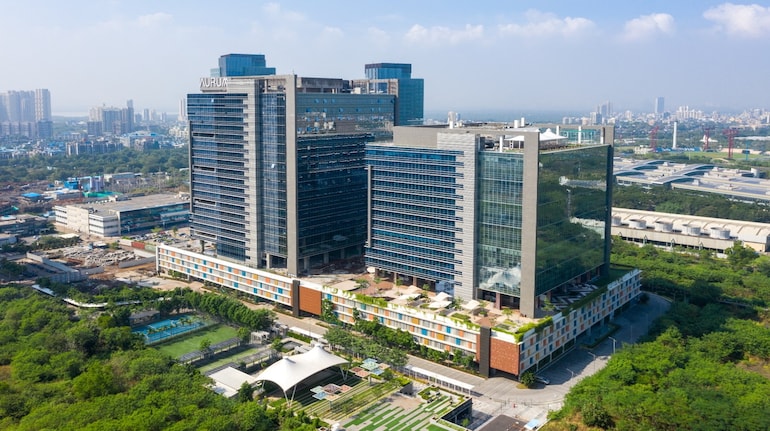
The district town planner (enforcement) has instructed the sub-registrar in Manesar to halt all property registrations linked to Raheja Developers’ commercial project in Sector 84, after it emerged that the project’s licence had lapsed.
According to an official communication issued by the Department of Town and Country Planning (DTCP), the licence for the 2.3-acre commercial colony expired on May 16, 2019, and was never renewed within the stipulated timeframe.
As per Rule 13 of the Haryana Development and Regulation of Urban Areas Rules, 1976, a licence holder is mandated to apply for renewal at least one month before the licence expires. Once the licence lapses without being renewed in accordance with the rules, any sale or transfer loses legal validity. In such situations, no registrations take place.
However, Navin Raheja, chairman and managing director of Raheja Developers Ltd, disputed the action. “The license was to be renewed. We have applied for the same already and we are already making provision for extra benefits to our existing customers by additional area allocation under mixed land TOD," Raheja said.
What does this mean for existing allottees?
For buyers who have already invested in the project, the registration freeze raises immediate concerns around possession timelines. The absence of a valid licence weakens the legal standing of transactions and leaves allottees exposed to prolonged uncertainty.
“For existing allottees, this means long uncertainty on possession, rentals and exit options, with a need to consider collective action (RERA, consumer fora, or writs) to protect investments and press for either project regularisation or refund/compensation,” said Rahul Jajoo, Advocate, Supreme Court.
What are the future aspects of the project?
The project’s future now depends entirely on whether the planning authority decides to grant a licence renewal and if so, on what conditions. Even a revival may not restore normalcy immediately, as regulatory oversight is likely to intensify.
“Its fate hinges entirely upon the discretion of the competent planning authority to grant renewal, and the terms on which such renewal, if at all, is accorded. Even in the event of revival, the project is likely to remain under sustained regulatory scrutiny, with possible imposition of penalties, revised timelines, and enhanced compliance obligations, all of which may materially impact viability and returns,” said Tushar Kumar, Advocate, Supreme Court of India.
What should buyers and investors keep in mind?
From an investor’s perspective, the lapse underscores the risks of projects that are not fully compliant with statutory approvals. “The point is simple: without a valid licence, buyers and investors face uncertainty on title, financing disruption, and higher dispute risk,” said Rahul Hingmire, Managing Partner, Vis Legis Law Practice, Advocates.
“New investors should treat it as a high risk, speculative situation and ideally avoid fresh exposure until there is a public, verifiable regulatory resolution in favour of the project,” Jajoo said.
Without a valid licence, buyers may face issues related to title clarity, financing, and enforceability of contractual rights. “A purchaser or investor must, therefore, exercise heightened caution, recognising that contractual assurances, builder undertakings, or pending renewal applications cannot substitute statutory compliance, nor can they confer marketable title or enforceable rights in the absence of a valid licence,” said Tushar Kumar, Advocate, Supreme Court.
It is also important to check RERA status, any DTCP public notices, and whether any FIRs or enforcement actions are initiated, as these will affect both timelines and enforceability of your rights in the project.
Discover the latest Business News, Sensex, and Nifty updates. Obtain Personal Finance insights, tax queries, and expert opinions on Moneycontrol or download the Moneycontrol App to stay updated!
Find the best of Al News in one place, specially curated for you every weekend.
Stay on top of the latest tech trends and biggest startup news.