
Bengaluru, India’s famed Silicon Valley, groans under the weight of its own success. With a population exceeding an estimated 13 million, the city’s infrastructure is at breaking point, mired in chronic traffic congestion and overcrowding.
The pressing need to decongest the core and foster balanced regional growth echoes the challenges faced by Delhi decades ago. Its solution, in part, was the rise of Gurugram.
Now, all eyes are on Devanahalli, the airport-backed region north of Bengaluru, to see if it can follow a similar transformative path — but with harder-learned lessons in hand.
The Gurugram blueprint: A meteoric rise and its caveats
The parallels between the two satellite hubs are compelling, rooted in geography and economic opportunity. Gurugram’s explosive growth, transforming from farmland in the 1990s into a global corporate hub, was catalysed by private investment, flexible land policies and its adjacency to the national capital and its airport.
However, its largely privatised and ad-hoc growth later exposed severe infrastructural deficits — chronic water shortages, inadequate public transport, flooding and pollution — highlighting the perils of weak governance scrambling to catch up with breakneck development.
Devanahalli’s strategic drivers: Airport, industry and infrastructure
Devanahalli’s cornerstone is the Kempegowda International Airport (KIA), a gateway handling 50 million passengers annually and serving as the anchor for a grand ‘Aerotropolis’ vision. The drivers of growth here are both strategic and substantial.
According to reports, major infrastructure arteries are being laid: the National Highway 44, the ambitious 280 km Satellite Town Ring Road (STRR), a dedicated Rs 4,100 crore airport rail link and planned metro extensions. This connectivity framework is designed to support massive industrial projects.
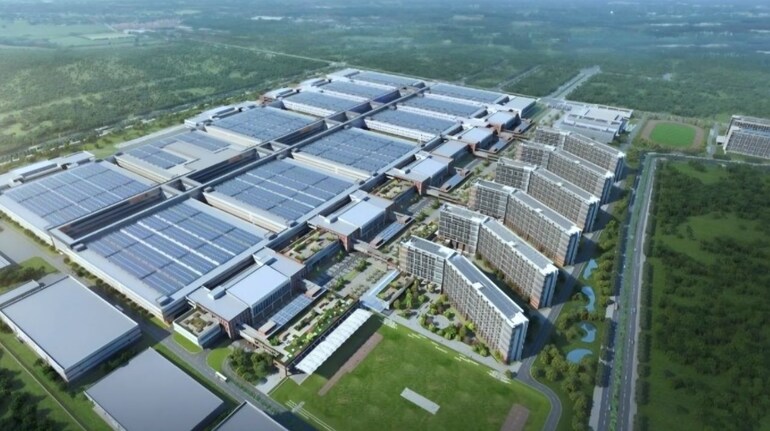
The Karnataka Industrial Areas Development Board (KIADB) Aerospace Park, Foxconn’s iPhone manufacturing unit and the expansive Bengaluru International Airport Limited (BIAL) IT Investment Region (ITIR) spanning 10,000 acres promise to generate hundreds of thousands of jobs.
Real estate surge: Projected growth and investor appeal
This potent mix has ignited the real estate market. Property prices in Devanahalli are projected to reach between Rs 5,500 and Rs 9,000 per square foot by 2026, with annual appreciation estimated at 12–18%, as per reports.
Major developers, including Prestige, Godrej and Sumadhura, are launching premium residential projects, capitalising on rental yields of 3–5% and attracting both investors and end-users with potential returns of 20–25%.
Sustainability challenges: Water scarcity and traffic risks
Yet, the shadow of Gurugram’s experience serves as a cautionary tale. Devanahalli faces analogous risks.
Water scarcity is a pressing concern, with heavy reliance on deep borewells threatening long-term sustainability. Traffic congestion, inherent to a major airport zone, poses another significant challenge.
Learning from Gurugram's lessons
However, analysts point to a potentially critical difference: the element of foresight. “Unlike Gurugram’s initially fragmented growth, Devanahalli benefits from a layer of planned development guided by state blueprints and budgets,” notes a review of the region’s prospects.
Proactive measures like the STRR and metro expansion are being deployed alongside growth, not as belated remedies. The planned integration of suburban rail, industrial clusters and residential townships aims to prevent the lopsided development that plagued its northern predecessor.
A template for balanced urban expansion?
The overarching question is whether this strategic planning can withstand the intense pressures of rapid urbanisation. The goal is ambitious: to sustainably house an estimated 500,000 residents by 2030, providing vital relief to Bengaluru’s saturated core.
Devanahalli is undoubtedly rising as Bengaluru’s northern growth engine, mirroring Gurugram’s airport-centric impetus and corporate appeal. Its true test, however, will be whether it can absorb the immense economic energy while building resilient public infrastructure from the outset.
If it succeeds, it may provide a new, more sustainable template for satellite city development in India — one that learns from the past to build a more balanced future.
Discover the latest Business News, Sensex, and Nifty updates. Obtain Personal Finance insights, tax queries, and expert opinions on Moneycontrol or download the Moneycontrol App to stay updated!
Find the best of Al News in one place, specially curated for you every weekend.
Stay on top of the latest tech trends and biggest startup news.