Vehicle recalls in India fell to their lowest level in eight years during 2025. Manufacturers recalled a total of 119,173 vehicles across two-wheelers, cars and sports utility vehicles during the year, the smallest annual figure since 2017. Industry experts attribute the lower numbers to improvements in manufacturing quality and greater internal checks by automakers.
The recalls were issued to address a range of potential defects, some of which could have posed serious safety risks if left unaddressed. Industry data shows that the sharp decline marks a significant turnaround from previous years when recalls routinely crossed several hundred thousand units.
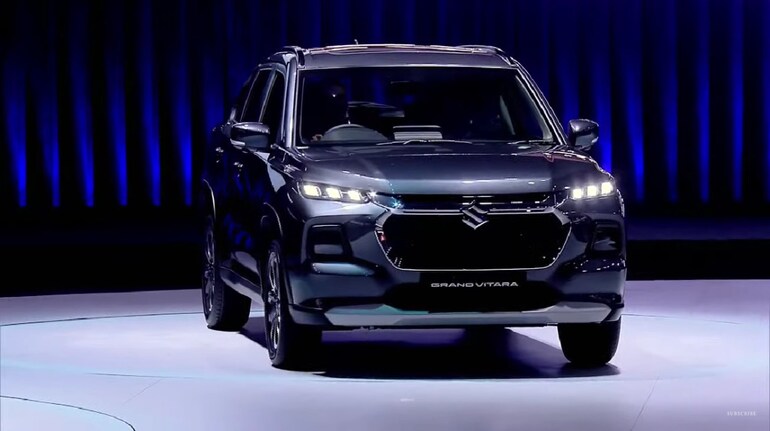
Maruti Suzuki accounted for nearly one-third of all recalls in 2025. The country’s largest carmaker recalled close to 40,000 units of the Grand Vitara after identifying a possible fault in the fuel level indicator and warning light within the speedometer assembly, which could display incorrect fuel status.
Skoda Auto and Volkswagen together recalled around 49,000 vehicles during the year, covering models such as the Kushaq, Slavia, Kylaq, Taigun and Virtus. The issue related to rear seat belts, with the manufacturers warning that in the event of a frontal collision, the buckle latch plate could break, or the webbing of the rear centre seatbelt and buckle of the rear right seatbelt could fail.
Toyota Kirloskar Motor, India’s fifth-largest carmaker, recalled a little over 20,000 vehicles in 2025. More than half of these were Urban Cruiser Hyryder models, recalled for the same fuel indicator-related issue that affected the Maruti Suzuki Grand Vitara, as both vehicles share common mechanical components.
Luxury carmaker Mercedes-Benz recalled 2,820 vehicles during the year, including its best-selling E-Class, AMG E-Class and CLE models. The recalls, issued between January and September, covered petrol-hybrid as well as electric powertrain variants.
Korean automaker Kia recalled 1,380 units of its flagship electric vehicle, the EV6, to address a potential issue with the integrated charging control unit (ICCU), which could affect the performance of the 12-volt auxiliary battery.
Vehicle recalls are typically initiated when manufacturers identify confirmed or potential issues, either through internal quality audits or customer complaints. Industry experts say the decline in recall volumes indicates better production standards and stronger quality control systems.
“In the past, recalls were seen as a negative. That perception has changed,” said a Delhi-based carmaker. “A recall shows that a manufacturer is actively monitoring its products and taking preventive action. Voluntary recalls are far better than issues escalating through social media outrage, which can seriously damage brand image.”
The contrast with previous years is stark. India witnessed a record 1.3 million vehicle recalls in 2021, the highest ever in a single year. In 2024, recalls stood at 864,351 units, according to data from the Society of Indian Automobile Manufacturers (SIAM).
Despite becoming the world’s fourth-largest automotive market by 2022, India implemented a formal, government-defined recall policy only in April 2021. Under the Central Motor Vehicle Rules, 2021, introduced by the Ministry of Road Transport and Highways, manufacturers can face penalties of up to ₹1 crore, depending on the scale and nature of recalls.
.

Discover the latest Business News, Sensex, and Nifty updates. Obtain Personal Finance insights, tax queries, and expert opinions on Moneycontrol or download the Moneycontrol App to stay updated!
Find the best of Al News in one place, specially curated for you every weekend.
Stay on top of the latest tech trends and biggest startup news.