
As fighting spreads across the Middle East following US and Israeli strikes on Iran, some Iranian Kurdish opposition groups believe the turmoil could open a rare path toward self-determination. Many of these groups operate from bases in northern Iraq, where they have spent years in exile, and they now see the war as a potential turning point.
Despite a long and often uneasy history with Washington, several Kurdish factions say they would be willing to work with the United States if the conflict weakens the Iranian leadership.
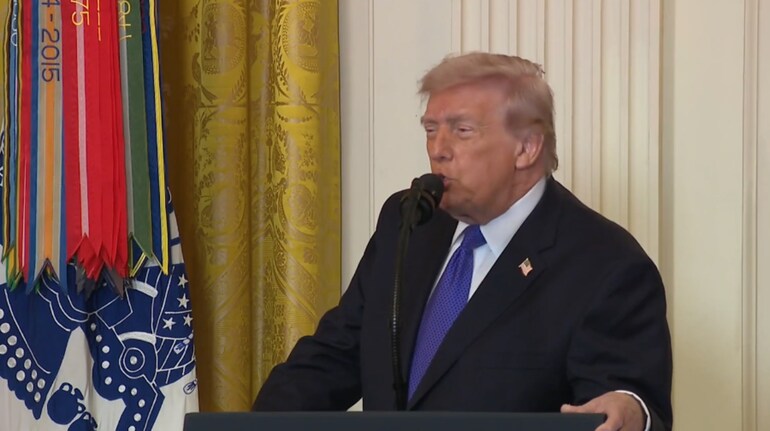
On Thursday, US President Donald Trump told Reuters he would “be all for” an offensive by Iranian Kurdish fighters into Iran, though he declined to say whether the United States would provide air cover for such an operation.
What is happening in northern Iraq?
Iraq’s autonomous Kurdistan region hosts camps and rear bases used by several Iranian Kurdish armed opposition groups. Tehran has repeatedly targeted these sites with cross-border attacks, accusing the groups of serving Western or Israeli interests.
Since the latest war began, Iranian forces have again struck positions linked to these groups.
An Iraqi security official told AFP that Iranian authorities warned Baghdad that hundreds of Kurdish fighters could attempt to cross into Iran.
For now, opposition sources say that has not happened.
Several members of the Kurdish opposition told AFP that no fighters have yet entered Iranian territory, though the possibility remains under discussion.
Kalel Kani Sanani, spokesperson for the Kurdistan Freedom Party PAK, suggested the situation could change if the conflict continues.
“If the strikes continue, the regime forces will be weakened,” Sanani said.
That, he argued, could create the conditions for a broader uprising inside Iran.
“We are closely monitoring the course of the war, and if it continues like this, we are likely to witness an uprising in Iranian Kurdistan,” he said.
Sanani added that preparations were already underway and that armed groups could eventually confront “what remains of the Iranian regime's forces.”
What do Iranian Kurds want?
The Kurdish people, who share a distinct culture and language, live across mountainous regions spanning Iran, Iraq, Syria, and Turkey. For decades, many Kurdish movements have pushed for autonomy or independence, often facing military repression and setbacks.
Iran’s Kurdish population represents one of the country’s most significant non-Persian ethnic minorities.
Sanani said Kurdish groups believe the current conflict could shift the balance.
“We believe that this war will create an opportunity for the people of Kurdistan to live freely,” he said.
Some analysts say Iranian Kurdish groups are inspired by developments in neighboring Iraq.
The 1991 Gulf War created conditions that allowed Iraqi Kurds to achieve de facto autonomy after the United States and its allies imposed a no-fly zone to protect them from Saddam Hussein’s forces.
Adel Bakawan, director of the European Institute for Studies on the Middle East and North Africa, said Iranian Kurds hope to replicate that experience.
“Iranian Kurds want to follow the path” taken by Iraqi Kurds, he said.
Why consider working with the United States?
Despite Washington’s history of shifting alliances with Kurdish groups across the region, some Iranian Kurdish factions say they would accept US help if it helped weaken Tehran.
Sanani said their position was pragmatic.
“If they help us overthrow or weaken the regime in Iranian Kurdistan and protect us as they did in Iraqi Kurdistan in 1991, we will accept” their aid.
Analysts say such cooperation would fit a familiar pattern.
Renad Mansour of the Chatham House think tank said the situation “appears to be another chapter in a long history in which the US seeks different Kurdish militant groups... to support in various battles.”
Even so, Kurdish leaders appear willing to take the risk.
For now, Mansour said, the partnership would likely amount to “just another marriage of convenience.”
How could regional powers react?
The situation is delicate for neighboring countries.
Baghdad has said it intends to honour its security agreement with Tehran to secure the shared border, and Kurdish authorities in Iraq have denied any involvement in plans to arm or send fighters into Iran.
At the same time, Iraq’s Kurdistan region has already been drawn into the wider conflict and has faced drone and missile attacks targeting US bases located there.
Turkey, which has battled its own Kurdish insurgency for decades, warned against developments that could “negatively affect... the overall peace and stability of the region.”
Bakawan argued that Iranian Kurds should not view Turkey as an adversary.
Instead, he said they could follow the political model used by Iraq’s Kurdish region, which maintains close ties with Ankara.
Meanwhile, Mansour suggested that Syria -- despite tensions with Kurdish groups -- could welcome any development that weakens Iran, which it considers a rival.
(With inputs from AFP)
Discover the latest Business News, Sensex, and Nifty updates. Obtain Personal Finance insights, tax queries, and expert opinions on Moneycontrol or download the Moneycontrol App to stay updated!
Find the best of Al News in one place, specially curated for you every weekend.
Stay on top of the latest tech trends and biggest startup news.