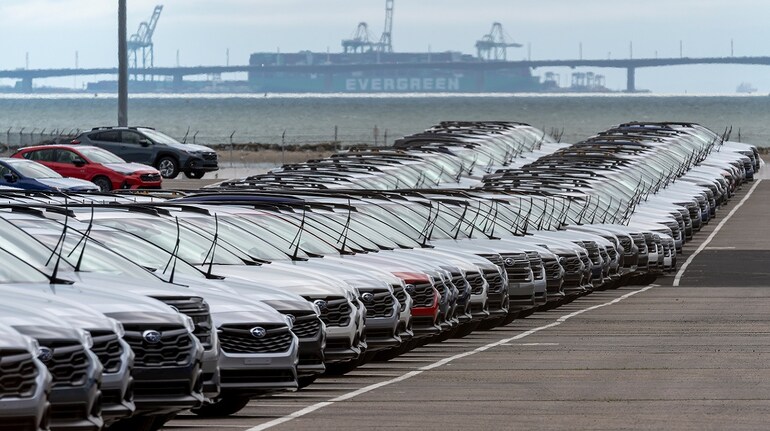
Donald Trump once promised a “golden age” for American automakers. In April, he announced sweeping 25% tariffs on imported vehicles, along with a slate of other levies on auto parts and materials. Standing before auto workers at the White House, he pledged that “jobs and factories will come roaring back into our country.” But several months in, the picture is far more complicated—and far more painful for American companies than many had anticipated, the Financial Times reported.
Take Detroit Axle, a Michigan-based car parts company led by Mike Musheinesh. His company once paid $700,000 a month in tariffs. Since April, that figure has surged to over $7 million, as tariffs on Chinese-made parts brought in via Mexico soared to 72.5%. With no immediate access to cheaper American alternatives, Musheinesh filed a lawsuit against the Trump administration, saying the sudden cost spike threatened the survival of his family business.
American companies bear the brunt
Detroit Axle’s ordeal reflects a broader pattern. The tariffs were designed to hurt foreign competition and protect US manufacturers. But in practice, American automakers are taking some of the biggest hits. The so-called “Big Three”—Ford, General Motors, and Stellantis—have together forecast a combined $7 billion in losses due to tariffs in 2025. GM anticipates a $3.5 billion hit alone.
Ford recently reported a net loss for the second quarter after an $800 million tariff impact erased its profits. CEO Jim Farley described Ford as “the most American company with a $2 billion liability.” Even Tesla’s Elon Musk, whose company is heavily focused on domestic manufacturing, has warned of “tough quarters ahead,” citing $300 million in additional costs in just one quarter.
Canada and Mexico face higher hurdles
The trade picture is uneven. Trump has signed tariff-cutting deals with the EU, Japan, and South Korea, bringing their car tariff rates down to 15%. But Canada and Mexico—America’s closest automotive partners under the 2020 USMCA trade pact—remain without updated agreements. As a result, vehicles made in those countries now face tariffs of 27.5%, more than those imported from Asia or Europe.
This discrepancy has left US automakers puzzled and frustrated. Antonio Filosa, CEO of Stellantis, noted that nearly a quarter of all cars sold in the US are assembled in Canada and Mexico with high levels of US parts content. Meanwhile, he added, cars from Europe and Asia, with “virtually zero” US content, benefit from lower tariffs.
Relief measures create more complexity
To cushion the blow, the administration has created exemptions and rebates. Car parts from Canada and Mexico that meet USMCA rules are tariff-free. Vehicles built in the US are eligible for rebates of up to 3.75% of their retail value. And cars compliant with USMCA rules face tariffs only on their non-US components.
Still, the rules are difficult to navigate. For example, BMW builds about half its US-sold vehicles in South Carolina but sources key parts like engines from Europe. As a result, its American-made cars are still hit with the full 27.5% tariff. That’s despite a new US-EU agreement that lowers rates to 15% for future shipments.
Prices are rising—and more are coming
Carmakers have been slow to raise prices, wary of consumer backlash and political scrutiny. But analysts say that can’t continue forever. According to Kelley Blue Book, the average transaction price for new vehicles rose 1.2% year-over-year in June. Cox Automotive projects a 4–8% price hike by the end of 2025, with most increases likely to come as new models are introduced in the fall.
To avoid making headlines, some manufacturers are quietly raising financing costs or cutting promotional discounts rather than lifting sticker prices. The impact will still be felt by buyers, especially lower-income Americans already strained by high inflation and interest rates.
Detroit Axle’s unexpected turnaround
At Detroit Axle, the situation remains fragile. Musheinesh initially warned he would need to lay off over 100 workers and shutter a warehouse to survive. But after raising prices and watching competitors collapse, the company has seen a 20% rise in sales. Despite an 80% decline in profit, Musheinesh has reversed plans for layoffs and stabilized his 300-plus workforce—for now.
“The world has changed,” he said. “Short of an economic crisis occurring, I don’t see it going back. American consumers are the ones that are paying for it in the end.”
A reshaped industry with an uncertain future
Automakers are now lobbying the White House for a clearer, more balanced trade policy. Ford’s finance chief Sherry House said talks with the administration have been “constructive,” but added, “We do have real work to do.”
Supply chains remain tangled. Companies like GM are investing billions to move production back to the US—but that shift takes years. Meanwhile, the global car industry continues to wrestle with falling demand in China, soaring EV costs, and the growing burden of tariffs on materials like copper and aluminium.
Trump’s car tariff regime may not be permanent. But even if the policies change, the disruption they’ve caused—economic, political, and industrial—will leave a lasting mark.
Discover the latest Business News, Sensex, and Nifty updates. Obtain Personal Finance insights, tax queries, and expert opinions on Moneycontrol or download the Moneycontrol App to stay updated!
Find the best of Al News in one place, specially curated for you every weekend.
Stay on top of the latest tech trends and biggest startup news.