






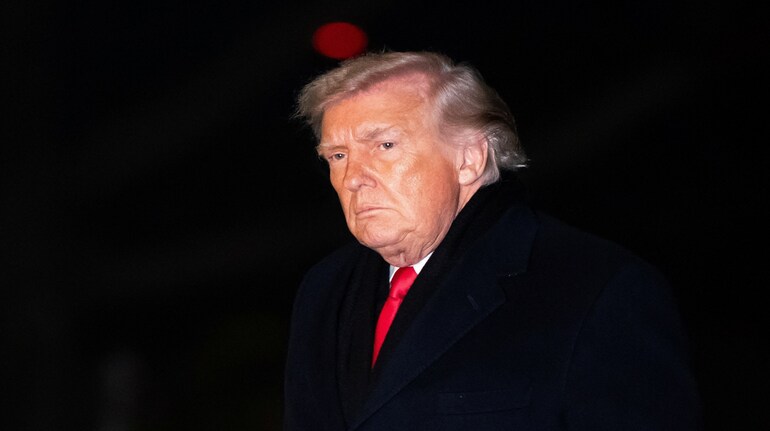

For decades, calls for regime change in Cuba have been a rallying cry for conservative lawmakers in Washington, especially in South Florida. Now, US President Donald Trump faces a more complicated calculation.
With Cuba’s economy in severe crisis — worsened by new US pressure on oil supplies — the administration is signalling it may prefer a negotiated, incremental transition over a sudden collapse of the island’s communist government, the New York Times reported.
Pressure without invasion
Unlike his approach toward Venezuela — where US forces captured Nicolás Maduro earlier this year — Trump has not threatened military action against Cuba. Instead, his administration has tightened economic screws.
After forcing Venezuela to halt oil shipments to Havana, the White House warned other countries against supplying fuel to the island. Mexico, Cuba’s remaining significant supplier, has since stopped shipments. The result has been blackouts, shortened workweeks and mounting strain on basic services.
The administration has simultaneously allowed limited resale of Venezuelan oil to Cuba’s private sector, an apparent attempt to ease humanitarian fallout without strengthening the state.
Rubio’s tonal shift
Secretary of State Marco Rubio, long a vocal critic of Havana’s “brutal dictatorship,” has recently adopted more measured language. Speaking after meetings with Caribbean leaders, he suggested change in Cuba “doesn’t have to happen all at once.”
Rubio has indicated that economic reform — opening space for private enterprise — could precede political transformation. The emphasis reflects an acknowledgment that a sudden power vacuum in Havana could unleash instability far beyond Cuba’s borders.
The administration has reportedly explored contacts with figures inside Cuba’s ruling system, including Raúl Guillermo Rodríguez Castro, a senior security official and grandson of Raúl Castro. Whether any such back-channel engagement will yield results remains uncertain.
Why a collapse could backfire
Cuba’s economy is under severe stress. Analysts describe the current moment as the island’s gravest crisis since the early 1990s, after the Soviet Union’s collapse.
But Washington’s fear is not simply economic failure. A rapid breakdown could trigger violence, factional infighting within the military, or mass migration toward Florida — a scenario that has historically rattled US politics. Refugee waves in 1980 and the mid-1990s created domestic crises for American presidents.
Cuba is just 90 miles from US shores. Any humanitarian collapse would be immediate and visible.
A declassified US intelligence assessment from the early 1990s warned that a government implosion in Cuba could produce “substantial and possibly protracted instability,” violent reprisals and large-scale emigration. Similar concerns appear to be shaping current strategy.
The limits of the Venezuela model
In Venezuela, Trump ultimately prioritised oil access and stability over immediate political overhaul. Even after US forces removed Maduro, Washington has cooperated with his successor to maintain energy flows.
Cuba presents a different equation. Its economy is smaller and more isolated, offering fewer economic incentives. At the same time, Cuba’s political system is more entrenched. The communist leadership has ruled for nearly seven decades, leaving no organised domestic opposition capable of stepping in quickly.
Some analysts argue that seeking a Cuban equivalent of Venezuela’s transitional figures is unrealistic. The ruling elite remains cohesive, and dissenters are largely imprisoned or in exile.
Domestic politics versus geopolitical caution
Hard-line Cuban American lawmakers continue to call for swift liberation. Representative María Elvira Salazar recently declared that “Cuba’s day of freedom is closer than ever.”
Yet the administration’s rhetoric suggests caution. White House press secretary Karoline Leavitt described the Cuban regime as “falling” but stopped short of outlining a plan for forced removal.
Trump and Rubio appear to be balancing two imperatives: satisfying political allies who favour regime change while avoiding the instability that abrupt collapse could produce.
An island that has defied predictions
Predictions of Cuba’s imminent fall have surfaced repeatedly over the past 60 years — and repeatedly proved wrong. Even during the dire economic crisis of the early 1990s, the government endured.
Today’s economic chokehold is severe, but the regime still controls security forces and political institutions. President Miguel Díaz-Canel has insisted Cuba will not negotiate over its sovereignty or constitution.
What comes next
The administration’s emerging posture suggests a willingness to trade immediate political transformation for gradual economic reform, at least in the near term. That may reduce the risk of chaos — but it also delays the sweeping change many of Trump’s allies have long demanded.
The question now is whether Cuba’s leadership views limited reform as survival — or surrender.
For Washington, the calculus is stark: push too hard and risk disorder on America’s doorstep; push too little and preserve the system it has opposed for generations.
Discover the latest Business News, Sensex, and Nifty updates. Obtain Personal Finance insights, tax queries, and expert opinions on Moneycontrol or download the Moneycontrol App to stay updated!
Find the best of Al News in one place, specially curated for you every weekend.
Stay on top of the latest tech trends and biggest startup news.





