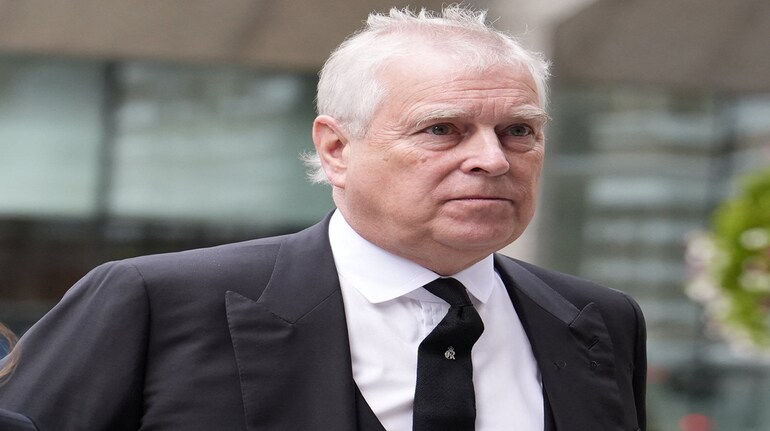

For decades, the British monarchy followed an unwritten rule when it came to Prince Andrew: protect him, absorb the damage, and move on. That rule effectively ended when King Charles III became king.
Andrew’s recent arrest on suspicion of misconduct in public office has brought that shift into sharp focus. While the investigation is still unfolding and Andrew has not been charged, the palace’s response has been unambiguous. There is no visible attempt to soften the fallout, close ranks, or shield him from consequences, the New York Times reported.
That is a clear break from how his mother handled similar crises.
How the Queen protected Andrew
Under Queen Elizabeth II, Andrew remained part of the royal picture even after his reputation collapsed over his ties to Jeffrey Epstein. In 2022, just weeks after Andrew paid a multimillion-pound settlement to Virginia Giuffre, the Queen insisted he escort her into Westminster Abbey for Prince Philip’s memorial service.
That moment was widely read as a statement. Andrew might be disgraced, but he was still under the monarch’s protection.
Elizabeth’s approach stemmed from a belief that defending her son and defending the institution were the same thing. Critics argue that instinct blurred lines between personal loyalty and public responsibility, but it defined Andrew’s royal life.
What Charles has done differently
Charles has taken the opposite view. Since ascending the throne, he has systematically removed Andrew from royal life.
First came the loss of military uniform privileges at the Queen’s funeral. Then a marginal role at the coronation, seated far from the centre of the ceremony. By late 2025, Charles stripped him of the Duke of York title and instructed that he be referred to simply as Andrew Mountbatten-Windsor.
The response to Andrew’s arrest went further. Charles issued a rare first-person statement expressing concern and pledging full cooperation with authorities. In royal terms, that was as close to a public disavowal as possible.
The message was simple. Andrew’s problems are Andrew’s alone.
Why this matters beyond family drama
This is not just about sibling rivalry or resentment built up over decades. It reflects a calculation about the monarchy’s survival.
Charles inherited a crown already under pressure from republican sentiment, media scrutiny, and demands for accountability. Any perception that the palace shields wrongdoing risks damaging the institution itself.
By distancing the crown from Andrew, Charles is drawing a line between private family failure and public monarchy. He is signalling that royal blood no longer guarantees protection.
Andrew’s long shadow
Andrew’s ties to Epstein were only part of the problem. Questions have long surrounded his conduct as Britain’s trade envoy, a role that gave him access to officials, documents, and foreign leaders. Investigators are now reportedly examining whether he misused that position.
Within royal circles, Andrew was often seen as reckless and entitled, convinced that status insulated him from consequences. That assumption no longer holds.
The wider implications
Andrew remains eighth in line to the throne, a technicality that has renewed calls for reform. British media report that the government is considering legislation to change succession rules to remove him altogether.
For Charles, the stakes are high. His reign is still young, and Andrew’s case risks becoming a defining test of whether the monarchy can adapt to modern expectations of accountability.
The contrast with his mother is stark. Elizabeth closed ranks. Charles has stepped back.
In doing so, he has made one thing clear. Loyalty to the crown now comes before loyalty to family, even when the cost is painfully personal.
Discover the latest Business News, Sensex, and Nifty updates. Obtain Personal Finance insights, tax queries, and expert opinions on Moneycontrol or download the Moneycontrol App to stay updated!
Find the best of Al News in one place, specially curated for you every weekend.
Stay on top of the latest tech trends and biggest startup news.