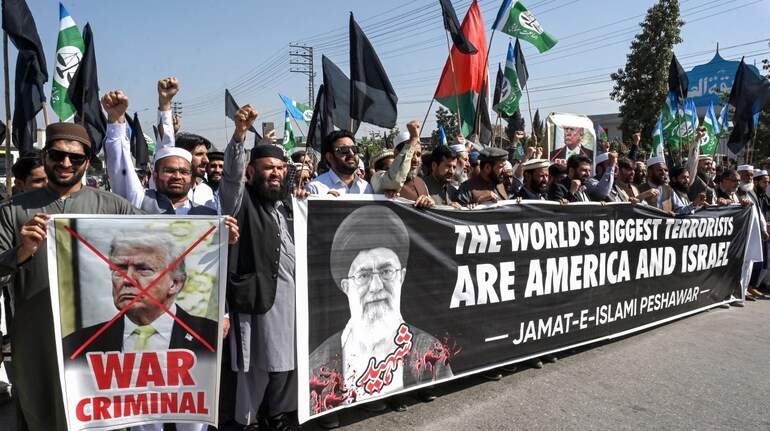
When the United States and Israel opened hostilities against Iran with a strike that killed Ayatollah Ali Khamenei, the legal questions began almost immediately. It is rare for a country to deliberately target and kill the sitting head of another sovereign state. That rarity is part of why the legal framework feels unsettled.
Here is where the arguments stand, according to the New York Times.
Was Khamenei a lawful target?
Khamenei was not a uniformed general. But he was Iran’s supreme leader and commander in chief of its armed forces. Under the laws of armed conflict, military commanders are legitimate targets during an armed conflict. Civilian officials who play no role in hostilities are not.
The complication is that Khamenei straddled both categories. Legal scholars generally agree that a civilian leader who directs military operations can be targeted during a war. The sticking point is timing. The armed conflict effectively began with the strike that killed him. If there was no prior state of armed conflict, then the legal basis for treating him as a wartime target becomes harder to defend.
Did the strike violate the UN Charter?
The United Nations Charter bars countries from using force against another state unless they are acting in self-defence against an armed attack or have Security Council approval. There was no Security Council authorisation here.
The Trump administration has framed the strike as defensive, saying it was aimed at eliminating imminent threats to US personnel. But public statements have not described a specific attack that was about to occur. Instead, officials have cited Iran’s broader military posture and the risk of escalation if Israel struck first.
Under international law, “imminent” has traditionally meant an attack that is about to happen, not one that might occur at some undefined future point. Critics argue that expanding that definition weakens the core prohibition on cross-border force.
Legal experts also point out a sequencing issue. Even if Khamenei could be considered a lawful military target during war, the war itself must begin lawfully. A country cannot retroactively justify the killing of a foreign leader by declaring that the strike itself started a conflict.
What about US constitutional authority?
The US Constitution gives US Congress the power to declare war. In practice, presidents have launched military operations without formal declarations for decades, arguing that limited engagements fall within their authority as commander in chief.
This strike was not a short drone operation against a non-state actor. It targeted the leader of a sovereign nation and triggered open hostilities. That scale makes the absence of congressional authorization more legally and politically significant.
Whether courts would intervene is another question. Historically, judges have been reluctant to police war powers disputes between Congress and the president.
Does the assassination ban matter?
Executive Order 12333 prohibits US officials from engaging in assassination. The order does not clearly define what qualifies as assassination, and administrations have long argued that targeted killings during armed conflict or in self-defence are not covered.
That reasoning was used to justify the 2020 strike on Iranian General Qassim Suleimani. But Suleimani was a military officer, not the head of state. Extending the same logic to a sitting national leader pushes the interpretation further.
If Israel carried out the strike, is the US still responsible?
Under international law’s doctrine of state responsibility, a country that knowingly assists another in committing an unlawful act can share liability. If US intelligence provided Khamenei’s location with the understanding that he would be targeted, legal responsibility would not stop at Israel’s doorstep.
The bottom line is that the legality of the strike depends on contested interpretations of self-defence, imminence and executive power. It is not a settled question. What is clear is that killing a sitting head of state sits at the outer edge of modern international practice, and it is likely to be debated long after the fighting subsides.
Discover the latest Business News, Sensex, and Nifty updates. Obtain Personal Finance insights, tax queries, and expert opinions on Moneycontrol or download the Moneycontrol App to stay updated!
Find the best of Al News in one place, specially curated for you every weekend.
Stay on top of the latest tech trends and biggest startup news.