
Oil tankers don’t usually trigger geopolitics. But in the Caribbean this month, they did.
As US naval forces moved to intercept vessels carrying Venezuelan crude, some branded 'ghost tankers,' others suddenly seized despite flying foreign flags, an old question snapped back into focus: is Washington’s pressure on Caracas really about drugs, democracy and sanctions compliance, or is it about oil?
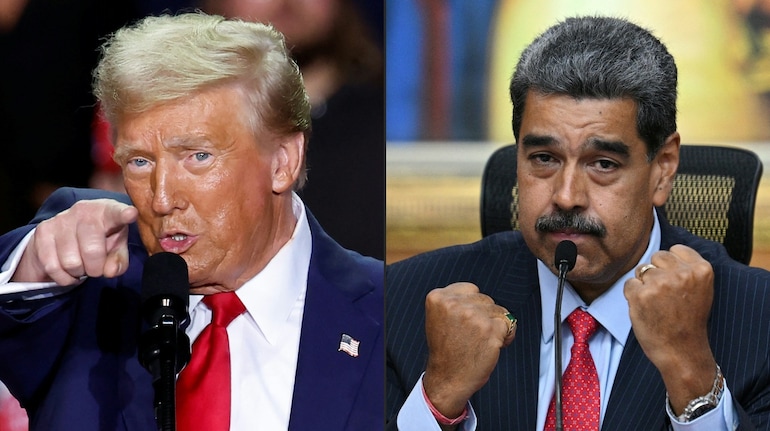
Donald Trump hasn’t helped mute the speculation. He has accused Venezuela of taking 'all of our oil' and said bluntly: “We want it back.” Brazil’s President Luiz Inacio Lula da Silva, offering to mediate, put it more diplomatically: “I don’t know if the interest is only in Venezuela’s oil.”
What’s clear is this: oil is not the headline of the US–Venezuela conflict. It’s the subtext. And it explains far more than ideology alone ever could.
The contradiction at the heart of Venezuela
Venezuela sits on the largest proven oil reserves in the world, larger than Saudi Arabia’s. Yet it functions like an energy-poor state.
Production has collapsed. Infrastructure is decaying. Revenues leak through sanctions, intermediaries and black-market channels. And the oil that does come out of the ground is unusually difficult to sell.
That contradiction, immense geological wealth paired with economic scarcity, drives almost every decision Washington and Caracas make.
Venezuela’s oil isn’t just oil
Most Venezuelan crude is heavy and extra-heavy oil, concentrated in the Orinoco Belt. Think of it less like flowing petrol and more like sticky tar.
To export it, producers need diluents, lighter hydrocarbons, to thin it. To refine it efficiently, buyers need specialised refineries, many of which were built decades ago along the US Gulf Coast precisely for Venezuelan crude.
This matters because oil markets aren’t interchangeable. A Venezuelan barrel can’t simply replace a Saudi or US shale barrel. Heavy crude is scarce globally, and refineries that depend on it can’t easily switch.
That structural reality is why Venezuela mattered to the US long before Chávez, and why it still matters now.
From prized supplier to political pariah
American companies began pumping Venezuelan oil in the 1920s. For decades, Caracas was a reliable supplier. Until 2005, Venezuela routinely shipped tens of millions of barrels a month to the US; at times, up to 60 million barrels.
The relationship ruptured after Hugo Chávez accelerated nationalisation in 2007, seizing assets from US firms and turning oil into a political instrument. What followed was a slow erosion of trust, investment and technical capacity.
When Chávez died, Nicolás Maduro inherited not just power but a fragile oil state.
How PDVSA collapsed in slow motion
PDVSA did not fail because of a single event.
Years of under-investment, politicised management, corruption allegations, worker flight and repeated accidents steadily weakened the company. Production slid from more than three million barrels per day in the early 2000s to under one million barrels per day by the early 2020s, according to OPEC secondary sources.
US sanctions imposed from 2017, and sharply expanded in 2019, did not cause the collapse. But they froze it in place.
They also cut off access to US-supplied diluents, making it even harder for Venezuela to process and export its heavy crude, according to the EIA and Reuters reporting.
Sanctions don’t stop oil. They reroute it.
A common misconception is that sanctions 'turn off' oil flows. They don’t. They change who ships, who insures, who pays and who profits.
Venezuela now exports an estimated 500,000 barrels per day through opaque channels, largely to China and other Asian buyers, according to former PDVSA executive Juan Szabo. Cargoes are often discounted. Payments are indirect. Shipping routes are masked.
The result: fewer dollars for the state, more opacity, and greater reliance on intermediaries.
This is the paradox of sanctions: they shrink transparency faster than they shrink barrels.
The Chevron exception and why it mattered
Amid sweeping sanctions, Washington left one narrow door open.
Chevron was allowed to operate in Venezuela under a tightly controlled US Treasury licence beginning in late 2022, following negotiations between Maduro’s government and the political opposition.
The licence allowed Chevron to produce and export Venezuelan oil, mainly to the US, but barred cash payments to the Maduro government. Revenues were used to service debt and fund operations, not to flow into state coffers, according to Treasury guidance.
For Washington, the logic was pragmatic. Chevron kept some oil moving through legal, visible channels. It stabilised output. It preserved leverage.
By late 2023, Chevron was exporting roughly 150,000-200,000 barrels per day, according to Venezuelan sector sources cited by Reuter, making it one of the country’s most important lifelines.
Why tanker seizures changed the equation
That balance snapped when the US escalated enforcement.
In December, US authorities announced a blockade-style crackdown on sanctioned oil shipments. Coast Guard units boarded and seized tankers carrying Venezuelan crude, arguing they were transporting PDVSA oil in violation of sanctions.
Shipping firms reacted immediately. Some refused to dock in Venezuela. Others left loaded tankers idling offshore to avoid interception. According to tanker-tracking data reviewed by Reuters, Venezuelan exports fell sharply within weeks.
For PDVSA, this is existential. The company has limited storage capacity. If exports stop for even a few days, production must be shut in. That means lost revenue in an economy already starved of foreign currency.
Why Venezuela still matters in a world awash with oil
The US insists it does not need Venezuelan crude. It is now the world’s largest oil producer.
But geopolitics is not just about supply. It is about optionality.
Heavy crude remains scarce. Refineries built for it still exist. And in a fragmented global order, where China and Russia are expanding energy ties across Latin America—control over marginal barrels still carries strategic weight.
As one Venezuelan petroleum economist told AFP, the struggle is “not just about oil,” but about influence in the Americas as global power lines harden.
Oil may not be the official reason Washington is pressuring Caracas. But it is the mechanism through which pressure actually works.
And as long as Venezuela’s barrels remain difficult, indispensable and vulnerable, oil will stay the quiet battlefield beneath the shouting.

Discover the latest Business News, Sensex, and Nifty updates. Obtain Personal Finance insights, tax queries, and expert opinions on Moneycontrol or download the Moneycontrol App to stay updated!
Find the best of Al News in one place, specially curated for you every weekend.
Stay on top of the latest tech trends and biggest startup news.