
As the United States and Israel launch coordinated strikes on Iran, and Tehran responds with retaliatory missile attacks on American military facilities in the Gulf, the strategic significance of Iran’s missile power has become clearer than ever. Iran’s ballistic arsenal remains one of the region’s most potent deterrents, capable of targeting US bases across the Middle East, a reality underscored by recent events in Bahrain and other host nations.
Iran conducted missile attacks on a US base in Bahrain, according to Iran’s semi-official Fars news agency, striking near the headquarters of the US Navy’s Fifth Fleet in Manama. The Bahrain News Agency confirmed that the service centre of the Fifth Fleet had been “subjected to a missile attack,” highlighting the reach of Tehran’s forces.
The current crisis escalated after the United States and Israel launched strikes against Iranian strategic and nuclear sites, a campaign aimed at degrading Tehran’s capabilities and neutralising what leaders in Washington and Jerusalem described as an existential threat. In response, Iranian forces have started targeting US facilities and regional partners, signalling a dangerous expansion of the conflict.
Why Iran’s missile arsenal matters
Iran possesses one of the largest stockpiles of ballistic missiles in the Middle East, with weapon systems of varying ranges that can reach US forces and bases across the Gulf region.
Missiles such as the Khorramshahr and Sejjil, with ranges of around 2,000 kilometres, can strike US installations in Bahrain, Qatar, Kuwait, Iraq and the United Arab Emirates. The Emad and Ghadr systems cover similar theatres across the Middle East. Shorter range systems including Fattah, Haj Qasem and Kheibar Shekan extend coverage to a wide array of regional targets with increasing precision.
Most US bases in the Gulf, including Al Udeid Air Base in Qatar, the US Naval Support Activity in Bahrain, Camp Arifjan and Ali Al Salem in Kuwait, and Al Dhafra Air Base in the United Arab Emirates, fall within the operational envelope of these missiles, making them vulnerable in a high intensity confrontation.
US bases in Middle East
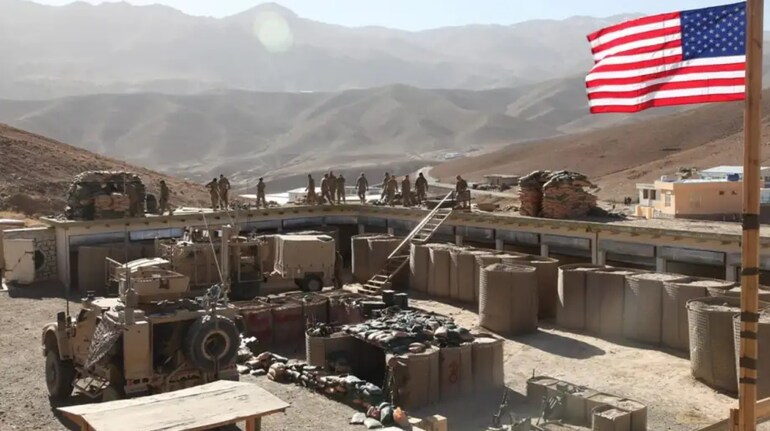
Tens of thousands of US troops are stationed across the region under the US military’s Central Command, known as CENTCOM. Many of these installations lie well within the operational envelope of Iran’s short and medium range ballistic missiles.
Bahrain
Bahrain has emerged as a focal point after reports that Iranian missiles targeted facilities linked to the US Navy’s Fifth Fleet. The small Gulf kingdom hosts Naval Support Activity Bahrain, home to the Fifth Fleet and US Naval Forces Central Command headquarters. Its deep water port accommodates some of the largest US warships, including aircraft carriers. The United States has maintained a naval presence there since 1948. Several US vessels, including anti mine ships and logistical support craft, are based in the country, making it a high value strategic target.
Iraq
The United States retains troops in Iraq’s autonomous Kurdish region as part of the international coalition against the Islamic State group. However, their mission is scheduled to end by September under an agreement with Baghdad. American forces have already withdrawn from federal Iraq under the same deal. In recent years, US positions in Iraq were repeatedly targeted by pro Iran militias, especially after the Gaza war erupted in October 2023. Washington responded with strikes on Tehran linked targets, reducing but not eliminating the threat.
Kuwait
Kuwait hosts several important US installations. Camp Arifjan serves as the forward headquarters for the US Army component of CENTCOM, with substantial pre positioned equipment and supplies. Ali al Salem Air Base hosts the 386th Air Expeditionary Wing, described by the US military as a primary airlift hub for regional operations. The United States also operates drones, including MQ 9 Reapers, from Kuwaiti soil.
Qatar
Al Udeid Air Base in Qatar is one of the most significant US facilities in the region. It houses forward components of CENTCOM, along with air and special operations forces. The base supports airlift, aerial refueling, intelligence, surveillance and reconnaissance missions. Iran fired missiles at Al Udeid last June following earlier US strikes on Iranian nuclear facilities, demonstrating its willingness to target high profile American sites.
Syria
US forces have long operated in Syria as part of efforts against the Islamic State group. While Washington is now in the process of withdrawing from Syria, the presence of remaining troops still presents potential targets for Iran aligned militias.
United Arab Emirates
Al Dhafra Air Base in the UAE hosts the 380th Air Expeditionary Wing, comprising multiple aircraft squadrons and drones such as MQ 9 Reapers. The base has also functioned as a hub for advanced air warfare training and rotating combat aircraft deployments.
As US and Israeli strikes intensify and Iran signals its readiness to retaliate, the geographic spread of American military assets across the Gulf and Levant underscores the scale of exposure. With many of these bases within missile range, the conflict risks widening into a broader regional confrontation that directly pits Tehran against US forces on multiple fronts.
Regional context and escalation
The reported missile strike linked to the Fifth Fleet facility marks one of the most direct Iranian responses to US assets since the latest escalation began. Analysts say Tehran’s move reflects a calculated effort to demonstrate deterrence and signal that American military infrastructure in the Gulf is within reach.
Iran’s missile capabilities have grown over decades through sustained investment in domestic production and technological adaptation. While Tehran maintains that its arsenal is defensive, Western military planners view it as central to Iran’s regional power projection and asymmetric warfare strategy.
The wider military picture
The United States has reinforced its military posture in the region, deploying additional warships, aircraft and air defence systems to protect personnel and bases from potential follow up strikes. Advanced fighter jets, aerial refuelling aircraft and guided missile destroyers have bolstered the American footprint amid fears of further escalation.
With tensions now spilling into direct exchanges of missile fire, Iran’s ballistic capabilities, long at the heart of deterrence calculations, are shaping the trajectory of a conflict that could redraw the security landscape of the Middle East.
Discover the latest Business News, Sensex, and Nifty updates. Obtain Personal Finance insights, tax queries, and expert opinions on Moneycontrol or download the Moneycontrol App to stay updated!
Find the best of Al News in one place, specially curated for you every weekend.
Stay on top of the latest tech trends and biggest startup news.