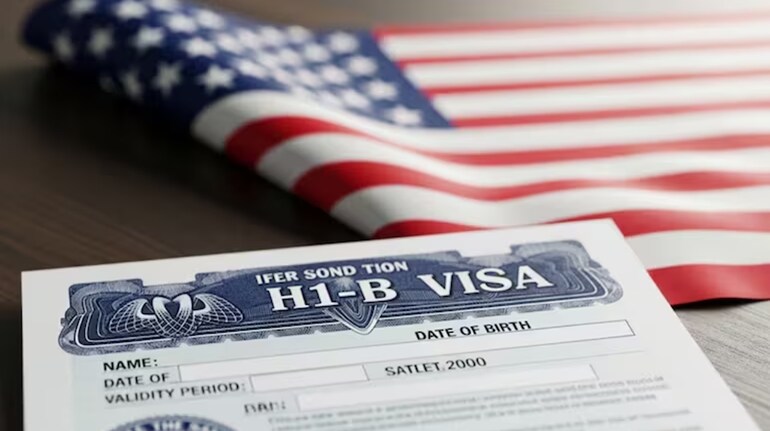

American companies employing Indian-origin professionals are facing growing online harassment and boycott calls amid a surge in anti-Indian sentiment in the United States, following President Donald Trump’s move to tighten skilled-worker visa rules.
According to a Financial Times report, major corporations, including FedEx, Walmart, and Verizon, have been targeted with coordinated online abuse, with critics accusing them of replacing “American workers” with Indian professionals. The backlash has intensified after the Trump administration overhauled the H-1B visa programme, which disproportionately affects Indian nationals who make up around 71 per cent of visa holders.
The hostility has played out widely on social media, where racist slurs, threats, and calls for boycotts have proliferated. One flashpoint came after a video of a damaged FedEx truck went viral ahead of Christmas, prompting users to link the incident to the Indian heritage of FedEx CEO Raj Subramaniam. Posts included comments such as, “Stop the f****** Indian takeover of our great American companies.”
Right-wing commentators amplified claims that Subramaniam was laying off White American workers in favour of Indian staff, allegations the company strongly denied. “For more than 50 years, FedEx has fostered a merit-based culture that creates opportunity for everyone,” the company said, adding that its workforce reflects the diversity of the countries it serves.
Monitoring groups say such incidents are not isolated. Raqib Naik, executive director of the Center for the Study of Organized Hate, said Indian-American executives and entrepreneurs, including those who received loans from the Small Business Administration, have been singled out in what he described as “coordinated campaigns.”
Data from advocacy group Stop AAPI Hate and counterterrorism firm Moonshot shows threats of violence against South Asians rose 12 per cent in November last year, while the use of online slurs increased by 69 per cent during the same period.
Experts link the spike in hostility to policy changes announced by Trump in September, including a $100,000 H-1B application fee and a wage-based selection system. From February, US authorities will prioritise the highest-paid applicants, a move the administration says will “better protect American workers.”
The backlash has been further fuelled by “Project Firewall,” a federal probe into alleged H-1B visa fraud. Anonymous accounts have published personal details of employees at firms such as Walmart and Verizon, accusing them of illegally selling jobs to Indian nationals. One post read, “Indian Green Card Managers must be kicked out of the country.”
The climate has unsettled corporate America, particularly as many companies have scaled back diversity, equity, and inclusion initiatives amid political pressure. Advocacy groups say firms are now more hesitant to publicly counter racist targeting or support cultural events such as Diwali.
Some conservative voices have criticised the rhetoric. Trump ally and Ohio gubernatorial candidate Vivek Ramaswamy said, “The idea that a ‘heritage American’ is more American than another American is un-American at its core.”
Analysts warn the trend reflects a broader shift in anti-immigrant discourse. “Indians have become a victim of an increasingly ethnocentric narrative around migrants,” said Siddharth Venkataramakrishnan of the Institute for Strategic Dialogue. “Anti-immigrant rhetoric is increasingly moving toward a ‘war for the soul of America’.”
Once viewed as a “model minority,” Indian professionals and Indian-American businesses now find themselves at the centre of intensifying political and cultural scrutiny in the US.
Discover the latest Business News, Sensex, and Nifty updates. Obtain Personal Finance insights, tax queries, and expert opinions on Moneycontrol or download the Moneycontrol App to stay updated!
Find the best of Al News in one place, specially curated for you every weekend.
Stay on top of the latest tech trends and biggest startup news.