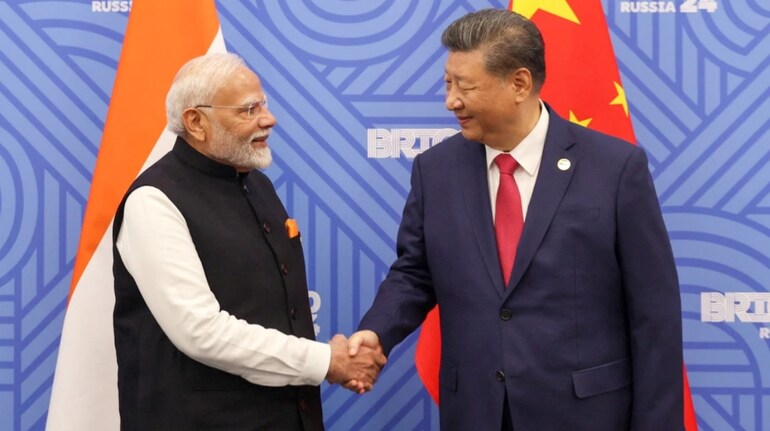

A visible recalibration is underway in global diplomacy and trade as countries respond to a more volatile international environment shaped by tariffs, strategic competition and shifting power equations. Governments across Europe, Asia and the Americas are reassessing economic dependencies and seeking broader partnerships to reduce exposure to shocks.
This shift does not signal a rejection of the United States, but rather a move toward diversification. India has emerged as a central beneficiary of this trend, offering scale, stability and long-term growth potential. China, too, is expanding diplomatic outreach, especially in Europe. The result is a more multipolar pattern of engagement where middle powers are strengthening ties with multiple partners to safeguard economic and strategic interests.
India-EU trade deal reflects strategic confidence
The India-European Union free trade agreement announced on Tuesday stands out as a major outcome of this realignment. Negotiated over nearly two decades, the deal reflects growing confidence in India as a reliable and expanding economic partner.
Prime Minister Narendra Modi framed the agreement in the context of global uncertainty. “Today, the global order is undergoing profound turbulence. In this context, the partnership between India and the European Union will strengthen stability within the international system,” he said.
European Commission President Ursula von der Leyen called it a milestone. “Europe and India are making history today,” she said. “This is only the beginning.”
The agreement will liberalise trade across most sectors, reduce tariffs on Indian exports such as textiles, leather, chemicals and gems and jewellery, and deepen services cooperation. India–EU trade already reached $136.5 billion in FY2025, surpassing India’s trade with both the US and China.
“This agreement will bring major opportunities for the 1.4 billion people of India and the millions of people in Europe,” Modi added.
Hedging against trade disruptions
Recent US trade actions have added urgency to diversification efforts. Tariff hikes and sharper rhetoric have prompted allies to strengthen alternative economic channels while maintaining engagement with Washington.
At the World Economic Forum in Davos, leaders spoke cautiously about the need for stability and cooperation. While criticism of the US remained muted, there was growing emphasis on building resilient trade networks.
China expands diplomatic outreach
China has sought to position itself as a supporter of multilateralism and continuity. Beijing has stepped up engagement with European leaders, including Ireland’s Prime Minister Micheál Martin and Finland’s Prime Minister Petteri Orpo.
An editorial in China’s Global Times urged Europe to deepen cooperation, warning against a return to “the law of the jungle” and calling for “a shared future for mankind.”
President Xi Jinping also reached out to Brazil’s President Luiz Inacio Lula da Silva, urging countries to “uphold the central role of the United Nations and international justice.”
Canada and Britain broaden partnerships
Canada has pursued closer ties with China and India as part of a diversification strategy. Prime Minister Mark Carney said, “Canada is forging a new strategic partnership with China,” describing the global moment as one of “rupture … not a transition.”
Britain has also renewed engagement with Beijing. Prime Minister Keir Starmer’s visit to China marked the first by a UK leader in eight years. Kerry Brown of King’s College London said, “One of the great anomalies of the current situation is that London is probably closer to Beijing than Washington” on issues like climate and public health.
India gains from a multipolar moment
Alongside China, India has become a preferred partner for countries seeking balance. Brazil’s upcoming high-level delegation to India, led by President Lula, underlines this shift. India’s recent trade agreements with multiple partners reinforce its role as a stable anchor in a changing global order.
Together, these developments suggest that while the US remains a key global actor, countries are increasingly building broader networks. For India, this moment highlights its growing centrality in global trade and diplomacy.
Discover the latest Business News, Sensex, and Nifty updates. Obtain Personal Finance insights, tax queries, and expert opinions on Moneycontrol or download the Moneycontrol App to stay updated!
Find the best of Al News in one place, specially curated for you every weekend.
Stay on top of the latest tech trends and biggest startup news.