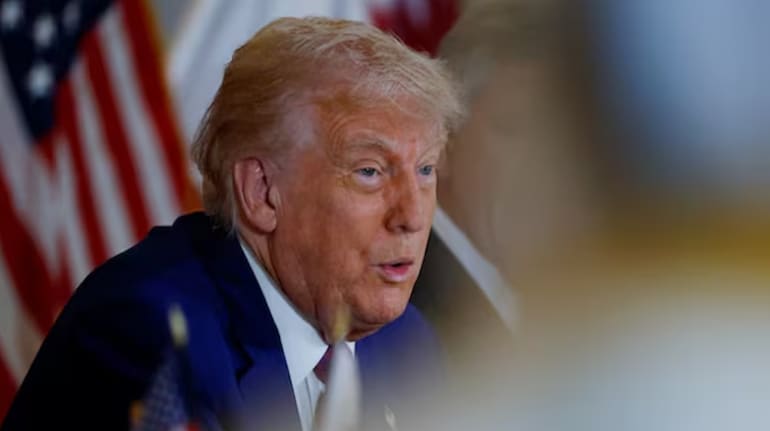
When US President Donald Trump unveiled the biggest US tariff increases in nearly a century in April, the country split into two loud camps. The White House promised a boom in jobs, factories and growth. Many economists and business leaders warned of an inflation surge and a recession. Eight months later, neither storyline has fully played out. The economy has held up better than the pessimists predicted, but the tariff-led renaissance Trump sold has also not materialised, the Wall Street Journal reported.
The data is still incomplete because some federal releases have been delayed, but the broad picture is clearer than it was in April. Recession expectations have eased, inflation has not exploded, and growth has been supported by forces that have little to do with tariffs.
Jobs have not surged, but the labour market has not broken
Trump and his allies argued that steep tariffs would protect domestic industry and create millions of jobs. Economists warned that higher input costs and weaker demand could lead to layoffs. What has happened so far is muddier.
Payroll growth has continued, including a stronger-than-expected increase of 119,000 jobs in September, but that month looks like an outlier against weaker job gains earlier in the year. By September, unemployment had risen to 4.4%, the highest in four years. Manufacturing employment has also been soft, with the sector down about 54,000 jobs since Trump took office, though isolating tariff effects from other forces is difficult. One example the Journal highlights is Kent International, where higher tariffs on Chinese bike components helped push the company to close a South Carolina factory, even as it continued importing finished bicycles.
Prices rose where tariffs hit, but broad inflation stayed near 3%
Trump insisted other countries would bear tariff costs. Economists said US consumers would. In practice, both sides were partly wrong. Retailers including major chains did raise prices quickly in categories exposed to tariffs, and executives publicly acknowledged the speed of increases.
Yet the worst inflation fears did not arrive. Overall inflation has hovered around 3% for months, above the Federal Reserve’s 2% target but below what many forecasters feared in April. Two reasons stand out in the Journal’s reporting. First, tariffs touch a narrower slice of the consumer basket than housing and energy, and those components helped keep headline inflation contained. Second, policy uncertainty has slowed the pass-through, as companies waited to see where tariffs would finally land, especially with a Supreme Court case pending on the administration’s authority to impose certain duties.
Tariff revenue jumped, but it is nowhere near income tax money
On revenue, the administration has a clearer win. Treasury data cited by the Journal shows customs duties averaged about $25 billion a month from April through September, compared with about $6.6 billion a month in 2024. Total duties collected in fiscal 2025 reached roughly $195 billion, more than double the $77 billion collected the prior year.
But that still falls far short of Trump’s more sweeping claims. Individual income taxes were about $2.4 trillion in 2024, roughly half of total federal revenue. The Journal also notes that the Supreme Court ruling could force refunds of more than $100 billion already collected if certain tariffs are struck down, and it could cut ongoing monthly revenue by more than half if the International Emergency Economic Powers Act duties are invalidated.
Growth held up, helped by AI investment and shifting tariffs
Tariffs did not tip the US into recession. GDP growth in the second quarter came in at an annualised 3.8% in the Commerce Department’s third estimate, the strongest quarterly growth in nearly two years. Third-quarter data was unavailable due to the government shutdown, but tracking estimates sat around 3.5%.
The Journal points to the AI investment boom as a major reason forecasters missed. Barclays estimated AI-related spending added an annualised 0.8% to GDP in the first half, about half of total growth. A stock market rally linked to that investment also supported consumer spending, a key driver of the US economy. Meanwhile, Trump also scaled back some headline tariff threats, including cutting China tariffs sharply from the 145% peak to lower levels through subsequent deals.
Manufacturing is still contracting, and uncertainty is a problem
If tariffs were supposed to “supercharge” manufacturing, the early evidence looks underwhelming. US factory activity has contracted for nine straight months, with the Institute for Supply Management’s manufacturing index at 48.2 in November, below the 50 line that separates expansion from contraction.
Executives interviewed by the Journal repeatedly point to an obvious issue: it is hard to plan long-term investment when tariff rates and rules keep changing. The White House has highlighted big investment announcements from firms like Apple, Toyota, Nvidia and TSMC, but many of those projects take years and may have happened anyway.
The trade deficit shrank in September, but the story is volatile
Tariffs have scrambled trade patterns. The goods deficit surged in March as importers rushed to stock up before tariffs hit, then fell in April once the baseline 10% duty kicked in. In September, the deficit narrowed to $79 billion, the lowest in about five years, helped by short-term gold flows. Year-to-date, the deficit remained higher than the same period last year.
The larger point the Journal makes is that trade balances do not respond neatly to tariffs alone. Deficits reflect savings and investment patterns, and they often narrow during recessions because demand falls.
Taken together, the “tariff reality” looks like this: the US economy absorbed the shock better than many expected, but that resilience owes a lot to AI-led investment, consumer momentum, and constant policy adjustments. Trump did raise revenue and reshape trade flows, but the promised manufacturing comeback remains more slogan than outcome.
Discover the latest Business News, Sensex, and Nifty updates. Obtain Personal Finance insights, tax queries, and expert opinions on Moneycontrol or download the Moneycontrol App to stay updated!
Find the best of Al News in one place, specially curated for you every weekend.
Stay on top of the latest tech trends and biggest startup news.