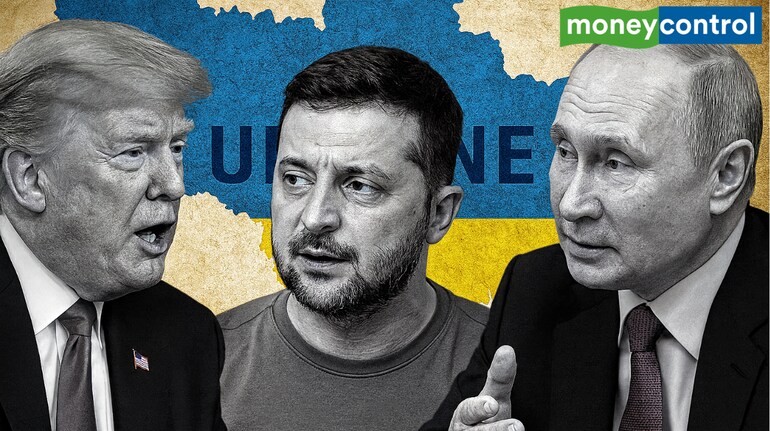
Zelenskiy’s push to meet Donald Trump “soon” isn’t just about lines on a map. It’s also about a power plant that can light up (or black out) a large part of Ukraine: the Russian-occupied Zaporizhzhia Nuclear Power Plant (ZNPP), Europe’s largest.
In the diplomacy now taking shape, Zaporizhzhia is the kind of asset that can be traded without saying the word 'territory,' which is exactly why it’s become a live wire.
Why Zaporizhzhia matters more than symbolism
ZNPP isn’t just a scary nuclear headline. Before the war, it was a pillar of Ukraine’s electricity system: six reactors, 5.7 GW capacity, built to run a huge chunk of baseload power.
Since Russia seized it in March 2022, the plant has sat at the intersection of two wars:
Ukraine’s pitch to Washington is simple: if you want a durable peace, you need a durable grid. Zaporizhzhia is the biggest single lever.
What’s the current status at the plant?
All six reactors are in cold shutdown; none has generated power since September 2022.
The plant has repeatedly faced loss of off-site power, forcing reliance on emergency diesel generators, one of the recurring safety risks flagged by nuclear watchdogs.
This is the part many miss: even 'shut down' nuclear reactors still need reliable power for cooling and safety systems.
The peace-talk twist: 'joint operation' as a workaround
Reuters reports Zelenskiy has floated a framework that would involve joint operation with the US, including sharing 50% of the plant’s energy output.
Russia, for its part, has signalled conditional openness to some form of joint US–Russia use.
This is why Zaporizhzhia is suddenly everywhere in diplomatic chatter: it’s a compromise structure that can be sold as 'economic/energy stabilisation' rather than 'territorial concession.'
Why Zelenskiy wants Trump in the room for this
Zelenskiy’s line, territory compromises must be discussed by heads of state, takes on extra meaning when the asset is Zaporizhzhia.
Because for Ukraine, ZNPP isn’t just land. It’s:
If a deal starts forming around the plant, Zelenskiy wants it negotiated at the top so he can defend it politically at home—and so the US owns its share of the outcome.
The safety reality check: restarting reactors isn’t a switch you flip
According to a Reuters report, Russia has considered reactivating Reactor No. 1, which Ukraine has condemned on safety grounds.
There’s also a longer-term technical constraint: cooling water. After the Kakhovka dam destruction (2023), the cooling-water situation became a central concern for nuclear safety planning at the site.
So any “let’s restart, let’s share output” plan runs into engineering and safety questions fast—plus a trust deficit that’s basically the size of the Dnipro.
The underplayed angle: Zaporizhzhia is an energy weapon and a bargaining chip
Think of Zaporizhzhia as a dual-use lever in talks:
For Ukraine: restoring control (or at least reliable output) would ease shortages and strengthen economic resilience while the grid is still under attack.
For Russia: retaining leverage over the plant keeps Ukraine’s energy vulnerability alive, even if the reactors are offline.
That’s why the plant can shape ceasefire geometry: not only where troops stand, but how power flows.
Discover the latest Business News, Sensex, and Nifty updates. Obtain Personal Finance insights, tax queries, and expert opinions on Moneycontrol or download the Moneycontrol App to stay updated!
Find the best of Al News in one place, specially curated for you every weekend.
Stay on top of the latest tech trends and biggest startup news.