
The scale of the crowds at the janaza of Bangladesh’s first woman prime minister Khaleda Zia stunned even seasoned observers. Lakhs of people poured into the streets of Dhaka, local television channels suspended regular programming to broadcast the funeral rites live, and New Year’s Eve celebrations across the capital were called off. The spectacle resembled the farewell of a sitting head of government rather than that of a leader whose party has been out of power for years.
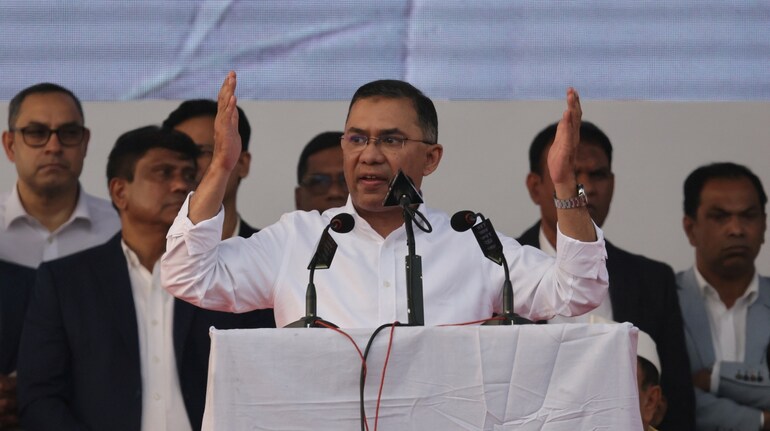
Yet the turnout was less about nostalgia and more about power politics. The attention surrounding Khaleda Zia’s death has reinforced a growing perception that the Bangladesh Nationalist Party is well placed to return to power in the February 12 elections next year. That message was underscored by the presence of senior dignitaries from both Pakistan and India, who made a point of meeting and offering condolences to her son Tarique Rahman, now widely seen as the party’s undisputed heir.
For India, this political churn in Dhaka is being watched with increasing unease. Reports of attacks on minorities, particularly Hindus and Christians, have intensified concerns in New Delhi. At the same time, infiltration and cross-border movement have become a charged political issue in Indian border states, especially West Bengal. India’s room for manoeuvre is limited. The realistic options for engaging with a future government in Bangladesh are narrow, and none are reassuring.
The alternatives to BNP include the National Citizen Party and Jamaat-e-Islami. Jamaat’s record of hardline positions, hostility toward India and radical views on minorities effectively rule it out as a viable partner. The NCP, despite projecting itself as a fresh force, has aligned with Jamaat and draws much of its strength from the same ideological space. By default rather than preference, the BNP emerges as the least problematic option for India.
Tarique Rahman, however, faces his own contradictions. He has promised a “new Bangladesh,” but the legacy he inherits complicates that pledge. Khaleda Zia’s decision to ally with Jamaat during her years in power damaged her credibility at home and abroad. For Tarique, a complete break from Jamaat risks alienating entrenched political networks. Yet continuing that association would raise red flags internationally at a time when foreign aid, investment and diplomatic legitimacy matter more than ever.
Global opinion is increasingly intolerant of governments that openly discriminate against minorities or accommodate extremist forces. If Tarique hopes to stabilise Bangladesh’s economy and attract external support, he will have to project moderation in both rhetoric and alliances. Whether he can do so without fracturing his political base remains uncertain.
Complicating matters further is Bangladesh’s restless youth population. More than 46 million young people form a volatile and politically charged demographic. Many of them were at the forefront of the unrest that led to the fall of Sheikh Hasina’s government last year. From this turbulence emerged the National Citizen Party, which has tapped into frustration, anger and a desire for radical change, particularly in rural areas where Jamaat’s influence remains strong.
Anti-India sentiment has found fertile ground in this environment. With Sheikh Hasina continuing to wield influence in Delhi, sections of Bangladesh’s youth have rallied around a politics defined more by rejection than by policy. The murder of youth leader Osman Hadi became a rallying point, spawning the slogan “I too am Hadi” and transforming him into a symbol of resistance for many young Bangladeshis.
Hadi’s appeal lay not in moderation but in defiance. To critics, he represented radical and anti-India tendencies. To supporters, he embodied aspiration, anger and a break from the political establishment. His killing has sharpened polarisation and deepened distrust in state institutions.
This leaves Bangladesh at a precarious crossroads. Can Tarique Rahman, despite his relative youth, channel this restless energy into a stable political project? Or will the NCP-Jamaat combine succeed in capturing the imagination of a generation that feels excluded and disillusioned?
What is clear is that Bangladesh’s democratic transition, if it can still be called that, is unlikely to be smooth. The contest ahead will be messy, polarised and potentially violent. For neighbours like India, the concern is not just who wins, but whether Bangladesh’s political system is sliding into a cycle of instability where radicalism, minority insecurity and street mobilisation become permanent features rather than passing phases.
Discover the latest Business News, Sensex, and Nifty updates. Obtain Personal Finance insights, tax queries, and expert opinions on Moneycontrol or download the Moneycontrol App to stay updated!
Find the best of Al News in one place, specially curated for you every weekend.
Stay on top of the latest tech trends and biggest startup news.