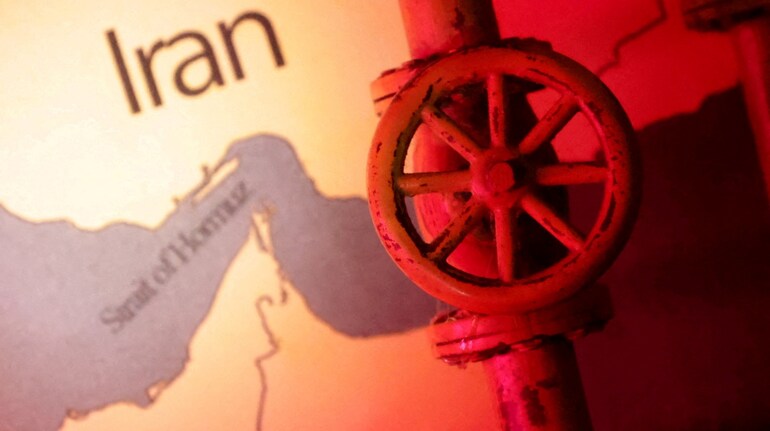

The closure of the Strait of Hormuz amid escalating conflict in West Asia has triggered global concern about energy supply disruptions, particularly for Asian economies that rely heavily on the narrow waterway for oil imports. Around 20 percent of the world’s seaborne oil passes through the strait, making it one of the most strategically important maritime chokepoints in the global energy system, according to reports cited by Bloomberg and international media.
With Iran announcing the closure of the strait following the latest round of US and Israeli strikes, energy markets have reacted sharply. Oil prices surged and shipping companies began diverting or halting vessels amid security fears, highlighting the vulnerability of global supply chains to geopolitical shocks.
Asia’s heavy reliance on the Strait
Bloomberg data shows that Asian economies are the most dependent on the Strait of Hormuz for oil flows.
China is the single largest destination for crude passing through the waterway, accounting for 38 percent of the oil shipments moving through the strait.
India follows with 19 percent, while the rest of Asia accounts for 14 percent. Other major importers include South Korea at 12 percent and Japan at 11 percent, while Europe represents just 3 percent of the oil flows through the route.
The numbers underline how any disruption in the Gulf disproportionately affects Asian energy security.
For India and China, the stakes are particularly high because both economies rely heavily on imported crude to sustain industrial activity and economic growth.
Below is the list of countries/regions and their dependability on Strait of Hormuz for energy imports. (Source: Bloomberg)
Why the strait matters so much
The Strait of Hormuz connects the Persian Gulf with the Gulf of Oman and the Arabian Sea, serving as the main exit route for oil produced in Gulf states such as Saudi Arabia, Iraq, Kuwait and the United Arab Emirates.
Analysts note that the strait functions as a gateway not only for energy shipments but also for regional trade. According to maritime experts quoted in international shipping analyses, the passage allows access to Dubai’s Jebel Ali port, one of the world’s largest container ports and a key redistribution hub for trade across the Middle East, Africa and South Asia.
The current disruption is being described by shipping experts as unprecedented. Researchers cited in maritime studies say that even during the Iran-Iraq war between 1980 and 1988, commercial shipping through the strait was never completely halted.
The current freeze on transit, triggered by the latest regional war, has forced some of the world’s largest shipping companies to pause or reroute vessels.
India’s vulnerability and preparedness
For India, the closure of the strait carries direct economic implications.
About 50 percent of India’s crude oil imports and 54 percent of liquefied natural gas imports passed through the Strait of Hormuz in 2025, according to Prashant Vasisht of the ratings agency ICRA.
“For India, the risks are significant,” Vasisht said in a briefing note. “While Indian refiners may be able to source crude oil from alternate locations such as the United States, Africa and South America, elevated energy prices could result in a higher import bill.”
New Delhi has acknowledged the seriousness of the situation. The foreign ministry said it was monitoring developments with “great anxiety”, noting that nearly 10 million Indian citizens live in the Gulf region.
“We cannot be impervious to any development that negatively affects them,” foreign ministry spokesperson Randhir Jaiswal said.
“Our trade and energy supply chains also traverse this geography. Any major disruption has serious consequences for the Indian economy.”
However, the government has sought to reassure markets and consumers about supply stability.
Petroleum Minister Hardeep Singh Puri said that “India has sufficient energy reserves to deal with the ongoing situation.”
Officials have also indicated that the country is exploring alternative crude sources from regions including the United States, Africa and Latin America.
According to a Reuters report, Russia has indicated that it is ready to support India with energy supplies if the ongoing conflict leads to shortages in global markets.
Government officials told Reuters that India currently has sufficient stocks of crude oil and refined fuels such as petrol and diesel to meet domestic demand for several weeks.
Officials said the country holds crude oil stocks that can last about 25 days, while inventories of refined petroleum products could support consumption for six to eight weeks.
China’s even greater exposure
China’s exposure to the Strait of Hormuz is even larger than India’s. With 38 percent of oil shipments through the waterway destined for Chinese buyers, Beijing faces a significant strategic challenge if the disruption continues.
China has spent years attempting to diversify supply routes through pipelines and overseas investments, but the strait remains a critical artery for its energy imports.
The current crisis therefore highlights a shared vulnerability among the world’s largest energy-consuming economies.
Global ripple effects
Beyond energy markets, the disruption could affect global trade and logistics.
Shipping companies have already begun clustering vessels near ports or rerouting routes as insurers raise risk premiums for ships entering the Gulf.
Freight costs are rising and delivery delays are being reported across international supply chains.
The Strait of Hormuz has long been seen as a potential flashpoint in global geopolitics. The latest crisis demonstrates how quickly events in a narrow stretch of water can ripple through energy markets, trade routes and national economies across the world.
Discover the latest Business News, Sensex, and Nifty updates. Obtain Personal Finance insights, tax queries, and expert opinions on Moneycontrol or download the Moneycontrol App to stay updated!
Find the best of Al News in one place, specially curated for you every weekend.
Stay on top of the latest tech trends and biggest startup news.