






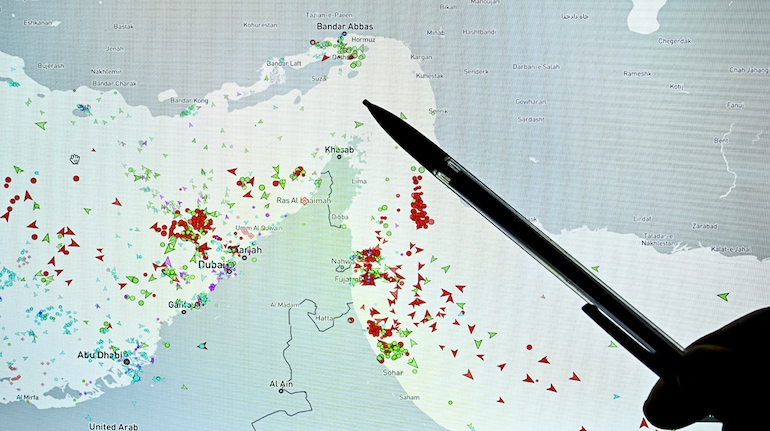
Oil tanker movements through the Strait of Hormuz have fallen by 90 per cent since the start of US–Israeli military operations against Iran, according to energy intelligence firm Kpler, which made the assessment on X on Wednesday.
The sharp decline underscores the strategic importance of the narrow waterway, through which roughly a fifth of the world’s crude oil flows. Iranian military officials have claimed that traffic through the strait has been fully blocked amid escalating tensions. However, Kpler said some vessels continue to attempt the passage despite the risks.
“Unlike several other vessel segments where movements have largely ceased, some tankers are still travelling east and west through the strait, with a number of voyages occurring under AIS blackouts,” said Kpler Principal Freight Analyst Matt Wright, referring to the marine traffic tracking system.
The Strait of Hormuz — about 33 kilometres wide at its narrowest point — connects the Persian Gulf to the Gulf of Oman and serves as a critical chokepoint for global energy supplies. Tankers carrying oil and gas from Saudi Arabia, Kuwait, Iraq, Qatar, Bahrain, the United Arab Emirates and Iran depend on the route to reach Asian markets, where most of the exports are destined. Although regional pipelines in Saudi Arabia and the UAE provide limited alternatives, industry officials say most volumes have no viable substitute for passage through the strait.
The disruption has contributed to a surge in oil prices, as markets factor in potential supply constraints. Analysts warn that a prolonged closure could push crude prices significantly higher and create volatility across energy-dependent economies.
Iran has warned ships against entering the waterway, with military officials signalling enforcement against vessels that attempt transit. In response, global shipping companies including Maersk, Hapag-Lloyd, CMA CGM and MSC have suspended operations in the region, citing safety concerns.
Shipping data shows thousands of vessels are now idle in or around the Persian Gulf, while others remain anchored outside the region awaiting clarity on security conditions. The developments highlight how quickly tensions in the Strait of Hormuz can reverberate through global trade and energy markets.
(With inputs from agencies)
Discover the latest Business News, Sensex, and Nifty updates. Obtain Personal Finance insights, tax queries, and expert opinions on Moneycontrol or download the Moneycontrol App to stay updated!
Find the best of Al News in one place, specially curated for you every weekend.
Stay on top of the latest tech trends and biggest startup news.




