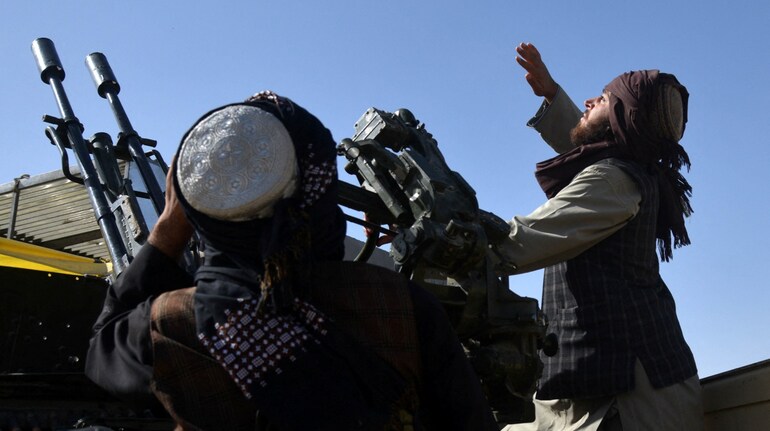
Pakistan’s Special Representative for Afghanistan, Mohammad Sadiq, on Sunday urged the Taliban-led government in Kabul to eliminate all terrorist groups operating from Afghan soil, flagging what he described as a growing security challenge for the region, according to a report by Pakistan local daily, Dawn.
Sadiq made the remarks at a meeting of Special Representatives for Afghanistan held in Tehran. Iran had invited the Taliban government to attend, but it stayed away, according to a Taliban spokesperson.
The meeting was attended by envoys from Pakistan, Tajikistan, Uzbekistan, Turkmenistan, China and Russia.
“In my remarks, I agreed with the assessment of all participating countries that the continued threat of terrorism emanating from Afghan soil is a big challenge for the region,” Sadiq said in a post on X.
He added that Afghanistan’s people had “already suffered enough” and deserved better governance outcomes. According to Sadiq, the most immediate step towards easing that suffering would be for the Taliban to “rid their soil indiscriminately of all types of terrorists”.
Sadiq also argued that only an Afghanistan that does not harbour militant groups would inspire confidence among neighbouring and regional countries, enabling meaningful engagement with Kabul and unlocking its economic and connectivity potential, the Dawn reported.
Taliban absence, stalled engagement
Pakistan’s former ambassador to Afghanistan, Mansoor Khan, told Dawn that Islamabad had earlier sought to engage the Taliban through a collective regional approach, including discussions around possible recognition of the Taliban government.
“The grouping could not become an effective forum as the Taliban did not positively respond,” Khan said.
He added that Pakistan had hoped Afghanistan’s immediate neighbours would coordinate on counter-terrorism, political inclusivity, girls’ education and broader human and women’s rights issues.
TTP remains the sticking point
Relations between Pakistan and Afghanistan have deteriorated sharply in recent months, with Islamabad repeatedly accusing the Taliban of providing sanctuary to the banned Tehreek-i-Taliban Pakistan (TTP). The Afghan Taliban have denied these allegations.
Following border clashes in October, both sides entered a dialogue process aimed at restoring stability. A second round of talks began in Ankara on October 25 but failed to produce what Pakistan’s Information Minister Attaullah Tarar described as any 'workable solution'.
Turkey and Qatar later intervened to keep the dialogue alive, issuing a joint statement on October 31 that said further modalities would be discussed at a principal-level meeting in Istanbul on November 6.
That effort, too, collapsed. After a third round of talks, Pakistan’s Defence Minister Khawaja Asif said negotiations on cross-border terrorism had effectively ended and entered an 'indefinite phase' due to persistent differences.
Following the breakdown, the Afghan Taliban suspended trade ties with Pakistan. Islamabad had already closed its border to trade after the October clashes.
Discover the latest Business News, Sensex, and Nifty updates. Obtain Personal Finance insights, tax queries, and expert opinions on Moneycontrol or download the Moneycontrol App to stay updated!
Find the best of Al News in one place, specially curated for you every weekend.
Stay on top of the latest tech trends and biggest startup news.