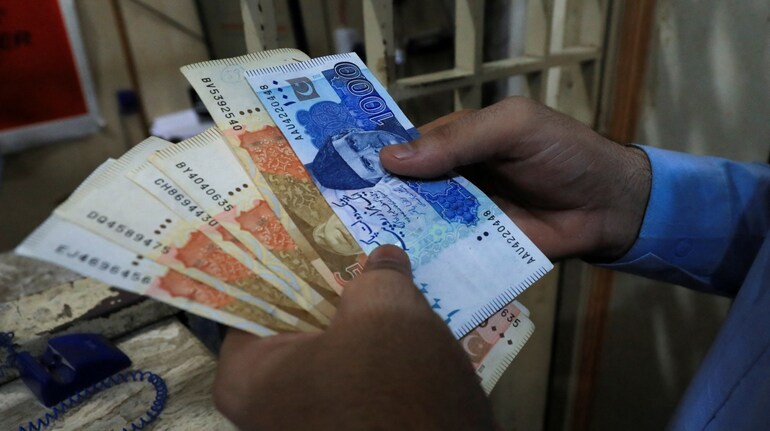

Pakistan’s defence minister Khawaja Asif may have sounded confident when he claimed that Islamabad would not need the International Monetary Fund in the near future, but the statement collapses under even basic scrutiny. Far from signalling economic recovery, Asif’s remarks underline how detached Pakistan’s leadership remains from the country’s grim financial reality.
A claim built on hype, not economics
Asif told Geo News that Pakistan could avoid IMF loans within six months, pointing to rising demand for Pakistani defence equipment after Operation Sindoor. He argued that Pakistan had showcased its “resolve and military effectiveness” during the May conflict with India, implying that arms exports could replace emergency financial support.
This claim rests on shaky ground. India’s Operation Sindoor involved strikes on terror infrastructure inside Pakistan and Pakistan-occupied Kashmir following the Pahalgam attack. Islamabad’s assertions of military success and downed Indian jets were never independently verified. Yet Pakistan’s leadership has tried to convert that episode into a commercial narrative, portraying it as a springboard for defence exports.
Defence deals cannot replace bailouts
Pakistan has indeed signed or discussed several defence deals, including potential sales of the JF-17 Thunder fighter jet. Bangladesh has expressed “potential interest” in the aircraft, and Reuters reported talks with Saudi Arabia to convert about $2 billion in loans into a JF-17 related arrangement. Pakistan also announced a weapons deal worth over $4 billion with Libya’s eastern-based Libyan National Army.
Even taken at face value, these figures do not add up to economic independence. Pakistan’s total arms export footprint remains marginal on a global scale. Claims of nearly $10 billion in defence exports in 2025 sound impressive until placed against Pakistan’s external financing needs, ballooning debt and recurring balance of payments crises. Defence contracts, often spread over years and dependent on financing and training commitments, do not generate the immediate foreign exchange Pakistan desperately needs.
IMF is not optional for Pakistan
Pakistan’s relationship with the IMF is not incidental. It is structural. Since 1958, Islamabad has entered into 24 IMF programmes, making it one of the lender’s most frequent borrowers. As of January 7, 2026, Pakistan owes over $10.6 billion to the IMF.
In September 2024, the IMF approved a 37-month, $7 billion Extended Fund Facility to stabilise Pakistan’s economy. This followed a $3 billion bailout in July 2023 that helped the country narrowly avoid default. In December 2024, the IMF released another $1.2 billion, citing short-term stability despite floods. Since 2024 alone, Pakistan has received roughly $3.3 billion from the IMF.
These are not signs of an economy ready to stand on its own. IMF assistance is triggered when countries are locked out of normal borrowing channels. Pakistan remains exactly in that position.
Conditions expose deeper rot
The IMF’s repeated interventions come with increasingly strict conditions. These include raising taxes, cutting subsidies and privatising state-owned firms. Under IMF pressure, Pakistan sold a majority stake in Pakistan International Airlines for $482 million last month. That sale itself highlights desperation, not strength.
An IMF assessment in November 2025 described Pakistan’s crisis as one driven by “state capture”, where policy is bent to serve political and military elites. Reports estimate that privileges enjoyed by these elites cost Pakistan about six per cent of its GDP. No arms deal fixes that.
Growth too weak, poverty too deep
Pakistan’s macro numbers remain bleak. GDP growth stood at just over three per cent in FY25, barely keeping pace with population growth. IMF projections see growth rising to only 3.2 per cent by FY26. Inflation has eased from extreme levels, but poverty continues to rise. World Bank data shows poverty at over 25 per cent, with nearly half the population living below the lower middle income line.
Debt remains crushing. Total government debt is projected at around 72 to 73 per cent of GDP, with guaranteed debt nearing 76 per cent. The IMF itself has warned of high debt, weak investment and slow job creation.
A familiar pattern of denial
Asif’s claim fits a familiar Pakistani pattern. Talk up military relevance. Promise economic turnaround. Dismiss the IMF. Then quietly return to Washington for the next tranche. Defence exports, even if real, do not replace fiscal reform, tax collection or credible governance.
In that sense, Asif’s statement is not bold optimism. It is political theatre. Pakistan is not walking away from the IMF. It cannot. And pretending otherwise only underlines how deeply addicted the country remains to bailouts while refusing to confront the causes of its repeated economic failures.
Discover the latest Business News, Sensex, and Nifty updates. Obtain Personal Finance insights, tax queries, and expert opinions on Moneycontrol or download the Moneycontrol App to stay updated!
Find the best of Al News in one place, specially curated for you every weekend.
Stay on top of the latest tech trends and biggest startup news.