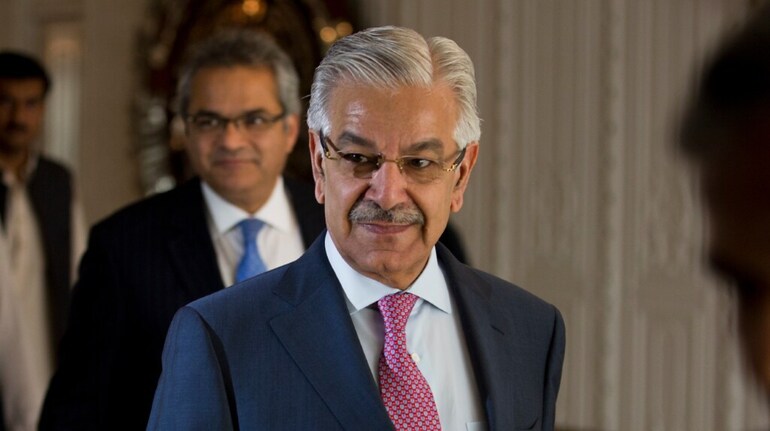
In a statement laced with boastfulness, Pakistan defence minister Khawaja Asif on Tuesday said that his country may not require future bailouts from the International Monetary Fund (IMF) due to a marked rise in defence orders.
Asif, who was speaking to Pakistan-based Geo News, said that Pakistan has seen a surge in international demand for its defence equipment following Operation Sindoor. He suggested that the windfall revenue from these orders may end Pakistan's dependence on financial assistance from IMF.
The Pakistani defence minister also resorted to exaggerated claims about his country's performance against India during the four-day military escalation in May, saying that the air force put up an "outstanding" show.
He added that the world saw Pakistan’s "resolve and military effectiveness" during the May 2025 India-Pakistan conflict.
The self-proclaimed victory narrative by Pakistan has been repeatedly busted by both India and international observers, with the external affairs ministry revealing that the Pakistani DGMO reached out to his Indian counterpart for ceasefire on May 10 after IAF missile strikes crippled strategic airbases in the neighbouring country.
Rise in defence orders
Currently, Pakistan is under a strict $7 billion bailout programme by IMF and has to comply with several structural conditions as part of the deal.
Though it remains to be seen whether the crisis-hit Pakistani economy can end its dependence on IMF grants, the country has indeed witnessed a spike in defence orders since Operation Sindoor.
According to available reports cited by The Print, Pakistan has struck export deals worth nearly $10 billion in 2025. This is the country's highest single-year export figure till date.
The JF-17 fighter jet, which has been jointly developed by Pakistan and China, is the biggest attraction, followed by the Mushshak trainer aircraft - a single-engine, low-wing jet.
Recently, Pakistan struck a massive deal worth $4 billion to sell military equipment to the Libyan National Army under the supervision of Field Marshal Asim Munir and Libyan deputy commander-in-chief of the LNA, Saddam Khalifa Haftar.
It was said to be Pakistan's largest-ever weapons sales yet. The deal came under global scrutiny since it directly contravenes a longstanding United Nations arms embargo on Libya.
According to The Print, Pakistan has also struck similar deals with several other nations over the last year, including Azerbaijan and Zimbabwe.
Pakistan has been using international platforms to spread a misleading propoganda post-Operation Sindoor about its defence capabilities. Its domestic defence-industrial complex is primarily a result of co-production arrangements with countries like China and Turkey.
Indian Army Vice Chief Lt Gen Rahul R Singh had said during a media briefing last year that China provided Pakistan with “all possible support” during Sindoor, including real-time intelligence, satellite surveillance and advanced weapon systems.
Senior Indian officers and defence think-tanks also revealed that Turkey supplied Pakistan with Bayraktar-series drones and loitering munitions in the run-up to and during Sindoor, some of which were used in Pakistan’s retaliatory strikes on Indian military and civilian targets.
Discover the latest Business News, Sensex, and Nifty updates. Obtain Personal Finance insights, tax queries, and expert opinions on Moneycontrol or download the Moneycontrol App to stay updated!
Find the best of Al News in one place, specially curated for you every weekend.
Stay on top of the latest tech trends and biggest startup news.